 Opinion
Arts festival gives young people stage to tell their stories
1.
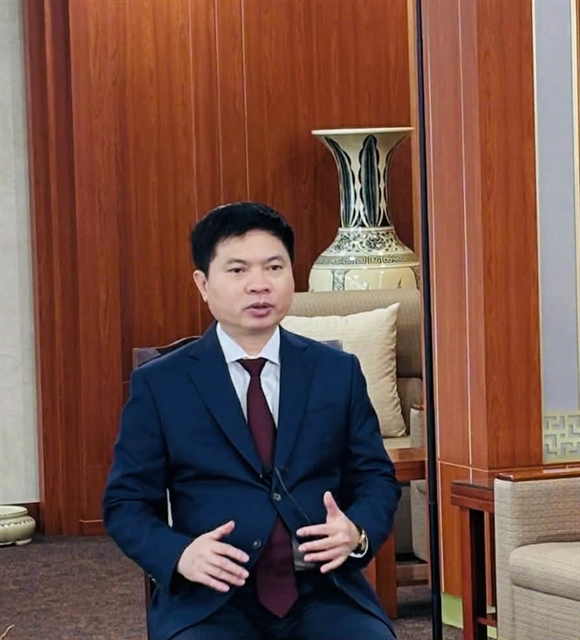 |
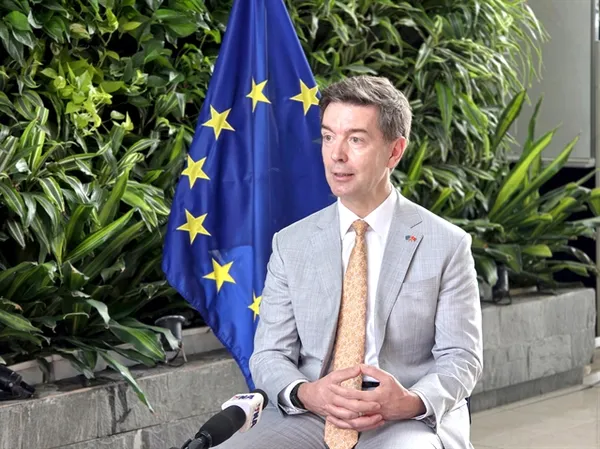
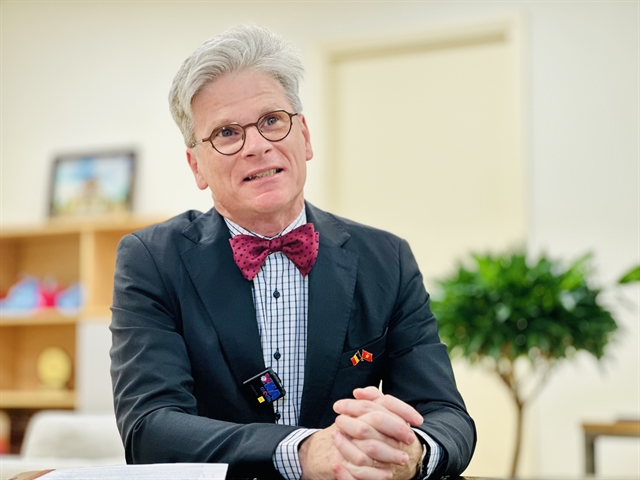
| Phú Thọ Province’s Party Secretary, Trương Quốc Huy. |
In the context of Việt Nam’s new era of green growth and innovation, Phú Thọ is becoming a dynamic driver of development in the Northern midlands and mountains. With its unique dual identity as a cultural heartland and a strategic logistics hub, the province is positioning itself as a new growth pole for the entire region. In an interview with Việt Nam News reporter Trần Như, Phú Thọ Province’s Party Secretary, Trương Quốc Huy, highlighted a balanced development path that integrates economic progress with cultural preservation and global integration. The province is prioritising investment in high-tech industries, services, and tourism. Key goals include improving the business environment, fostering high-value sectors, and promoting the cultural identity of the "Ancestral Land" to an international audience.
Phú Thọ is being regarded as a “new development space” for the Northern midlands and mountainous region. What is the strategic vision for the province to achieve a powerful breakthrough in the coming period?
We have identified very clearly that in the next development phase, Phú Thọ Province set to become a growth pole for the Northern midlands and mountainous region.
Phú Thọ possesses several fundamental advantages. First, is its geographic location as the northwestern gateway to Hà Nội, offering seamless connectivity to the Red River Delta, the Northwest, and major economic centers via a system of expressways, national highways, and railways, especially its rapid connection to Nội Bài International Airport. Additionally, the province’s population of over four million creates a massive labour market and significant room for industrial and service development.
To generate sustainable growth momentum, the province places special importance on the role of the business community and investors. The success of enterprises is the ultimate yardstick for the province’s governance and development efficiency. Therefore, Phú Thọ is accelerating administrative reforms, enhancing investment transparency, and reducing costs and time for businesses. We are also proactively removing "bottlenecks", particularly in land clearance and infrastructure development. We are not chasing a high volume of projects; instead, we prioritise investors with technological prowess, modern management capabilities, and a commitment to sustainable development.
To realise this goal, the province is focusing on synchronous investment in "framework infrastructure," ranging from transport, electricity, and water to industrial zones, urban areas, and logistics. Industrial zones are planned in close alignment with the national transport network to minimise production and logistics costs for enterprises, thereby enhancing the province's overall competitiveness.
In tandem with these efforts, institutional and administrative reform is considered a "breakthrough" step. Phú Thọ is promoting the simplification and digitalisation of all administrative procedures so that investors can access full and clear information, reducing time and costs during project implementation. Our philosophy is clear: The success of the business is the success of the province.
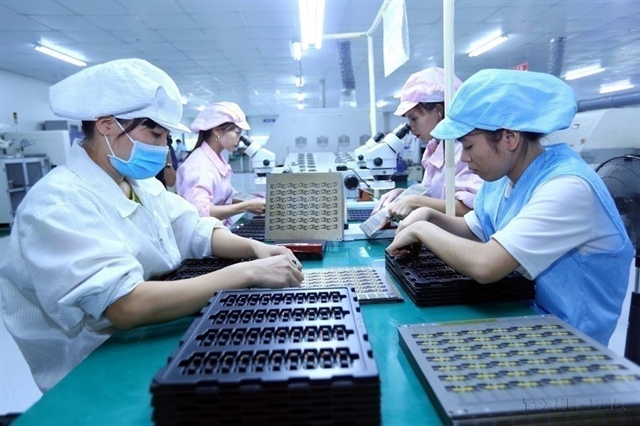
Another vital pillar is human resource development. Phú Thọ focuses on training high-quality labour through a close-knit "School – Enterprise – State" partnership. Training is conducted based on the specific "orders" (requirements) of businesses, ensuring workers can meet job requirements immediately upon entering production. This allows enterprises to feel secure in making long-term investments in the locality.
With these strategic orientations, Phú Thọ aims not only for rapid growth but for sustainable development, establishing itself as a vital industrial and service hub for the region and contributing significantly to the nation’s overall growth.
Phú Thọ is both the nation’s cultural cradle and a land of great potential for industrial and urban development. How does the Provincial Party Committee plan to harmonise heritage preservation with socio-economic growth?
This is a vital question because Phú Thọ possesses a unique characteristic that few other localities share: it is the "Ancestral Land"—the cultural roots of the Vietnamese people—while simultaneously facing the urgent need for rapid development amidst industrialisation, urbanisation, and international integration.
Our perspective is clear: economic development must not come at the cost of eroding cultural values. Conversely, culture must become a key resource for development. Phú Thọ boasts a rich system of historical and cultural sites, most notably the Hùng Kings Temple National Special Historical Site, along with UNESCO-inscribed intangible cultural heritages such as the Worship of Hùng Kings and Xoan singing. Additionally, we possess the unique cultural values of our ethnic communities, alongside ecological potential and a climate highly favorable for resort tourism.
Moving forward, the province aims to diversify its tourism products by harmoniously combining cultural, spiritual, ecological, resort, and sports tourism. Cultural and tourism spaces will be methodically planned to avoid overlap and unhealthy competition between localities. Instead, we are working toward linking these assets into a comprehensive value chain.
We are currently reviewing and re-mapping the province's tourism landscape so that each locality can maximise its own unique advantages while connecting with others to create attractive tourism routes and destinations. The goal is for visitors to Phú Thọ to stay for multiple days, not just a single day, to truly immerse themselves in the cultural depth, nature, and people of the Ancestral Land.
In tandem with tourism, Phú Thọ is promoting the "cultural industry" and tourism-linked agriculture. Areas with natural advantages, such as the Long Cốc tea hills or specialised fruit zones, will be developed toward high-quality agriculture combined with experiential and educational tourism. This approach simultaneously enhances the value of agricultural products and creates sustainable livelihoods for our citizens.
We believe that with effective planning and development management, culture will not only be preserved but also "awakened", becoming a vital endogenous driver for sustainable socio-economic growth.
How do you assess Phú Thọ’s potential for international cooperation, and what is the strategy to turn unique heritages such as the Worship of Hùng Kings, Xoan singing, and Mõ Mường, into cultural icons that resonate globally?
International cooperation is one of the key pillars in Phú Thọ’s development strategy for the coming period. We recognise very clearly that to achieve rapid and sustainable growth, we cannot rely solely on domestic resources. We must proactively integrate and attract international resources in terms of capital, technology, management, and expertise.
Regarding investment, Phú Thọ places a high priority on foreign investors who bring high technology, modern management, and a commitment to long-term development. The province is implementing a range of synchronous policies to attract these investors from infrastructure investment and administrative reform to human resource training and the development of support services for experts and workers, such as healthcare, education, and social housing. Our goal is to create the most favourable living and working environment so that investors feel confident in making a long-term commitment to our province.
In the field of culture and tourism, Phú Thọ views the promotion of cultural heritage to the world not just as a preservation task, but as an opportunity to elevate the province's image and standing on the international stage. Heritages such as the Worship of Hùng Kings, Xoan singing, and Mõ Mường are not only the pride of Phú Thọ but also the common assets of humanity.
In the coming time, the province will strengthen cooperation with international organisations, embassies, and foreign cultural agencies to promote these unique values through events, festivals, cultural exchange programs, art performances, and experiential tourism. Simultaneously, we encourage business participation in investing and developing high-quality cultural tourism products that cater to the tastes of international travelers.
Phú Thọ’s goal is to attract over 20 million visitors by 2030, with a steadily increasing proportion of international tourists, firmly positioning the "Ancestral Land" on the regional and global tourism map.
Could you please elaborate on the highest commitment of the Phú Thọ provincial government to the business community and strategic investors?
Our greatest commitment is to consistently stand side-by-side with businesses. The provincial government clearly defines its role not as a mere bystander, but as a partner—one who shares responsibility and works directly with investors to resolve difficulties throughout the entire lifecycle of a project, from implementation to operation.
When businesses encounter obstacles, whether related to administrative procedures, land clearance, tax and customs policies, or infrastructure connectivity, the provincial government will proactively coordinate with central ministries and agencies to find the fastest and most effective solutions. We firmly believe that only when businesses achieve sustainable growth can the province’s socio-economic development be truly sustainable. VNS
Opinion
.jpg) Opinion
Opinion
 Opinion
 Opinion
 Opinion
 Opinion
 Opinion
 Opinion
 Opinion
 Opinion
.jpg) Opinion
Opinion
 Opinion
 Opinion
 Opinion
 Opinion