 Opinion

Việt Nam, Laos aim to raise bilateral trade to US$5 billion
1.
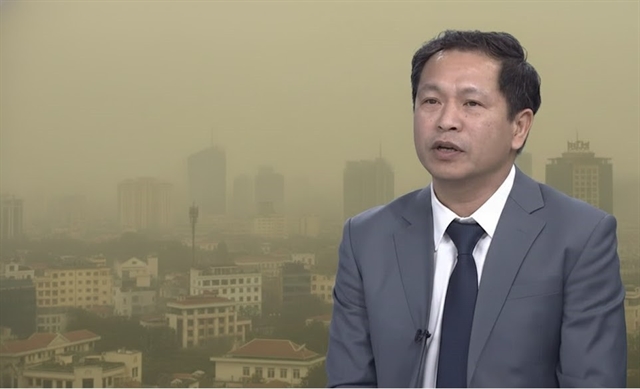 |
| Associate Professor Dr Hoàng Anh Lê. Photo kienthuc.net.vn |
Hà Nội has experienced its third major air pollution episode since the beginning of the season, from November 28 to December 5, according to an AI-based air quality forecasting model developed by the Smart Geospatial Research Group in the University of Engineering and Technology, Vietnam National University Hà Nội.
Associate Professor Dr Hoàng Anh Lê, head of the Department of Environmental Management at the university's Faculty of Environment, spoke to the Tri thức & Cuộc sống (Knowledge & Life) e-newspaper, pointing out the main causes of the city's air pollution problem and issuing warnings about the health impacts on residents.
Over the past several days, AQI measuring stations in Hà Nội have indicated that air quality is at very unhealthy levels. How do you assess the current pollution situation?
As we all know, the Air Quality Index (AQI) measures air quality. The higher the AQI is, the worse the air quality. Obviously, the current situation is alarming. Breathing is the most fundamental need. According to the 'rule of three', humans can survive without food for three weeks and without water for three days, but cannot go without breathing for more than three minutes. Air quality thus has a direct impact on everyone’s health.
The impact is not only on health or the environment, but also extends to the economy and society. A very obvious example is that a polluted Hà Nội will find it hard to attract tourists. That's not to mention the effects on crops, production and a wide range of other development activities. If converted into monetary terms, the losses would certainly be significant.
The current pollution level is truly alarming, especially in Hà Nội. During the period from October to February or March of the following year, the city's air quality often reaches its worst levels.
When is the air most polluted during the day?
During the day, there are certain time frames that people need to pay attention to, particularly when travelling on the roads. Measures must be taken to protect health, especially at these times. These include 5-8am, 5-7pm and 9pm until late, sometimes even after midnight.
How can the air be polluted even late at night?
In fact, many industrial production activities continue into the evening, keeping emissions high. In addition, although there are fewer motorbikes in traffic at night, there is a large number of heavy-duty vehicles, freight trucks and passenger buses that are permitted to operate. These also contribute significantly to the rise in air pollution levels in the capital city.
Why does Hà Nội face severe air pollution at this time of year?
Air quality depends on many factors, such as topography, emission sources and especially weather conditions. From around the ninth lunar month, when the weather begins to change and the northeast monsoon appears, this wind can carry pollutants from northern regions, causing pollution levels in the city to rise. As a result, during this period, air quality often tends to deteriorate.
Regarding emission sources, there are four main groups contributing to pollution: traffic, industrial activities from factories or craft villages, open burning — such as burning straw, agricultural by-products, waste, and branches or leaves — and construction activities, which release large amounts of dust.
In addition to local sources, Hà Nội is also affected by pollution spreading from other provinces.
The causes are clear — so why has air pollution not been resolved, and why does it keep returning year after year?
I believe the management capacity of State environmental agencies is still inadequate. These units have not thoroughly carried out the tasks and responsibilities assigned to them.
When you go out on the streets, you can see many pollution-related issues left unaddressed. For example, people often litter and burn waste improperly; trucks carry construction materials and sometimes spill soil and rocks onto the roads; and, notably, even the waste collection vehicles themselves are often the dirtiest on the streets.
Hà Nội plans to implement a ban on petrol-powered motorbikes for certain inner city areas, but if these problems are not properly addressed, I believe the air pollution issue will remain unsolved.
Regulations and legal documents are already in place, but the key lies in enforcement. If everything is in place but enforcement is weak, pollution will continue to persist year after year.
How do you view macro and long-term solutions that are being implemented?
We have recently issued several important policies, including Directive 20 signed by Prime Minister Phạm Minh Chính, followed by the Action Plan on Air Quality issued by Deputy Prime Minister Trần Hồng Hà.
For Hà Nội specifically, the city People’s Committee has promulgated Decision 68 to ensure safety and environmental sanitation at construction sites. With this policy framework, we expect air quality to see positive improvements in the near future.
While waiting for policies to be fully effective, what are the most urgent solutions?
First and foremost, we must act with strong resolve and urgency. What is most important is to enhance monitoring and surveillance activities to get a comprehensive picture of the extent and sources of pollution.
It is also necessary to use technology tools like AI to issue timely warnings and forecasts, which are helping make advancements in modern environmental management.
Accelerating inspection and monitoring of emissions sources is also important. These existing activities must be carried out in a more serious and drastic manner. We must also pay special attention to vulnerable groups including the elderly and children, who are suffering the most from our poor air quality.
One more significant factor is to reinforce the intersectoral, interprovincial and interregional management. Hà Nội is located in an area vulnerable to pollution from outside its borders — but these are uncontrollable elements.
Strengthening the enforcement capacity of the regulatory agencies, along with an effective interregional coordination mechanism, is something that must be done immediately. VNS
Opinion
 Opinion
 Opinion
 Opinion
 Opinion
 Opinion
 Opinion
 Opinion
 Opinion
 Opinion
 Opinion
 Opinion
 Opinion
 Opinion
 Opinion