 Opinion

Project lays foundation for digital greenhouse gas emissions data management
1.
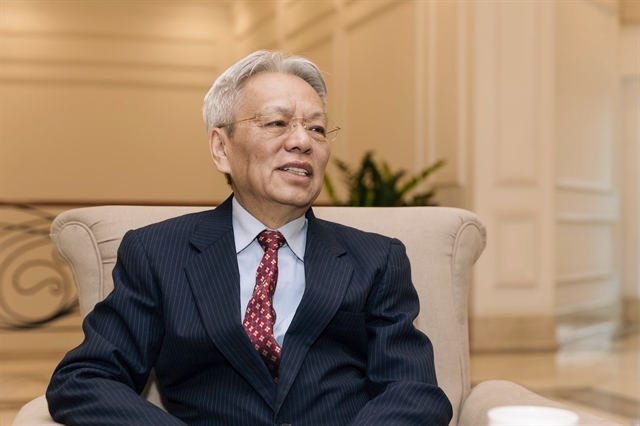 |
| Nguyễn Sĩ Dũng, former deputy chairman of the Office of the National Assembly. — Photo diendandoanhnghiep.vn |
Marking the 80th anniversary of Việt Nam’s first general election, Nguyễn Sĩ Dũng, former deputy chairman of the Office of the National Assembly, spoke with a Việt Nam News and Law reporter Lê Việt Dũng about how the 1946 vote laid the foundations of legitimacy and national unity for the newly independent state.
The 1946 election gave the revolutionary state full legal legitimacy. How did that legitimacy help consolidate national unity at home while strengthening Việt Nam’s standing and voice abroad at a critical historical moment?
The 1946 election gave the Vietnamese revolutionary state something it could not have obtained by declaration alone – undeniable legal legitimacy. That legitimacy became a source of real power, domestically and internationally.
At home, it allowed different social forces – workers, peasants, intellectuals, religious groups and patriotic political parties – to come together within a shared institutional framework: the National Assembly.
When power is established through the people’s vote, unity no longer relies on slogans or emotional appeals. It rests on institutional trust.
Internationally, a state born of universal suffrage speaks with legitimacy and weight. Việt Nam was not only proclaiming independence; it was demonstrating that it was a sovereign country with representative institutions.
That legitimacy helped Việt Nam win sympathy from progressive global opinion and assert itself as a nation claiming the right to self-determination in the post-war international order.
The 1946 election is often described as the 'first major leap' in democratic institutions. Given the country’s low levels of education at the time and its newly-claimed independence, how did this leap fundamentally change ideas about State power and the political status of ordinary Vietnamese people?
The 1946 election is often described as 'the first major leap' in democratic institutions because it overturned centuries of political logic. For most of Vietnamese history, State power was understood as flowing downward – from kings, mandarins or colonial authorities – while ordinary people were subjects to be ruled.
The 1946 election introduced a fundamentally new idea – State power originates from the people.
For the first time, Vietnamese citizens, despite widespread poverty and low levels of education, were recognised as political actors with the right to choose their representatives.
This was not simply about casting a ballot. It was about political dignity, recognising people as citizens and as owners of their country.
That shift laid the intellectual foundation for a State 'of the people, by the people and for the people' – a principle that continues to guide Việt Nam’s institutional development today.
The 1946 election helped transform Vietnamese people from subjects into citizens of a free and independent country. Looking back over eight decades, what do you see as the most enduring value the National Assembly has inherited from the spirit of that 'first major leap'?
Its core legacy is democratic legitimacy: the idea that State power is born from the people, entrusted by them and exercised in their interests.
The election of January 6, 1946, was more than a procedural event. It was an institutional turning point. For the first time in modern history, Vietnamese people moved from being ruled to being citizens with the right to help decide the nation’s fate.
From that moment, power was no longer something handed down from above. It became a crystallisation of popular will.
President Hồ Chí Minh captured this clearly when he said: "Our country is a democratic country. All benefits belong to the people. All powers belong to the people."
A National Assembly born in that spirit is not simply a power-holding body; it is a mechanism through which people exercise their sovereignty in a constitutional and lawful way.
Much has changed over eight decades, but the National Assembly’s institutional DNA has not: representation, transparency, debate and accountability to the people.
Every law and major decision ultimately has to answer one question: Does this power truly come from the people, and does it serve their long-term interests?
The National Assembly is often described as an embodiment of national unity. How do you assess the broad and diverse composition of the first legislature compared with today’s Assembly?
What stands out about the first National Assembly is not only its historic role, but how open and inclusive it was from the very beginning.
It brought together veteran revolutionaries, patriotic businesspeople, intellectuals, religious leaders, ethnic minority representatives and members of different political groups. It was, in a very literal sense, a parliament of the entire nation.
That diversity was not symbolic. It reflected a clear political philosophy: building an independent country required mobilising all social forces and integrating them into a shared institutional framework.
Today’s National Assembly looks very different. It is more professionalised, with a higher proportion of full-time deputies and greater expertise in law, governance and economic management.
That evolution is inevitable in a more complex, globally integrated state.
The key issue, however, is not whether the composition has changed, but whether the spirit of representation remains intact. National unity today is not about ticking boxes; it is about whether diverse social interests can be heard, translated and reflected in policy.
A strong parliament is not strong because it has many experts, but because legitimate public voices can find their way into the chamber.
If national unity in 1946 was built through inclusion, today it must be sustained through effective representation, robust scrutiny and accountability – an update of the Assembly’s original legacy for the XXI century.
The first National Assembly decided to add 70 deputies from different political parties without election. What lessons does that decision offer for building today’s National Assembly as an embodiment of national unity?
That decision was a powerful lesson in putting national interest above procedural rigidity. At a moment when the country’s survival was precarious, the Assembly treated national unity as a supreme institutional principle.
That lesson still resonates. Building a National Assembly that truly embodies national unity is not just about structure or numbers. It is about the ability to accommodate differences, balance competing interests and turn diverse social voices into shared decisions.
When a parliament consistently places the country’s long-term interests above narrow or sectional concerns, it becomes a focal point of public trust and unity follows. — VNS
Opinion
.jpg) Opinion
Opinion
 Opinion
 Opinion
 Opinion
 Opinion
 Opinion
 Opinion
 Opinion
 Opinion
 Opinion
 Opinion
 Opinion
 Opinion
 Opinion