 Life & Style
Great National Unity Day in Europe: Youth build stronger, more united community
1.
|
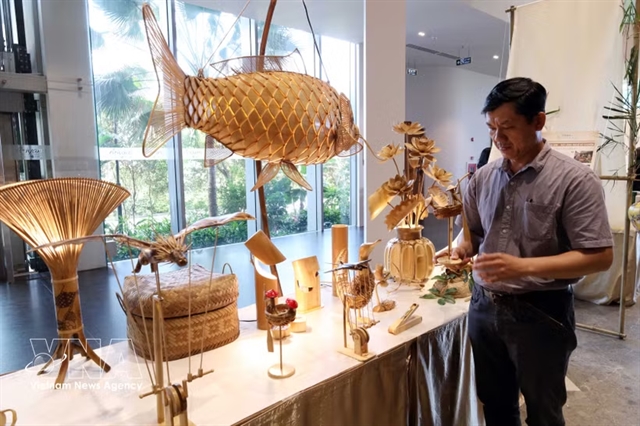
| Bamboo and rattan decorations and gifts have replaced plastic products at many tourism service establishments, contributing to the development of green tourism in Đà Nẵng. — VNA/VNS Photos |
ĐÀ NẴNG — The central city of Đà Nẵng is stepping up efforts, from introducing green accommodation criteria to improving resource efficiency, to make environmental standards a competitive advantage as it works towards becoming an international tourism destination.
Following its merger, Đà Nẵng has gained a broader development space with diverse resources, ranging from urban areas, beaches and cultural heritage sites to craft villages and mountain ecosystems. These assets offer opportunities to connect local cultural, economic and tourism values and develop competitive products. At the same time, they place greater demands on resource protection, environmental management and sustainable development.
The municipal Department of Culture, Sports and Tourism has coordinated with relevant agencies to implement measures to protect the tourism environment. These include waste sorting at service establishments and rubbish collection at hotspots such as Sơn Trà Peninsula, Chàm Islands and local beaches.
Community initiatives, including “Clean Up Sơn Trà”, “Clean Up Đà Nẵng ”, underwater rubbish collection to protect coral reefs, and campaigns encouraging people to exchange waste for plants, have also helped raise environmental awareness among businesses and residents.
In August 2026, the city introduced the Đà Nẵng Green Stay criteria for tourism accommodation establishments. The guidelines encourage businesses to use energy efficiently, manage resources responsibly and reduce waste, helping them adopt greener and more sustainable business models.
Tourism operators are also developing nature-based experiences. The Aphrodite cruise, An Di speedboat and Sơn Trà Marina offer activities linked to the sea and surrounding landscapes, with a focus on authentic experiences. Meanwhile, Go Green Đà Nẵng promotes environmentally friendly transport solutions and more sustainable urban lifestyles.
|
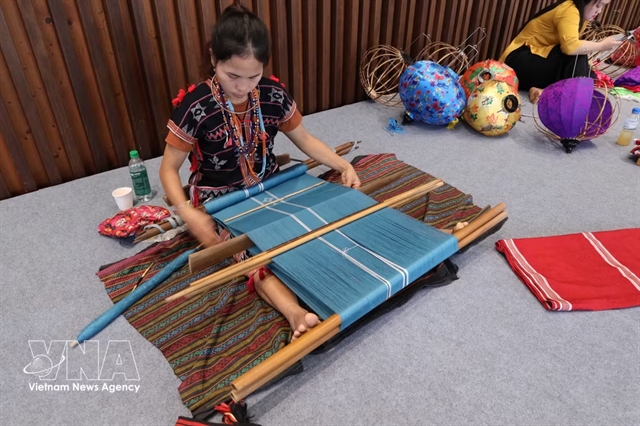
| Brocade weaving demonstration at a tourism service establishment in Đà Nẵng City. |
Nguyễn Thành Tâm, general director of Việt An Group JSC, said businesses should look beyond revenue growth to build their own identities and create positive value for the community. Economic development and culture are closely linked, he noted, adding that preserving local identity and investing in visitor experiences provide a foundation for sustainable growth.
Nguyễn Thị Hoài An, deputy director of the municipal Department of Culture, Sports and Tourism, said businesses could begin their green transition with practical measures suited to their financial capacity, such as saving electricity and water and reducing plastic waste, rather than making large investments from the outset.
With more than 2,400 accommodation establishments and 67,000 rooms, Đà Nẵng has considerable room to improve resource efficiency, service quality and competitiveness. Green accommodation can also serve as a starting point for wider changes across the tourism service chain, An said.
The city is promoting links among tour operators, transport providers, ecological destinations and local communities. Local OCOP products, specialties and cultural experiences are being incorporated into itineraries, while community-based tourism, ecotourism and local cuisine are being fostered in Tam Kỳ, Phù Ninh, coastal areas and island communes.
Towards sustainable growth
Poliburo Resolution No 26, dated August 22, 2026, sets out a vision for making tourism a key economic sector in the new era, with an emphasis on high quality, smart services, green development, innovation, cultural identity and greater value added.
As one of Việt Nam's three major tourism growth engines, Đà Nẵng is seeking to make fuller use of special mechanisms and policies to strengthen its role in the central region. Key priorities include developing green products and services based on standardised criteria, upgrading waste and wastewater treatment infrastructure, reducing plastic waste, preserving heritage and landscapes, and exploring blue carbon credits at major tourism sites, coastal areas and islands.
The city has identified green transformation as a central and breakthrough task in line with national strategies and its own plans to renew the growth model.
Vũ Quang Dũng, deputy director general of the Việt Nam National Authority of Tourism, said Đà Nẵng, one of central Việt Nam's leading tourism hubs, should make full use of available policy frameworks to advance green and sustainable tourism.
He called on the city to strictly manage the carrying capacity of destinations, stressing that environmental quality should not be sacrificed for purely numerical growth in visitor arrivals. Quantitative indicators should be developed to regulate visitor numbers in ecologically sensitive areas such as Sơn Trà Peninsula and the Chàm Islands, as well as internationally recognised heritage sites such as Hội An and Mỹ Sơn.
He also recommended a more balanced East–West distribution of tourism development, with greater investment in the West through community-based ecotourism villages and green rural tourism. Clean agricultural produce could be linked with high-end tourism services, creating additional value for local communities.
Đà Nẵng should also accelerate its “twin transition” by combining digitalisation with green development. Proposed measures include using digital data for environmental management, piloting energy audits and automated waste treatment at major hotels along the coast and the Hàn River, and completing green tourism criteria for other service sectors.
Incentives and recognition should be introduced for businesses taking the lead in pursuing net-zero emissions, he added. — VNA/VNS
Life & Style
 Life & Style
 Life & Style
 Life & Style
 Life & Style
 Life & Style
 Life & Style
 Life & Style
 Life & Style
 Life & Style
 Life & Style
.jpg) Life & Style
 Life & Style
 Life & Style
 Life & Style