 Life & Style

SCEX completes level 4 information system security assessment, moving closer to official operations
1.
|
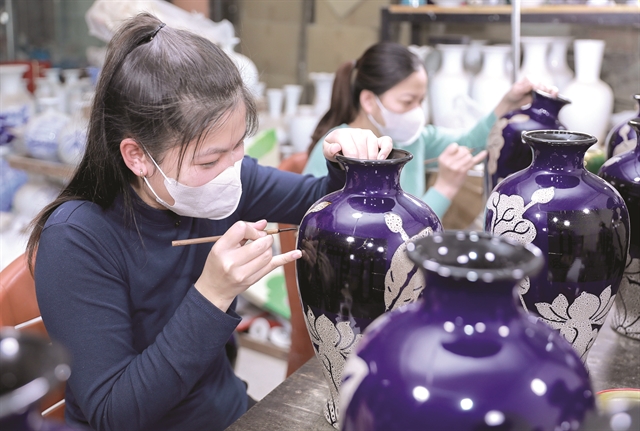
| INTRICATE: Workers paint on unfired ceramic vases in Bát Tràng porcelain and pottery village. — VNA/VNS Photo |
Minh Hằng
From silk weaving and pottery to mother-of-pearl inlay and wood carving, Hà Nội’s ancient craft villages are seeking new ways to keep centuries-old traditions alive as changing markets and modern lifestyles reshape the future of their trades.
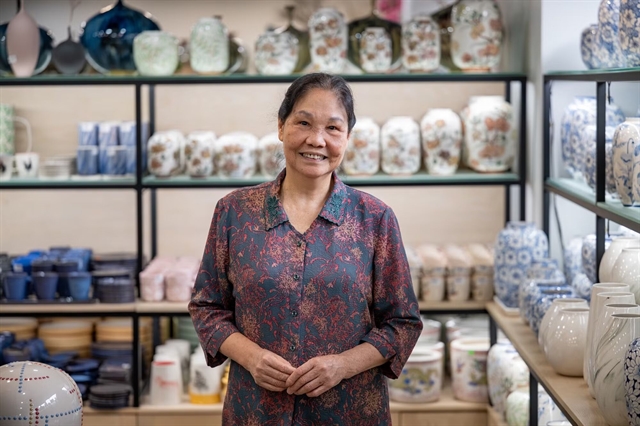
In Bát Tràng, a renowned pottery and porcelain village about 15km from the city centre, distinguished craftswoman Hà Thị Vinh wants visitors to discover not only ceramics but also the history, traditions and family stories behind them.
She has proposed a living museum that she hopes will bring Bát Tràng’s heritage to life through its streets and workshops, allowing residents to share generations of craftsmanship and offering visitors a deeper understanding of the village beyond its ceramics.
“We will create a series of interactive spaces, each telling its own story,” said Vinh, chairwoman of the Hà Nội Handicraft and Craft Village Association.
The project would explore the village’s scholarly traditions, traditional kitchens and culinary heritage, as well as how pottery-making survived periods of economic upheaval, especially the years after national reunification, when many production facilities were nationalised.
"Older artisans would share their knowledge with younger generations, while residents would guide visitors through the history of their families and neighbourhoods."
The challenge for Hà Nội’s craft villages is to turn their rich heritage into lasting economic opportunities without compromising the traditions passed down through generations.
|
| MUCH TO OFFER: Craftswoman Hà Thị Vinh stands among ceramic products made in Bát Tràng Village. — Photo vietnamplus.vn |
Hà Nội has more than 1,350 craft villages preserving techniques and knowledge passed down through generations. As of March 2026, the city had officially recognised 337 craft villages and traditional crafts.
From Bát Tràng ceramics and Vạn Phúc silk to Chuyên Mỹ mother-of-pearl inlay and Sơn Đồng wood carving and gilding, these communities are an important part of the capital’s cultural identity.
International recognition, including through the World Crafts Cities Network, offers opportunities to promote their products and reach overseas markets.
But heritage alone cannot guarantee survival. Changing consumer preferences, competition from mass-produced goods and the growth of digital commerce are forcing artisans to rethink their designs, marketing and distribution. At the same time, they must attract younger workers and secure sufficient income to sustain production.
For Vinh, tourism offers one way to bridge the gap between cultural preservation and economic development.
"Bát Tràng began exploring tourism around 15 years ago, but early initiatives failed to meet expectations, including some aimed at international visitors," Vinh said.
Many artisans initially believed that high-quality ceramics would sell themselves, she said, paying less attention to the history and cultural traditions behind their products. That thinking is changing as residents recognise that heritage can distinguish their products and create additional sources of income.
Vinh cited preliminary figures suggesting that Bát Tràng receives more than 20,000 visitors a month, although the estimate has yet to be independently verified.
The proposed living museum has received approval in principle from the city but awaits further development and approval. Progress has been slowed partly by the need to align it with wider plans for the Red River landscape corridor.
The city is considering the concept as a model for other craft villages.
"About 80 per cent of the proposed content has been developed, including visitor routes and interactive spaces in Bát Tràng’s old village. Plans include pottery-making workshops and evening activities with artisans, offering visitors a deeper insight into local traditions beyond daytime shopping," she said.
Reinventing tradition
Tourism businesses say such ideas must be developed into products that can be offered consistently to visitors.

|
| TRADITION: Sơn Đồng artisans preserve their traditional wood-carving skills. — VNA/VNS Photo |
Lê Hồng Thái of the Hà Nội Tourism Corporation said activities needed clearly defined durations, group sizes, prices, guides, safety arrangements and visitor facilities before tour operators could incorporate them into itineraries.
Villages and travel companies also needed to coordinate their programmes and services, he said.
Thái proposed distinctive night-time experiences for each craft village, including pottery in Bát Tràng, silk production in Vạn Phúc, mother-of-pearl inlay in Chuyên Mỹ and wood carving and gilding in Sơn Đồng.
Improved lighting, infrastructure, digital payment systems, packaging and transport services could also make visits more accessible.
"A proposed night-time route linking Hà Nội’s Old Quarter with four craft villages could connect the capital’s urban tourism economy with its traditional craft communities," Thái said.
Yet the success of such initiatives will depend on whether visitors gain a genuine understanding of the crafts and the people who sustain them. Their products must also appeal to contemporary consumers.
Associate Professor Đặng Mai Anh, former acting vice-rector of the University of Industrial Fine Arts, said design was crucial to improving competitiveness.
"Artisans need to understand domestic and international market trends and adapt their products to modern lifestyles without losing their cultural identity," she said.
Changes to colours, materials, shapes and functions can make traditional products more attractive while preserving the techniques that distinguish each village. Achieving that balance requires closer cooperation between artisans, designers, universities, research institutes and businesses.
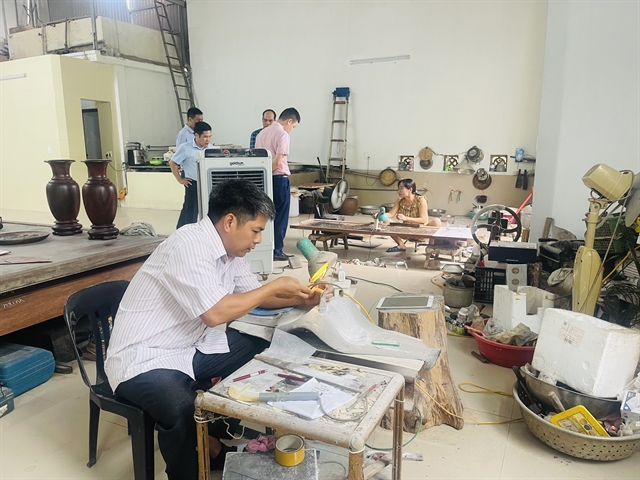
In Chuyên Mỹ, known for mother-of-pearl inlay and lacquerware, artisan Vũ Văn Đình said quality remained the foundation of sustainable development. Handicraft producers also needed stronger links between manufacturing, design and marketing to develop products that met customer demand and secured more regular orders, he said.
|
| ARTISAN: Vũ Văn Vịnh of Chuyên Mỹ Village has spent 40 years crafting mother-of-pearl inlaid lacquerware. — VNA/VNS Photo |
Từ Thị Loan, chairwoman of the Việt Nam Cultural Development Association, said craft products needed to become more diverse and creative while retaining their cultural identity. Digital technologies could improve design, management and marketing while opening up export opportunities, she said.
"The challenge is to avoid preserving products unchanged as markets evolve or modernising them so extensively that they lose the distinctive character that sets them apart," Loan said.
For Hà Nội’s craft villages, design is a means of translating cultural knowledge into products that consumers recognise, value and are willing to buy.
Who benefits?
As craft villages seek investment and new markets, the question arises as to who benefits from commercialisation.
Tourism operators, designers and businesses can provide expertise, funding and access to customers. But artisans risk being marginalised if they have little influence over how their traditions are presented or receive only a small share of the returns.
Loan said local communities should participate at every stage, from developing ideas and designing products to organising production and accessing markets.
"Artisans are not merely suppliers of traditional skills," she argued. "They are best placed to identify what makes their crafts distinctive and determine which elements must be preserved."
Designers and research institutions can help turn that knowledge into commercially viable products, but their contributions should complement rather than replace local expertise.
"Transparent agreements are essential, with partnerships clearly defining the rights and responsibilities of each party, including how revenue and other benefits are shared," Loan said.
|
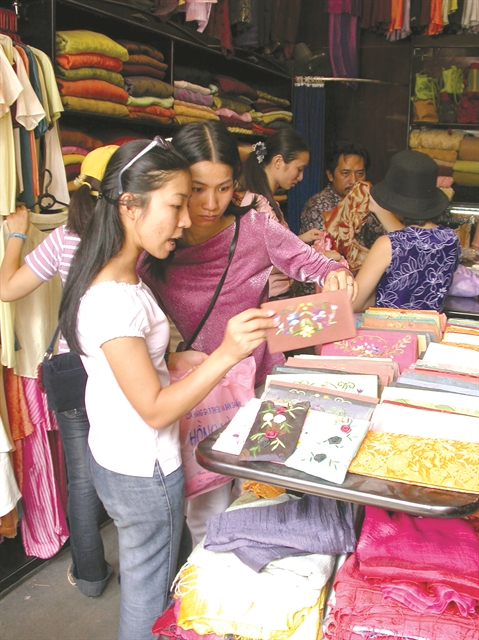
| BUSY: Shoppers browse silk products at a busy shop in Vạn Phúc Village. — VNS Photo Đoàn Tùng |
If artisans feel unfairly treated or receive inadequate returns, they will have little incentive to participate, she said. Local authorities must therefore help coordinate stakeholders, mobilise resources and encourage investment while protecting community interests.
Tourism should be seen as one route to development rather than an end in itself. The broader objective is to ensure that the people safeguarding traditional skills remain central to decisions about how their heritage is used.
That also means ensuring artisans can earn a viable income from production, attract younger workers and pass their knowledge to the next generation.
Hà Nội aims to establish 10 craft village tours or tourism routes by 2030, connect at least three villages with tourism and digitise 300 products. As of October, it was also supporting 84 craft villages in developing brands and securing intellectual property rights. — VNS
Life & Style
 Life & Style
 Life & Style
 Life & Style
 Life & Style
.jpg) Life & Style
 Life & Style
 Life & Style
 Life & Style
 Life & Style
 Life & Style
 Life & Style
 Life & Style
 Life & Style
 Life & Style