 Life & Style

16th NA’s second session: 43 draft laws and resolutions to be considered
1.
|
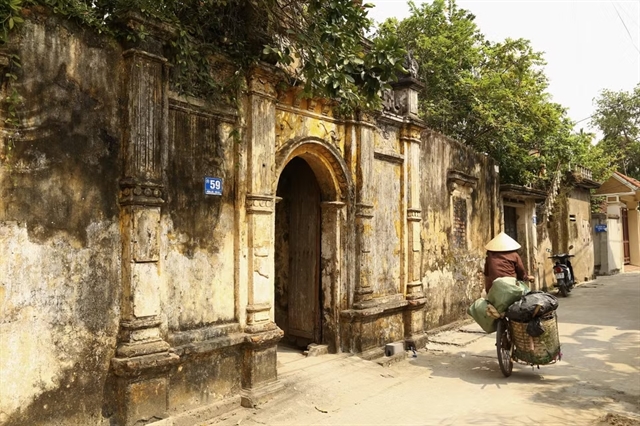
| Cựu is a village over 500 years old located in Chuyên Mỹ Commune. The village still preserves architectural features characteristic of the Red River Delta. — VNA/VNS Photo |
HÀ NỘI — With its diverse craft villages, master artisans, and scenic rural charms, Chuyên Mỹ Commune is poised to become Hà Nội’s next standout tourism hotspot. On October 16, a delegation of experts surveyed the locality to help local authorities outline a strategic roadmap for sustainable growth.
Located at the southern gateway to the city, about 40km from the centre and adjacent to National Highway 1A and the Pháp Vân-Cầu Giẽ Expressway, Chuyên Mỹ is well-positioned to develop short-term and weekend tourism offerings, while also serving as a connecting point to various destinations within Hà Nội and the surrounding region.
The commune vice chairwoman Nguyễn Thị Thùy Hương said one of the notable advantages of Chuyên Mỹ was a rich heritage of traditional craft villages.
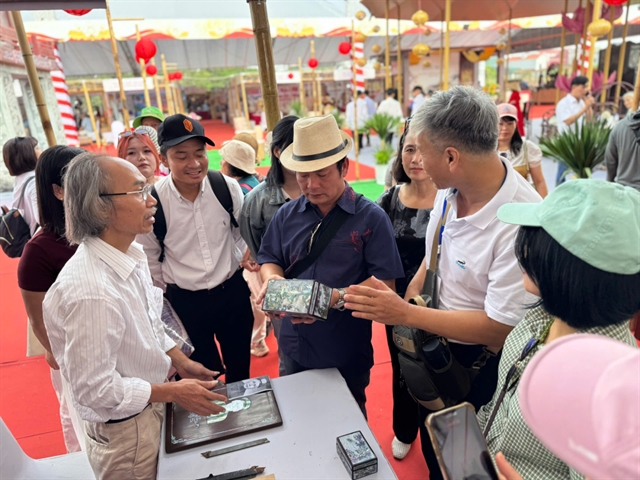
Among the area's prominent destinations were Chuyên Mỹ, renowned for its mother-of-pearl inlay and lacquerware; Vân Từ, famous for custom tailoring; and Phú Yên, known for leather footwear.
The commune boasted 18 officially recognised craft villages, alongside numerous enterprises, cooperatives, and individual production or business households dedicated to these traditional trades.
Chuyên Mỹ was home to 44 recognised artisans, including 12 Meritorious Artisans and 29 Vietnamese Artisans. These individuals served as the core force in preserving technical skills and trade secrets, training the younger generation, and participating in experiential tourism activities.
She added that Chuyên Mỹ also owned a system of 85 cultural and historic heritage sites along with 24 traditional festivals. Notably, the ancient village of Cựu still retained about 40 historic houses that showcased an architectural blend of traditional Vietnamese, Western, and Indochinese styles. Such a setting offered rich potential for architectural exploration, rural lifestyle tourism, and local homestays.
|
| Tourism experts and travel companies' representatives visit a booth of mother-of-pearl inlay and lacquerware which is a traditional craft in Chuyên Mỹ. — VNS Photo Hồng Hạnh |
Chuyên Mỹ also boasted a typical rural and agricultural spaces together with a 5.000sq.m clean vegetable production model, which utilises Israeli aeroponic technology and a lotus production model integrated with brand development and tourism.
Hương believed that these advantages were strong foundation for the development of community-based tourism, educational, and experiential agricultural tourism, catering a range of customers such as students, families and international guests.
Experts' opinions
However, Chuyên Mỹ has yet to find a way to fully leverage its potential, particularly in light of the new strategic direction for tourism development in the capital, as well as Resolution No. 26-NQ/TW, issued by the Politburo on August 22, 2026, which outlines the development of Việt Nam’s tourism sector into a key economic industry for the new era.
Accordingly, the effective exploitation of cultural values, heritage, craft villages, and creative capacity is identified as the foundation for developing products with high added value, an approach linked to enhancing service quality, driving digital transformation, and fostering sustainable development.
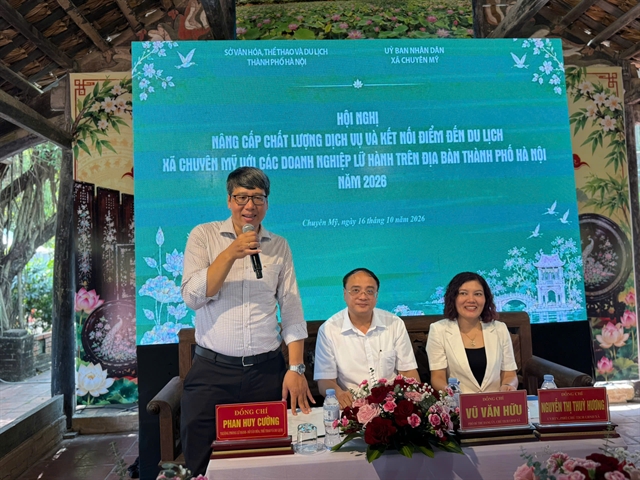
A locality survey and conference organised by the Hà Nội Department of Culture, Sports and Tourism and the local People's Committee held on October 16 aimed to enhance the quality of services in Chuyên Mỹ and connect its tourism destinations with travel agencies across Hà Nội.
The department's head of Travel Division Phan Huy Cường said despite advantages, tourism activities in Chuyên Mỹ didn't develop as expected. Numerous issues require resolution, including inadequate and poorly synchronised transport infrastructure, parking facilities, and auxiliary service systems.
Furthermore, tourism promotion and marketing efforts remained weak; there was a shortage of experiential offerings, lodging options, and on-site tour guides. Local residents lacked formal training to participate effectively in community-based tourism, and there was a notable lack of coordination among artisans, production facilities, service providers, and travel agencies.
Dr Phùng Quang Thắng from the Vietnam Tourism Association, suggested that Chuyên Mỹ needed to develop experiential tourism products that allowed visitors to engage directly in crafting handmade items and explore the cultural and historical narratives behind traditional craft villages.
|
| A conference gathering tourism-related people to find ways to boost Chuyên Mỹ's tourism is held on October 16 in Hà Nội. — VNS Photo Hồng Hạnh |
In particular, Cựu Village, renowned for its suit-tailoring trade, could become a compelling attraction if its craft heritage was effectively linked to the stories of Hà Nội’s Old Quarter.
Chuyên Mỹ should establish an official centre for tourism information, promote their destination in the digital platforms and collaborate with travel companies to design tours and itineraries aimed at extending visitors' length of stay.
Vũ Văn Tuyên, director of Travelogy Vietnam, proposed the guided and hands-on craft experience spaces, where visitors could participate in the production process and take home a finished product as a keepsake.
He suggested developing agricultural and rural tourism based on a "farm-to-table" model, incorporating visits to craft villages, cooking experiences, culinary enjoyment, and the purchase of handmade goods. Such activities can form a comprehensive visitor experience, encouraging longer stays and higher spending by tourists.
Vice President of Hanoi Tourism Association Nguyễn Tiến Đạt emphasises the need to “sell experiences rather than products” as the emotions and direct participation of visitors are what truly set craft-village tourism apart.
He emphasised the need for deeper market research, particularly targeting international visitors. Souvenirs, he noted, should be compact, lightweight, and artistically refined, while showcasing the distinct cultural heritage of Việt Nam and Hà Nội.
"Most importantly, local households serving tourists must directly benefit and profit from these economic activities," he added. — VNS
Life & Style
 Life & Style
 Life & Style
 Life & Style
 Life & Style
 Life & Style
 Life & Style
 Life & Style
 Life & Style
 Life & Style
 Life & Style
 Life & Style
 Life & Style
 Life & Style
 Life & Style