 Life & Style
Int’l cooperation helps address nuclear power workforce shortages
1.
|
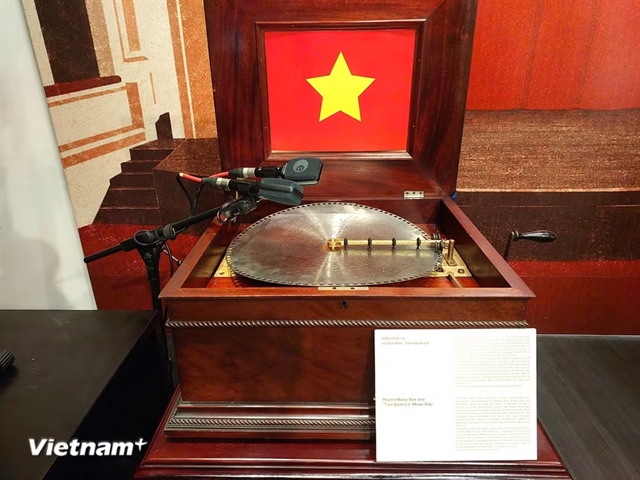
| A Regina music box on display at the Hà Nội Museum.. — Photos vietnamplus.vn |
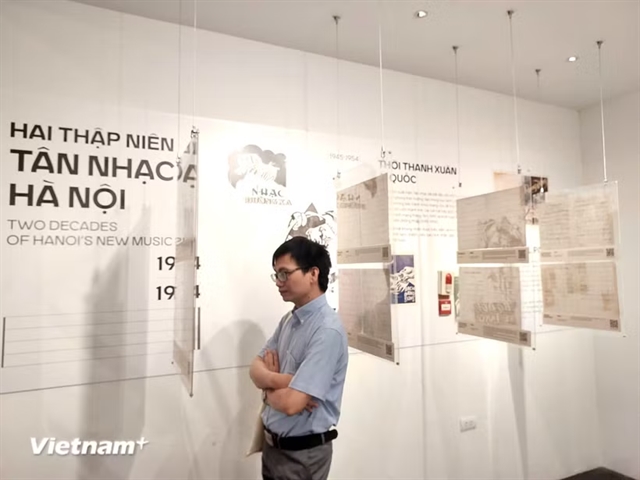
HÀ NỘI — A collection of 102 rare documents, original music scores and images charting the birth and early development of modern Vietnamese music in the capital from 1934 to 1954 is on display at the Hà Nội Museum.
The exhibition highlights how a new musical genre emerged and became closely connected with the capital’s cultural and artistic life during an important period in Việt Nam’s history.
“The exhibits offer visitors a glimpse into the vibrant musical, artistic and spiritual life of Hà Nội’s people and artists during a significant period in the nation’s history,” said Nguyễn Thị Ngọc Hòa, Director of the Hà Nội Centre for Coordinating Creative Activities.
Emerging in the mid-1930s, modern Vietnamese music was rooted in Western traditions and quickly attracted young audiences. In Hà Nội, composer Nguyễn Văn Tuyên’s performances of modern music in 1938 are regarded as a milestone in its development.
Among the highlights is a Regina music box with a 38cm, single-comb disc, made of wood and metal in Rahway, New Jersey, around 1895–1900. It is accompanied by a music disc specially commissioned to play composer Văn Cao’s Tiến Quân Ca (The Marching Song).
The exhibits not only document the emergence of a new musical genre but also offer a picture of Hà Nội’s cultural and artistic life during the early decades of modern Vietnamese music.
|
| A visitor looks at old music scores on display at the Hà Nội Museum. |
No other place in Việt Nam has inspired as many musicians and songs as Hà Nội. Musicians have written about the capital from before the August Revolution through the wars against France and the US and into the post-war period.
Modern Vietnamese music emerged as a new medium for expressing social and emotional themes and contributing to the national liberation movement.
The exhibition runs through September 30 at the Hà Nội Museum on Phạm Hùng Street. It is part of a series of activities marking the second Thăng Long–Hà Nội Festival, held from September 11 to 20. — VNS
Life & Style
 Life & Style
 Life & Style
 Life & Style
 Life & Style
 Life & Style
 Life & Style
 Life & Style
 Life & Style
 Life & Style
 Life & Style
 Life & Style
 Life & Style
 Life & Style
 Life & Style