 Life & Style
Việt Nam seeks to modernise state audit amid emerging challenges
1.
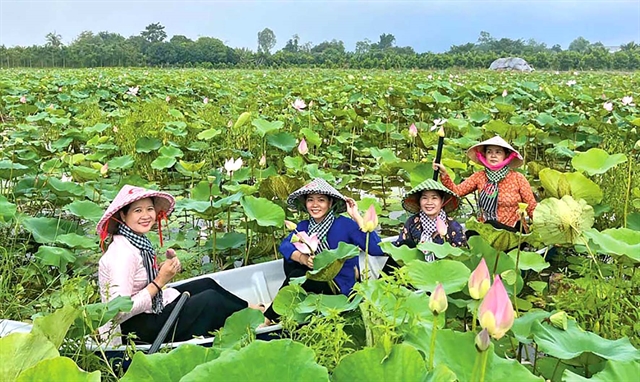 |
| Visitors are increasingly seeking experiences that bring them closer to nature, local life and culture. — Photo bvhttdl.gov.vn |
HCM CITY — From winding canals and lush orchards to traditional villages and wetland ecosystems, Đồng Tháp is drawing increasing numbers of visitors with tourism experiences that bring them closer to nature, local life and the province’s rich cultural heritage.
During the five-day National Day holiday, destinations across the riverine region became bustling as tourists flocked to eco-tourism sites, orchards, rural villages and distinctive cultural spaces.
Rather than simply sightseeing, visitors are increasingly seeking experiences that bring them closer to nature, local life and culture.
Refreshing products, broadening appeal
At many destinations, tourism products are being renewed to offer visitors more immersive experiences, from taking boats through small canals and visiting fruit orchards to sampling local specialities, learning about history and exploring wetland ecosystems.
The diversity of tourism products is creating greater appeal, particularly as the trend of seeking out nature and experiencing local life becomes increasingly pronounced.
During the holiday, Đồng Tháp Province welcomed 169,957 tourist arrivals, up 57 per cent year-on-year, including 13,084 international visitors, up 131 per cent.
Tourism revenue reached VNĐ64.5 billion (US$2.45 million), up 66 per cent, while average accommodation occupancy stood at 65-70 per cent.
In the first eight months of 2026, the province received around 5.5 million visitors, up 11.4 per cent, including 432,000 international arrivals.
Tourism revenue was estimated at VNĐ2.9 trillion, up 4 per cent.
These figures demonstrate the growing appeal of tourism products being developed in increasingly diverse ways.
Behind the rise in visitor numbers are efforts to renew destinations, strengthen promotion and gradually build a network of products based on the region's natural, cultural and community-based advantages.
Võ Phạm Tân, deputy director of the Đồng Tháp Department of Culture, Sports and Tourism, said the tourism sector had implemented a range of tasks and solutions to develop tourism, while advising on the development and implementation of tourism development plans, programmes, projects and schemes, as well as strengthening cooperation with other localities in the region.
The Đồng Tháp Department of Culture, Sports and Tourism, in coordination with the HCM City Department of Tourism and localities in the Mekong Delta, has developed data for a smart 3D/360-degree interactive tourism map in five languages: Vietnamese, English, French, Chinese and Spanish.
The tool allows visitors to learn about and experience destinations virtually before deciding on an actual trip.
The department has also introduced an e-handbook featuring tourism investment promotion projects, creating an additional channel to connect investors and businesses with localities in the region.
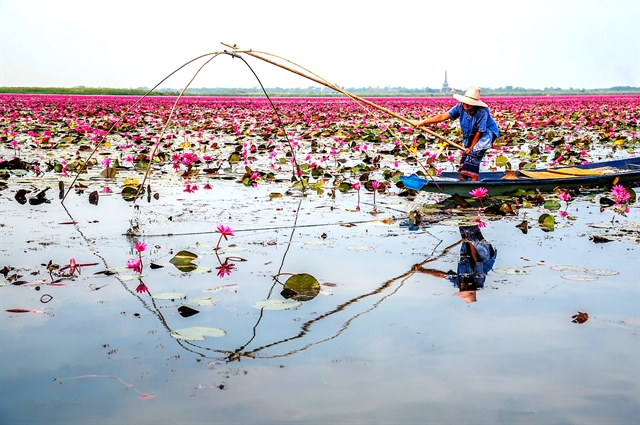 |
| Tràm Chim National Park offers a range of exciting tourism activities. – Photos vietjetair.com |
Meanwhile, the provincial tourism information portal and smart tourism application for mobile devices continue to provide information on destinations, services, itineraries and tourism events across the province.
The combination of product development and digital promotion is broadening the ways in which destinations reach visitors.
Rather than simply waiting for tourists to arrive, destinations can now be introduced through images, data and online experiences, creating more opportunities to turn initial interest into actual travel plans.
Leveraging advantages, moving towards green tourism
Đồng Tháp has three natural ecological zones, comprising freshwater, saline and acid-sulphate wetland ecosystems.
These conditions provide favourable opportunities for the province to develop eco-tourism products tailored to the characteristics of each zone.
As a result, the number of domestic and international visitors to Đồng Tháp has grown by more than 15 per cent annually on average, placing the province among the fastest-growing tourism destinations in the Mekong Delta.
Alongside its natural advantages, international tourists in recent years have increasingly sought rural destinations, nature-based experiences and activities featuring strong local cultural identities.
This presents an opportunity for Đồng Tháp to further develop eco-tourism.
Nguyễn Thanh Phong, Director of Việt Nhật Tourism Co., Ltd. in Mỹ Tho Ward, Đồng Tháp Province, said the number of tourists booking tours to Đồng Tháp had risen sharply in the first months of the year.
Destinations including Tân Thành Beach in Gò Công Đông Commune, Đồng Tâm Snake Farm under the Centre for Cultivation, Research and Processing of Medicinal Materials of Military Region 9's Logistics Department in Kim Sơn Commune, Thới Sơn Islet in Mỹ Tho Ward, Đông Hòa Hiệp Ancient Village in Cái Bè Commune and Tân Phong Islet in Ngũ Hiệp Commune have attracted large numbers of visitors.
At Xẻo Quít Relic Site in Mỹ Hiệp Commune, a range of activities have been organised to enhance the visitor experience, including guided tours, documentary screenings about the site's history, history-themed activities, sampling a wartime dish known as “rice balls wrapped in lotus leaves”, boat trips in traditional three-leaf boats, tandem cycling and visits to a traditional southern Vietnamese house.
During the holiday, Xẻo Quít Relic Site welcomed more than 6,600 domestic and international visitors.
In Cao Lãnh Ward, exhibitions featuring photographs, documents and artefacts have been organised around various themes, including “Activities of Deputy Laureate Nguyễn Sinh Sắc in the former Hòa An Village” and “Đồng Tháp – My Homeland”.
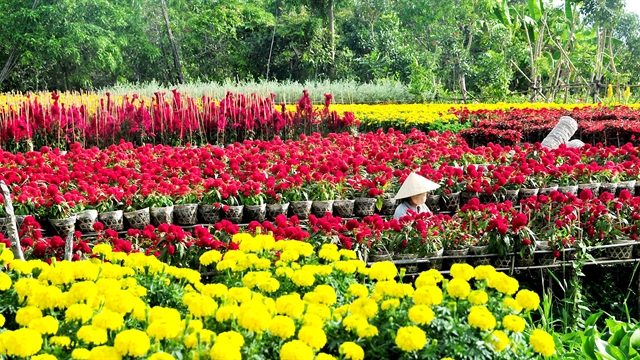 |
| Sa Đéc Flower Village is one of Đồng Tháp’s most popular tourist attractions. |
Other activities include calligraphy exhibitions, antique displays and a model showcasing “Đồng Tháp during the flood season”.
A highlight for visitors is the recreated Hòa An Village at the Nguyễn Sinh Sắc Relic Site. During the holiday, destinations across the ward welcomed around 5,350 visitors.
In Thới Sơn Ward, meanwhile, tourists have been drawn to the orchard landscape, taking boat trips through small canals, visiting fruit gardens and sampling products typical of the riverine region. During the holiday, the locality was estimated to have welcomed around 6,450 international visitors and 16,000 domestic tourists, generating VNĐ10.2 billion in revenue.
Nguyễn Văn Thanh Sơn, owner of Kỳ Lân Honey Tea Stop in Thới Sơn Ward, said visitor numbers had risen sharply during the first months of the year.
The destination welcomed an average of 400-500 visitors a day, who stopped to enjoy tea and purchase honey products and local fruit specialities.
Alongside these destinations, Tràm Chim National Park in Tràm Chim Commune has also attracted large numbers of visitors with nature- and wetland-based experiences.
Visitors can sample rustic southern Vietnamese dishes, explore the landscape, learn about the ecosystem and observe characteristic wildlife and waterbirds.
Võ Phạm Tân, Deputy Director of the Đồng Tháp Department of Culture, Sports and Tourism, said that in the coming period, the provincial tourism sector would continue to focus on tapping the potential of the natural ecosystems in each area, as well as historical traditions, cultural festivals and agricultural and forestry eco-tourism, to create new, distinctive and attractive tourism products.
The province will also focus on developing the “smokeless industry” by calling for investment to tap and develop its marine eco-tourism potential in a sustainable manner, ensuring destinations are “green, clean, safe and environmentally friendly”.
Đồng Tháp currently has more than 150 tourism sites associated with agriculture, community-based tourism, traditional craft villages and eco-tourism, stretching from the Cambodian border area to the Gò Công coastal area.
Of these sites, 32 have been recognised by the provincial People's Committee as tourism sites under the 2017 Law on Tourism, while 14 products have received OCOP certification.
The province currently has 91 travel companies, more than 400 tour guides and 455 accommodation establishments with over 7,900 rooms.
Of these hotels, 59 are rated between one and three stars, while 396 accommodation establishments meet the requirements for tourism business operations.
In 2026, Đồng Tháp aims to welcome 8 million tourist arrivals, including 870,000 international visitors, and generate VNĐ4.8 trillion in tourism revenue. — VNS
Life & Style
 Life & Style
 Life & Style
 Life & Style
 Life & Style
 Life & Style
 Life & Style
 Life & Style
 Life & Style
 Life & Style
 Life & Style
 Life & Style
 Life & Style
 Life & Style
 Life & Style

.jpg)




