 Life & Style
Divo Tùng Dương reunites with hit songwriter for 25th-anniversary concert
1.
|
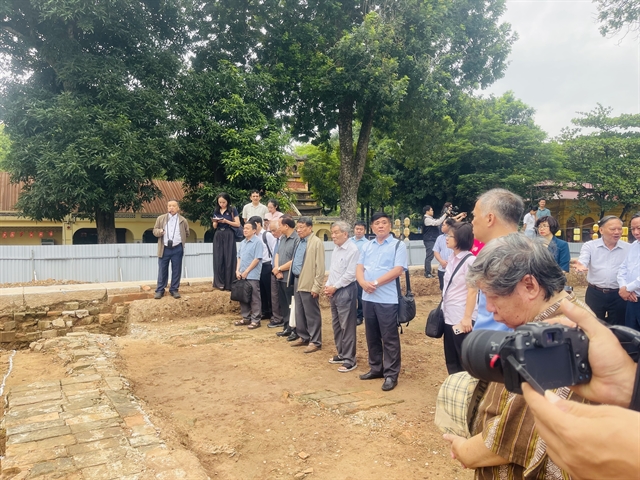
| Scientists and researchers inspect the excavation site at Kính Thiên Palace. — VNA/VNS Photo Tuyết Mai |
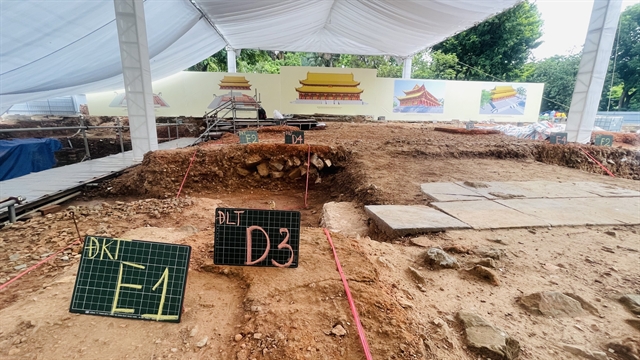
HÀ NỘI — Archaeological excavations at the Kính Thiên Palace site in the Thăng Long Imperial Citadel have uncovered six metres of stratigraphic layers showing evidence of human activity, with the oldest layer dating back to around 1,300 years ago, providing new information about the capital’s long history.
The findings were announced on September 14 at a scientific seminar jointly organised by the Thăng Long-Hà Nội Heritage Conservation Centre and the Institute of Archaeology to report preliminary results of the 2026 excavation at Kính Thiên Palace.
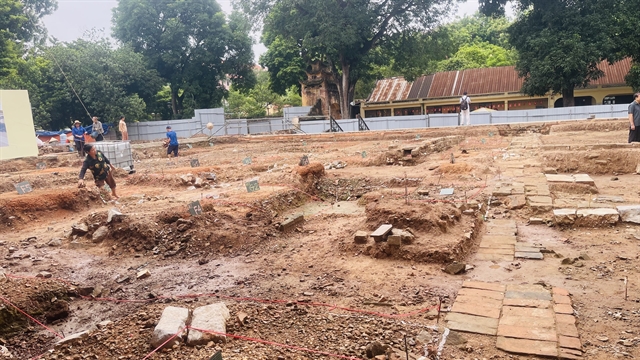
According to Associate Professor Dr Tống Trung Tín, chairman of the Vietnam Archaeological Association and head of the project, the latest excavation was the fourth conducted at the site, which covers 910sq.m in the area of the former artillery building.
Combined with three prior excavations, the work has revealed a six-metre-deep archaeological stratigraphy containing artefacts from the Đại La period (7th–9th centuries), the Đinh–Early Lê Dynasties (10th century), the Lý Dynasty (11th–12th centuries), the Trần Dynasty (13th–14th centuries), the Early Lê Dynasty (15th–16th centuries), the Revival Lê period (17th–18th centuries) and the Nguyễn Dynasty (19th century).
Researchers said this is the deepest and most complete stratigraphic sequence of Thăng Long–Hà Nội’s history discovered to date.
|
| The latest excavation was conducted on an area of 910sq.m.— VNA/VNS Photo Tuyết Mai |
The findings also revealed traces of Long Thiên Palace, a Nguyễn Dynasty structure built under Emperor Gia Long (1762-1820), corresponding with the east-west boundaries of the former French colonial artillery building.
The exposed system of column foundations and drainage channels has provided further clarification of findings from a 2025 excavation, confirming that the palace followed the Nguyễn Dynasty’s distinctive architectural style in which two buildings, the front hall and main hall, were built on the same foundation and connected by an intervening roofed section.
Beneath the remains of Long Thiên Palace are traces of Kính Thiên Palace, dating from the Early Lê and Revival Lê periods. Historical records indicate that the palace building pad was artificially constructed, with the area carefully filled and compacted with clay and construction materials before the positions of the column foundations were laid out.
The unearthed column bases comprise single and double foundations. The single foundations measure between 2.8–3.5m by 2.5–3.5m, while the double foundations measure between 5.4–6.1m by 2.7–3m. The column bases were built on additional foundation structures, forming the largest and most technically sophisticated column foundations yet identified in the history of Vietnamese architecture.
|
| An excavation pit at the site. The work has revealed six metres of archaeological stratigraphy containing layers dating back to around 1,300 years ago, providing new evidence of the capital’s long history. — VNA/VNS Photo Tuyết Mai |
Based on the exposed foundations, researchers have identified the east-west dimensions of Kính Thiên Palace as nine bays with 10 rows of columns, while its north-south layout consisted of five bays with six rows of columns.
Researchers said the newly uncovered archaeological layers also provide further evidence for the theory that earlier royal structures once occupied the site, including Thiên An Palace under the Trần Dynasty and Thiên An and Càn Nguyên palaces under the Lý Dynasty.
According to researchers, this hypothesis is well supported by scientific evidence, as the stratigraphy shows continuous development starting with the earliest layer containing evidence of human activity.
The excavation has yielded a wealth of new information on the scale of Kính Thiên Palace, the construction of its building pad and column foundations, and the building materials used, as well as traces of the Long Thiên Palace pad dating from the Nguyễn Dynasty.
These findings come as part of the excavation effort in response to the recommendations of UNESCO and the International Council on Monuments and Sites, the 2022 Hanoi Statement, the requirements of Việt Nam’s Law on Cultural Heritage and guidance from Vietnamese heritage authorities.
They provide an additional scientific basis for research into the reconstruction of Kính Thiên Palace’s Main Hall and further enhance the property’s Outstanding Universal Value, a UNESCO term indicating that its heritage is important to all of humanity.
Professor Dr Trần Đức Cường, chairman of the Vietnam Association of Historical Sciences, said the 2026 excavation has further demonstrated the exceptional historical depth of the site, with multiple cultural layers dating from the Đại La, Lý, Trần, Early Lê and other periods.
He described the site as an exceptional heritage area of great significance to Vietnamese history, archaeology and culture, and one that is rare among former imperial capitals around the world.
The archaeological discoveries made over the past 15 years are expected to provide an important scientific foundation for the conservation and possible reconstruction of Kính Thiên Palace, helping further promote the outstanding universal value of the Thăng Long Imperial Citadel. — VNS
Life & Style
 Life & Style
 Life & Style
 Life & Style
 Life & Style
 Life & Style
 Life & Style
 Life & Style
 Life & Style
 Life & Style
 Life & Style
 Life & Style
 Life & Style
 Life & Style
 Life & Style