 Life & Style

Vietnamese community in Macao strengthens solidarity, contributes to homeland
1.
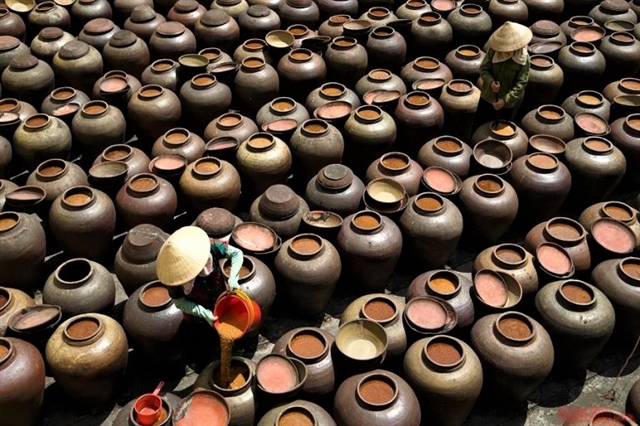 |
| The craft of making fermented soybean paste has been preserved for many years and passed to through generations in Phú Bình Commune, Thái Nguyên Province. — Photos vienkyluc.vn |
Tú Phương
THÁI NGUYÊN — Many recommendations were given to me when I asked about buying a gift from Thái Nguyên Province to bring home for my family and friends.
Ignoring the province's best known tea products, the option that impressed the most was Úc Kỳ fermented soybean paste.
"Believe me, you will never regret trying this sauce. It is unfamiliar to you but here we have eaten this paste for centuries," Dương Văn Duy, a resident said, inviting me to visit Nam 1 Village in Phú Bình Commune.
He said Úc Kỳ was previously the name of a commune which includes many villages that made soybean paste. That's why the soybean paste was named after the commune. Now Úc Kỳ forms part of Phú Bình after the recent national merger.
Producing the sauce is a long process that requires not only good ingredients but also experience and skills of farmers.
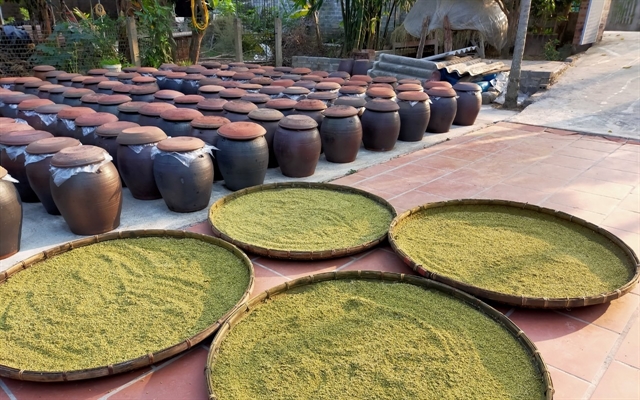 |
| Mixtures of glutinous rice, soybeans and white salt must be sun-dried to ensure good taste and flavour. |
"No one, not even the elders in the village, knows exactly when the craft of making fermented soybean paste began in this area," said Duy.
"What is known is that for a long time, every household has kept a jar of this paste for daily consumption and as a gift for visitors.
"Passed down through generations over hundreds of years, Úc Kỳ soybean paste has earned a place in our culinary traditions, boasting a distinctive flavour that captivates anyone who tastes it. Making soybean paste has become our specialised craft with over 200 households engaged in production and trade."
He said that making the sauces requires neither elaborate ingredients nor complex preparation methods. It is crafted from three staples that are deeply familiar to farmers – Thầu Dầu glutinous rice, soybeans and white salt.
"Still, producing a delicious batch of this paste is no simple task," Duy said.
"Behind its deep golden hue, delicate sweetness, and mild aroma lies a lengthy process that relies on the weather, as well as the maker's skill and years of accumulated experience.
"Certain stages cannot be precisely timed by the clock; instead, success depends on observing the colour of the yeast, smelling the aroma, feeling the texture of the glutinous rice grains and monitoring the paste’s daily transformation."
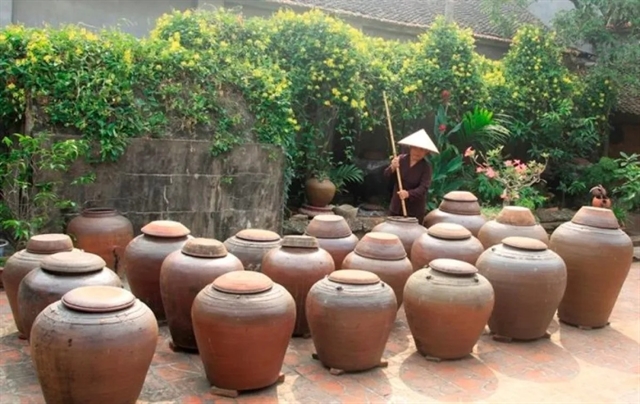 |
| Soybean paste makers have to take care their products everyday, stirring the mixture and checking its colour and smell. |
The carefully selected Thầu Dầu glutinous rice, which has stickiness and a distinctive aroma, must be washed and soaked before it is steamed.
Once cooked, the rice is spread out onto clean bamboo trays and placed in a suitable location to begin the process. This stage requires the most experience as the makers have to frequently check temperature, humidity, sunlight, and airflow that strongly influenced fungus. After a few days, a pale yellow layer begins to appear on the surface of the rice grains.
The beans are also carefully selected, washed and roasted to bring out their aroma. They are crushed and then soaked in saltwater for about two weeks until it reaches the proper state. Only then is it combined with the glutinous rice.
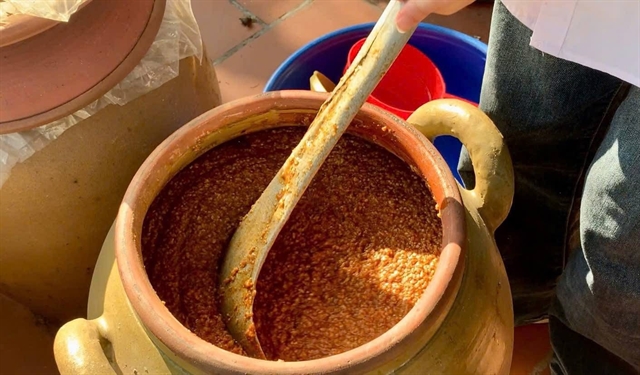 |
| Good-quality soybean paste typically has a golden colour, mild aroma and a delicate sweetness. |
The mixture is put in an earthenware jar and set in a sunny spot. Heat from natural sunlight helps the fermentation process.
The makers must take care of their mixture regularly, stirring with a large bamboo pole to help all ingredients blend evenly.
After each stirring, the jar is sealed tightly. Throughout the fermentation period, which can last more than two months, the ingredients continued to transform and meld, developing their distinctive colour, aroma and flavour.
The paste is produced all year round. However, the most suitable time is from March to October.
Duy said: "Our elders always tell us that the finest Úc Kỳ fermented soybean paste must be stored in earthenware jars left out in the open.
"These jars maintain a stable temperature: warmed by the sun during the day and cooled by the night air. This represents a harmony of 'yin and yang', absorbing the vital energy of both heaven and earth."
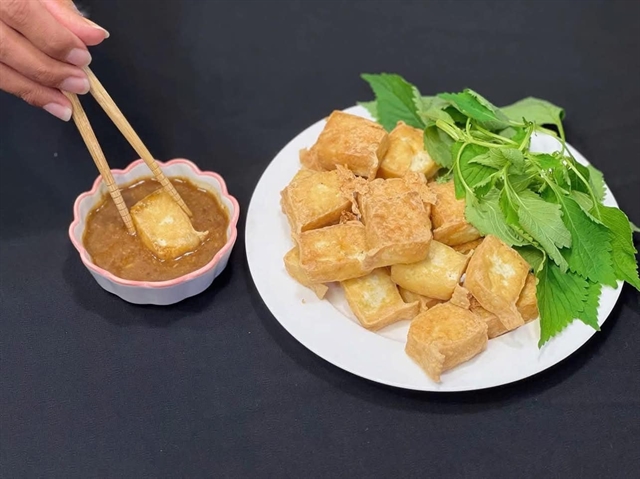 |
| Fermented soybean paste can be used as a dipping sauce or as an ingredient for marinades and braises. |
"Over time, the paste transforms into a lustrous golden hue, boasting a rich, viscous consistency akin to wild forest honey. Upon tasting, the saltiness and savoury richness of the soybeans blend seamlessly with the deep sweetness of fermented Thầu Dầu sticky rice, creating a robust flavour that requires no additional seasoning. Their advice has remained our secret, one that will be passed down forever."
The paste was perfect as a dipping sauce for steamed vegetables and boiled pork and beef, fried tofu and to add a savoury, earthy, and salty depth to stews, soups and marinades.
I was still full of questions, but Duy eased my mind.
He said: "Our paste is a three-star OCOP product and one of the 27 outstanding agricultural products of Thái Nguyên. Don't worry! Our farmers sell them nationwide, and you can find customer feedback on all major social networks and e-commerce platforms. Try once and you will never regret!"
I tried and discovered that he was absolutely speaking the truth. — VNS
Life & Style
 Life & Style
 Life & Style
 Life & Style
 Life & Style
.jpg) Life & Style
Life & Style
 Life & Style
 Life & Style
 Life & Style
 Life & Style
 Life & Style
 Life & Style
 Life & Style
 Life & Style
 Life & Style