 Life & Style
ASEAN Digital Economy Framework Agreement to enable trusted, interoperable data flows
1.
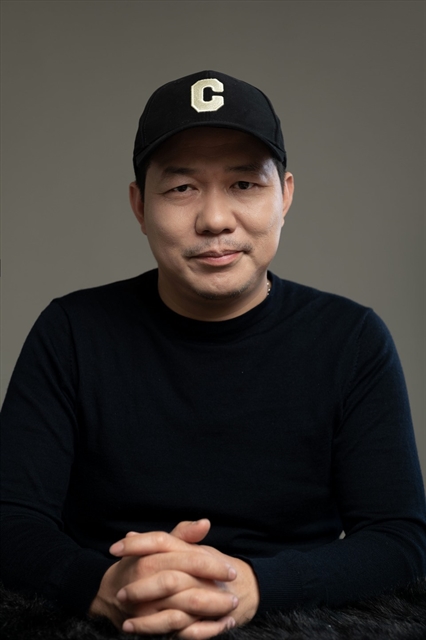 |
| Director Lương Đình Dũng. Photo laodong.vn |
The surge in AI-generated short films is rapidly changing filmmaking for directors such as Lương Đình Dũng, who recently spoke to the media about the new technology. He said that from creating settings and characters to editing and post-production, there are new ways to use AI in Vietnamese cinema while cutting costs and retaining the human touch.
What is your view on the rapid rise of AI-generated short films, and how could AI change the way films are made?
I think this is a positive development. For Vietnamese cinema, AI could even help us move forward by 15 to 20 years while saving a great deal of time and money.
If AI-generated films are used responsibly and in line with the technology’s capabilities, they can be truly remarkable.
If we consider AI a form of visual effects, then it is simply a more advanced form of visual effects. In the past, creating a bee on screen could require a great deal of time and money, and the result was sometimes less realistic than an AI-generated bee. So clearly, this is a positive development.
At the moment, there are too many AI short films, and the field is somewhat chaotic. But that is also an inevitable part of the process. Those who can withstand the pressure and stay the course will survive.
I think that within the next year or two, professional studios with specialised teams will emerge. Industry professionals will branch out to establish their own studios, creating works that combine traditional filmmaking with AI, as well as films made entirely with AI. If the work is good, it can still win over audiences.
AI is cutting production costs and turning once unrealistic filmmaking ideas into viable projects. But what parts of filmmaking still need the human touch and are hard for AI to replace?
A lathe cannot make a screw by itself. It still requires human involvement. Human emotions are incredibly nuanced. How could AI ever experience a beautiful scene in the same way a human does? Only human emotion can truly convey feeling and touch people’s hearts.
AI is still an incredible tool. I have a script with underwater scenes that, until recently, I might have thought would take another 20 years before I could even consider making it. Now, I think I could start working on it within just a few years.
AI can now create individual scenes based on what you describe. But there is still an element of chance. A skilled filmmaker, however, knows when a scene works, when it serves the story and when it is simply a mistake.
At its core, filmmaking remains a craft – shooting, cutting and editing. These are fundamental to creating a film. Technology can generate many things, but deciding what to include in the final work still requires the filmmaker’s creative thinking.
Some AI short films rely on similar themes, imagery and storytelling styles to attract viewers online. Do you think this could make filmmaking more predictable?
By nature, filmmaking has always followed certain formulas. It evolves with technological trends and with the development of entertainment media at different stages.
AI-generated imagery is still rooted in filmmaking, photography and other visual media. So I don’t think AI can completely change the language of cinema. But it can create visual and storytelling patterns very quickly, which fit the nature of today’s short films and the way they are made to engage audiences.
It is also creating a trend in which AI films are appearing everywhere. At the same time, AI short films are opening up opportunities for people who want to tell stories and make films. They create a certain level of equality – anyone can make a film.
Many people are turning to AI filmmaking for its commercial potential, branding opportunities and appeal as a cutting-edge trend.
As a result, when we open our phones, we see AI films everywhere. They are so pervasive that they can give the impression that this is a huge trend.
How can young filmmakers make good use of AI while preserving their creative voice and artistic values?
First, filmmakers need to understand the technology as thoroughly as possible so they can control AI and get it to depict what they actually want to create.
At the same time, they need a strong understanding of visual language, which is deeply rooted in literature. When they have a solid grasp of both, the two can naturally come together to create a work of art.
AI can create images faster, but filmmakers still have to decide what story they want to tell, how to tell it and what to keep.
I think that is also what lies at the heart of filmmaking. It is not simply about creating beautiful images, but about selecting and refining them to create a work. — VNS
Life & Style
 Life & Style
 Life & Style
 Life & Style
 Life & Style
 Life & Style
 Life & Style
 Life & Style
 Life & Style
 Life & Style
 Life & Style
 Life & Style
 Life & Style
 Life & Style
 Life & Style