 Life & Style
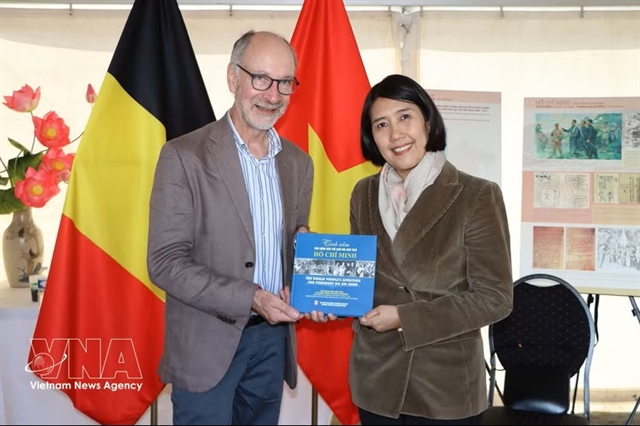
Việt Nam, EU and Belgium seek deeper, practical cooperation
1.
|
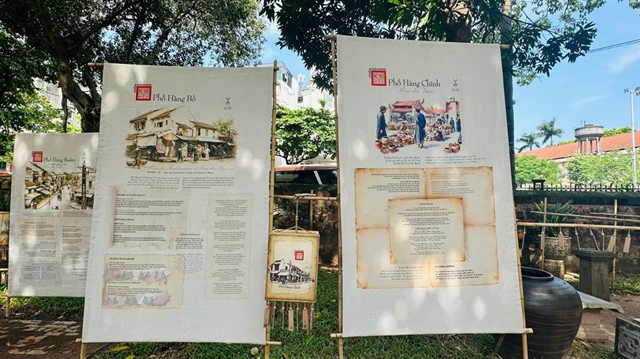
| Images of old Hà Nội streets with information on display at the Nét Kinh Kỳ (Essence of the Imperial Capital) from September 12-19 at the Temple of Literature. — Photos baovanhoa.vn |
HÀ NỘI — Hà Nội's past and present have been recreated in a programme entitled Nét Kinh Kỳ (Essence of the Imperial Capital) at the Temple of Literature special national relic site as part of the second Thăng Long-Hà Nội Festival 2026.
Inspired by the streetscapes and their architecture, traditional craft streets and daily life of ancient Thăng Long, the programme presents images and historical artefacts of Hà Nội’s historic '36 Streets' while offering hands-on workshops with traditional craftspeople. It unfolds the story of a Hà Nội rich in history and culture, yet dynamic and constantly evolving amid modern life.
Hà Nội's Old Quarter has been a source of inspiration for many artists in painting, photography, sculpture and various other forms of artistic expression. Its moss-covered tiled roofs, windows, street corners and shop signs, along with the bustling rhythm of commerce and the unique atmosphere of the traditional trade streets, have been deeply embedded in the memories of generations of Hanoians.
At the exhibition, images of the 36 streets are displayed along with related documents, offering a glimpse of the ancient capital's historic landscape. In addition, information on the history of the streets, the origins of their names and the traditional crafts once associated with each street is also available.
|
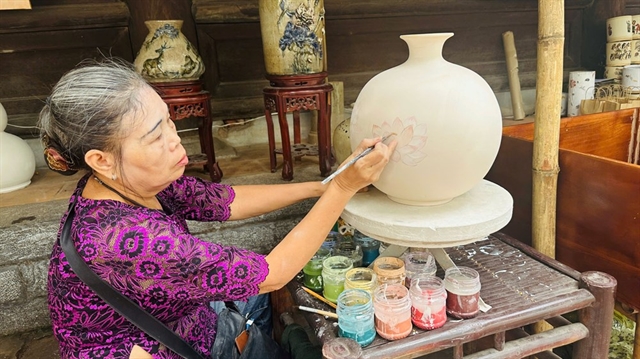
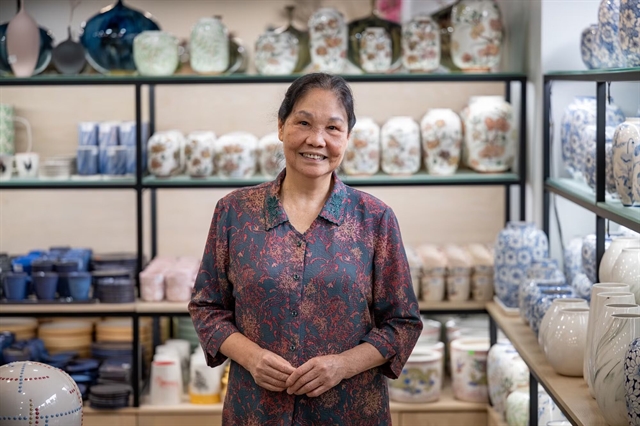
| An artisan from Bát Tràng Village demonstrates part of the ceramic making process. |
A highlight of the programme is the opportunity for visitors to experience traditional crafts, who will be guided by artisans from renowned villages such as Bát Tràng ceramics, Bồ Bát pottery, Kim Sơn lace embroidery and seagrass weaving, and Phong Khê traditional dó (poonah) paper.
In addition to artisans from Hà Nội, the programme also features those from the nation's former imperial capitals such as Hoa Lư (Ninh Bình Province) and Phú Xuân (Huế City), creating a rich and diverse cultural space where knowledge of traditional crafts is shared and updated.
By observing the artisans at work, visitors can gain a better understanding of the materials, techniques and skills and directly learn from the artisans. Directly observing and interacting with the products and craftspeople allows them to better appreciate the value of creative work and the vitality of traditional crafts in contemporary life.
The programme is expected to forge a connection between memories of the craft streets of ancient Thăng Long and the traditional crafts preserved and developed in today's villages.
|
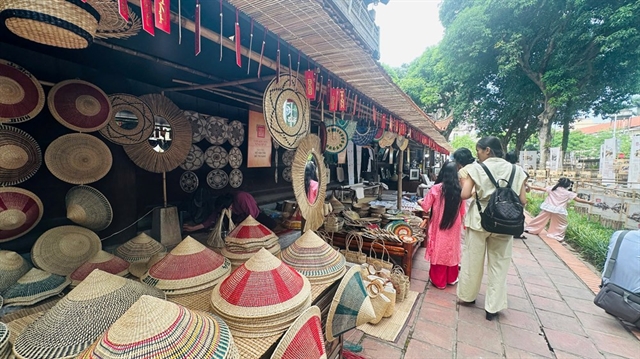
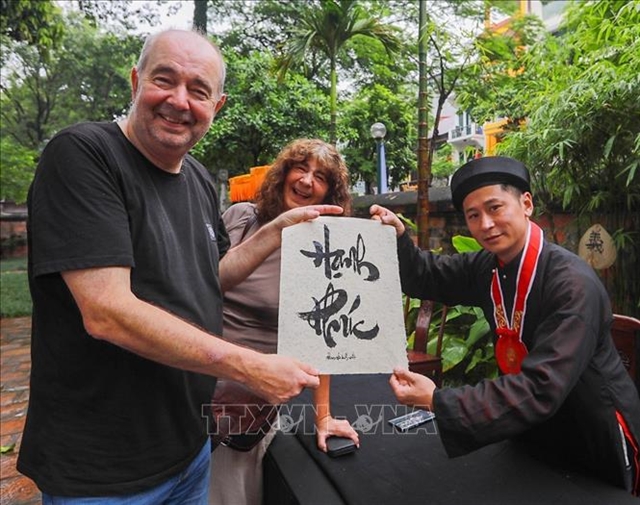
| Visitors have opportunities to see many traditional crafts of Hà Nội through the eight-day event. |
Lê Xuân Kiêu, director of the Văn Miếu - Quốc Tử Giám Centre for Cultural and Scientific Activities, said visitors can explore the city's heritage step by step, beginning with visual displays, learning through the information provided and finally taking part in hands-on workshops.
The combination of displays of images and documents with interactive workshops was expected to offer visitors, especially young people, an engaging way to experience Hà Nội's cultural heritage, bringing everyday stories of the past into the present, helping heritage stays vibrant and relevant while inspiring the community.
The programme runs until September 19 at No 58 Quốc Tử Giám Street. — VNS
Life & Style
 Life & Style
 Life & Style
 Life & Style
 Life & Style
 Life & Style
 Life & Style
 Life & Style
 Life & Style
 Life & Style
 Life & Style
 Life & Style
 Life & Style
 Life & Style
 Life & Style