 Life & Style

Swiss President’s visit to Việt Nam to translate cooperation potential into tangible results
1.
Dr Yaron Atzmon*
Most of us rarely think about our liver. While we quickly notice when our heart races or our stomach hurts, the liver quietly goes about its work without demanding much attention.
In fact, it is one of the hardest-working organs in the body. It performs hundreds of vital functions, from removing harmful substances from the blood and helping the body digest food to storing nutrients, producing proteins and supporting the immune system. It works around the clock to keep the body functioning normally.
The problem is that the liver is remarkably quiet. Unlike many other organs, it often does not cause pain or obvious warning signs when something is wrong. That is why viral hepatitis can remain in the body for years without a person knowing it. Many people living with hepatitis B or hepatitis C feel completely well, while the virus continues to damage their liver.
|
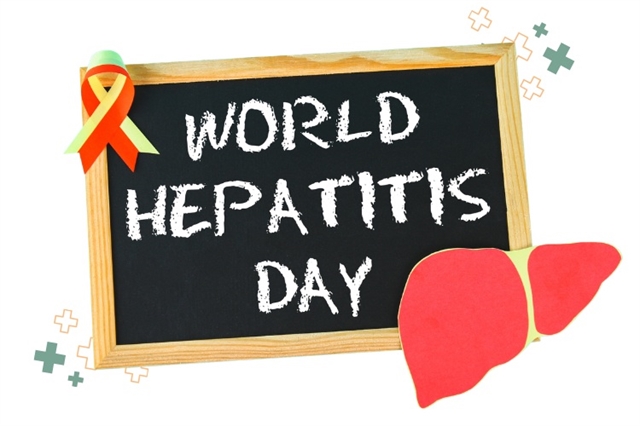
| World Hepatitis Day is celebrated on July 28. — Photo courtesy of Family Medical Practice |
Every year on July 28, World Hepatitis Day reminds us of an important fact: feeling healthy does not always mean your liver is healthy. By the time symptoms develop, liver disease may already be at an advanced stage.
How can hepatitis go unnoticed for so long?
It may seem surprising, but the liver has an extraordinary ability to continue working despite damage. Even when part of the liver has been affected, the remaining healthy tissue may continue performing enough of its essential functions to keep the body functioning normally.
This remarkable ability is one of the reasons liver disease often develops quietly, without causing obvious symptoms in its early stages.
However, not all types of viral hepatitis behave in the same way. There are five main hepatitis viruses: A, B, C, D and E.
Hepatitis A and hepatitis E usually cause short-term infections, and most patients recover completely. Hepatitis B and hepatitis C, however, can become chronic. Hepatitis D affects only people who already have hepatitis B and can cause more severe liver disease
In some patients, the immune system is unable to clear the hepatitis B or hepatitis C virus, allowing the infection and inflammation to continue for many years.
As the liver repeatedly tries to repair this damage, healthy liver tissue may gradually be replaced by scar tissue, a process known as fibrosis. Because this happens slowly, most people continue to feel completely well and have no idea that their liver is being damaged.
The slow progression of chronic hepatitis is a double-edged sword. Although many people remain unaware of the infection for years, its slow progression may provide an opportunity to detect the disease and begin treatment before serious complications develop.
If left untreated, fibrosis may eventually progress to cirrhosis, liver failure or liver cancer.
How do people usually find out they have hepatitis?
For many people, a diagnosis of hepatitis comes as a complete surprise. They feel well, have no symptoms, and discover the infection only after having a blood test for an entirely different reason.
Hepatitis may be detected during routine health checks, investigations for mildly abnormal liver enzyme levels, blood donation, pregnancy screening, pre-operative assessments, or pre-employment medical examinations. Sometimes, one person’s diagnosis prompts other family members to get tested.

|
| Many people only discover they have hepatitis after a routine blood test performed for another reason. — Photo courtesy of Family Medical Practice |
This is why hepatitis is often described as a “silent” disease. People do not ignore the symptoms; they simply do not have any.
Without a blood test, many people may not know they are infected until liver damage has already developed.
Can hepatitis be prevented?
The good news is that many forms of hepatitis can now be prevented or treated effectively.
Hepatitis B can be spread through infected blood and body fluids, including during childbirth and through sexual contact. Hepatitis C is transmitted mainly through contact with infected blood.
Avoiding the sharing of needles and personal items that may be contaminated with blood, practising safer sex, and ensuring that medical, dental, tattoo and piercing procedures are performed with sterile equipment can all help reduce the risk of infection.
Vaccination is one of the most effective ways to prevent hepatitis. Safe and effective vaccines are available for both hepatitis A and hepatitis B. In particular, hepatitis B vaccination not only prevents infection but also helps reduce the risk of cirrhosis and liver cancer later in life. Although hepatitis B cannot usually be completely cured, antiviral treatment can control the virus and greatly reduce the risk of liver damage and other complications.

|
| Vaccination against hepatitis A and hepatitis B is one of the most effective ways to prevent infection. — Photo courtesy of Family Medical Practice |
There is currently no vaccine against hepatitis C. However, modern antiviral medicines can cure more than 95 per cent of hepatitis C infections, usually with a short course of oral treatment.
Protecting your liver starts with knowing your health status
World Hepatitis Day is not only about raising awareness. It also reminds us that serious liver disease can develop silently, long before symptoms appear.
If you have never been tested for hepatitis, are unsure whether you have been fully vaccinated against hepatitis B, or think you may have been exposed to the virus, speak with your doctor.
A simple blood test or a conversation about vaccination could be the first step towards protecting your liver and your health for years to come. — Family Medical Practice

|
| Dr Yaron Atzmon. — Photo courtesy of Family Medical Practice |
*Dr Yaron Atzmon, clinic director of Family Medical Practice Hanoi, is an internal medicine physician with more than 25 years of experience in managing adult infectious diseases and chronic conditions, including hypertension, diabetes, ischaemic heart disease, gout and lipid disorders.
FMP Healthcare Group operates medical centres in major cities including HCM City, Hà Nội and Đà Nẵng, offering consultations with international doctors, check-up centres and emergency ambulance services.
Visit FMP Hà Nội 24/7 at 298I Kim Mã Street, Ngọc Hà Ward, Hà Nội.
To book an appointment, please call us at (024).3843.0784, or contact us via WhatsApp, Viber or Zalo on +84.944.43.1919 or email hanoi@vietnammedicalpractice.com.
Life & Style
 Life & Style
 Life & Style
 Life & Style
 Life & Style
 Life & Style
 Life & Style
 Life & Style
 Life & Style
 Life & Style
 Life & Style
 Life & Style
 Life & Style
.jfif) Life & Style
Life & Style
 Life & Style