 Life & Style
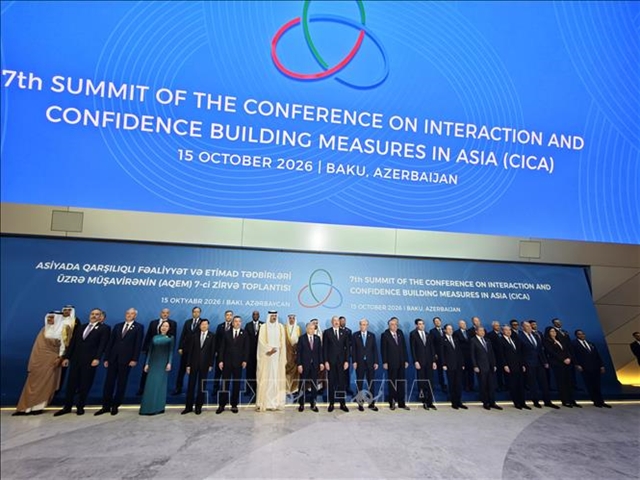
CICA summit opens with focus on trust, cooperation
1.
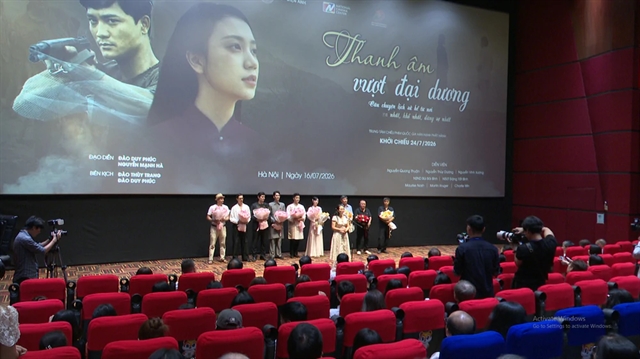 |
| State-commissioned film "Echoes Across the Ocean" was launched at the National Cinema Centre in Hà Nội. — Photo thethaovanhoa.vn |
HÀ NỘI — State-commissioned films are set to reach wider audiences through commercial screenings at cinema chains nationwide under a new policy that marks a major turning point for Việt Nam's film industry.
The move marks a major turning point for the country's film industry. Previously, state-funded films were screened free of charge only during national holidays at state-run cinemas or through mobile screening programmes in remote and mountainous areas.
Historical films attracted little audience interest for many years, according to Đặng Trần Cường, head of the culture ministry's Cinema Department.
"The recent success of films such as Đào, Phở and Piano, Địa Đạo - Mặt Trời Trong Bóng Tối (Tunnel: Sun In The Dark) and Mưa Đỏ (Red Rain) shows that audiences are beginning to embrace historical-themed movies," Cường said.
According to Cường, Government Decree 189 issued on May 28, creates three major opportunities for state-commissioned films.
"First, it will enable films produced with State funding to reach as many people as possible," Cường said at the launch of Thanh Âm Vượt Đại Dương (Echoes Across the Ocean) on July 16 at the National Cinema Centre.
"Second, it will establish a transparent mechanism to recover part of the production costs, allowing those funds to be reinvested in future projects.
"Third, it will provide a more accurate measure of the capabilities of production companies. The best way to assess whether a state-funded film has been produced effectively and can attract audiences is through the commercial market.
"However, the foremost priority of state-commissioned films remains fulfilling their public service and political mission while reaching the broadest possible audience."
Echoes Across the Ocean is produced by Feature Film Studio 1 under a state commission. The 116-minute feature carries a PG-13 rating and recreates the resilience of Vietnamese revolutionaries detained at Côn Đảo Prison between 1945 and 1954.
The film began screening in the commercial cinema network nationwide on July 24. It is the first motion picture released following the implementation of Government Decree 189, which officially came into force on July 15, 2026.
Film director Đào Duy Phúc said he hoped audiences nationwide would embrace the film's message.
"This marks the beginning of more state-commissioned films reaching wider audiences, so that their public mission, as well as the passion and dedication of the artists behind them, can be shared with people across the country," Phúc said.
A new commercial pathway
Even before Decree 189 was introduced, a pilot scheme, launched in early 2024, allowed ticket sales for several state-commissioned films, including Đào, Phở and Piano and Hồng Hà Nữ Sĩ (Hồng Hà: Lady of Letters). The trial, however, highlighted significant legal and regulatory gaps in commercially distributing state-funded productions.
 |
| A still from the state-commissioned 'Hồng Hà Nữ Sĩ' (Hồng Hà: Lady of Letters). — Photo courtesy of the producer |
The enactment of Decree 189 is regarded as a significant policy milestone, strengthening the legal framework for the commercial distribution of state-commissioned films while providing fresh incentives for filmmakers and raising the profile of the sector.
One of the decree's two core provisions requires that at least 30 per cent of box-office revenue be returned to the state budget. The other encourages organisations and individuals to take part in distributing and showing state-owned films.
The impact of Decree 189 will be substantial, filmmakers believe.
"The decree is a strong incentive for filmmakers to give their best and remain committed to producing state-commissioned films of increasingly high quality," Phúc said.
The overarching goal of Decree 189 is to broaden access to state-commissioned films through commercial cinema networks nationwide, allowing stories of Việt Nam's history and revolution to reach wider audiences, promote their humanistic values and give more people the opportunity to connect with the country's past through the big screen. — VNS
Life & Style
 Life & Style
 Life & Style
 Life & Style
 Life & Style
 Life & Style
 Life & Style
 Life & Style
 Life & Style
 Life & Style
 Life & Style
 Life & Style
 Life & Style
 Life & Style
.jfif) Life & Style
Life & Style