 Life & Style
Vietnamese PM pays courtesy visits to Cambodian King, Queen Mother
1.
|
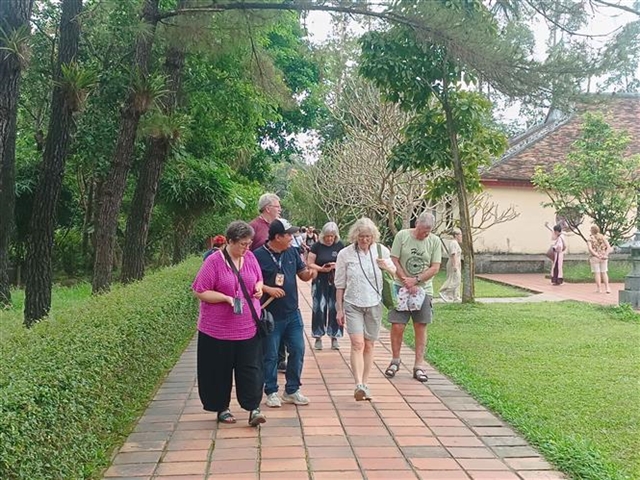
| Visitors explore one of Huế's ancient pagodas, where spiritual tourism and tranquil surroundings have become an important part of the city's growing wellness tourism appeal. — VNA/VNS Photos |
HUẾ — When South Korean visitor Kim Eun-jung arrived in Huế, she had little interest in rushing between the city's famous monuments.
Instead, she spent an afternoon at Maia Imperial Spa, lying quietly as the gentle resonance of singing bowls filled the room. Guided breathing exercises and herbal therapies rooted in Huế's traditional healing practices gradually replaced the pressures of daily life with a sense of calm.
"It feels as though I've left all my stress behind," she said after the session.
Her experience reflects a growing trend reshaping tourism in the former imperial capital. While Huế has long been known for its royal heritage, cuisine and tranquil landscapes, an increasing number of travellers are now coming in search of something less tangible – physical well-being, emotional balance and a slower pace of life.
Wellness tourism has become one of the fastest-growing segments of the global travel industry, and Huế is steadily building an ecosystem that combines healthcare, traditional medicine, cultural heritage and nature into distinctive visitor experiences.
When healing becomes the destination
Recognising changing travel preferences, tourism businesses across the city are expanding beyond conventional sightseeing packages.
Hotels, resorts and travel companies are introducing programmes that blend relaxation with local culture, allowing visitors to experience Huế through meditation, herbal therapies, yoga, vegetarian cuisine and mindfulness.
At Maia Imperial Spa, new wellness programmes combine traditional herbal remedies with guided breathing exercises and guided sound healing sessions.
Using the vibrations of singing bowls, the treatments encourage deep relaxation and help restore inner balance. Unlike conventional massage, they aim not only to ease physical tension, but also to calm the mind and promote overall well-being.
According to the spa, demand has risen steadily among both domestic and international guests, particularly visitors from South Korea, Japan and Europe, where wellness travel has become an established lifestyle.
Tour operators are seeing similar changes.
Huế-based MTRAVEL has developed dedicated Healing Tours after observing that visitors increasingly want meaningful experiences rather than simply ticking off famous attractions.
Many South Korean travellers choose programmes featuring meditation in ancient pagodas, yoga in natural surroundings, traditional herbal treatments, tea appreciation and vegetarian cuisine inspired by Huế's rich Buddhist heritage.
Faced with rising workplace stress, many are willing to spend significantly more on wellness holidays, viewing them as an investment in long-term health and quality of life.
Behind these evolving tourism products lies a broader transformation. Across Huế, scientific advances, innovation and digital technology are increasingly being applied to create higher-value tourism services.
Rather than replacing the city's cultural heritage, new technologies are helping connect traditional medicine, indigenous herbal resources and personalised wellness services, enabling tourism businesses to better understand visitors' needs while preserving the authenticity that defines Huế.
Huế's wellness ecosystem now extends well beyond private tourism enterprises. Traditional medicine inspired by the Nguyễn Dynasty's Imperial Medical Institute, specialised healthcare services, spa and detox programmes and mineral hot spring resorts are together creating a more diverse range of experiences for both domestic and international visitors.
By integrating modern healthcare with cultural heritage and local knowledge, Huế is gradually transforming wellness tourism into one of its most promising new growth sectors.
Where tradition meets innovation
|
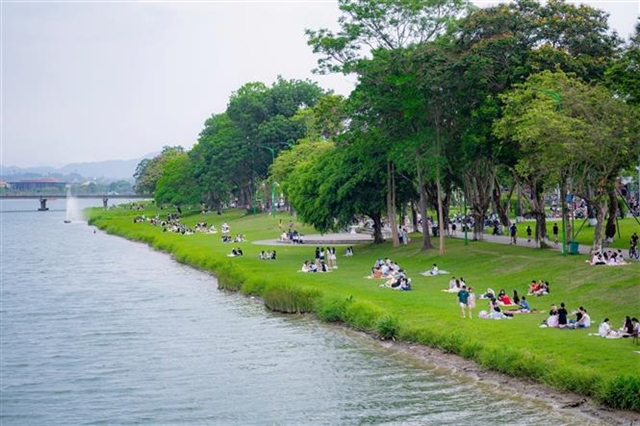
| Huế's rich heritage, tranquil landscapes and slower pace of life are helping position the former imperial capital as an emerging wellness destination in Asia. |
While many wellness destinations rely primarily on luxury resorts, Huế offers a combination of strengths that few places in the region can match.
Professor Dr Nguyễn Vũ Quốc Huy, acting director of Huế University and rector of the University's School of Medicine and Pharmacy, believes the city's greatest advantage lies in its unique combination of advanced healthcare, traditional medicine, education and cultural heritage.
Alongside leading hospitals and medical specialists, Huế preserves the legacy of the Nguyễn Dynasty's Imperial Medical Institute, rich herbal resources and a long tradition of medical research and training.
Complementing these are the city's tranquil natural landscapes, centuries-old pagodas, meditation culture, refined cuisine and unhurried rhythm of life – qualities that naturally support physical and mental well-being.
According to multiple tourism businesses, this cultural depth sets Huế apart from many destinations where wellness tourism revolves mainly around modern spas and luxury accommodation.
In Huế, visitors can enjoy meditation in ancient temples, therapies based on traditional herbal medicine, tea ceremonies, vegetarian cuisine and heritage experiences as part of a holistic journey towards better health.
Experts believe the next challenge lies in transforming these individual strengths into a fully connected ecosystem.
Rather than developing tourism, healthcare and research separately, closer collaboration among hospitals, universities, travel companies, resorts and technology providers will be essential to creating integrated wellness services with higher added value.
Science, technological innovation and digital transformation are expected to play a central role in that process. From digital healthcare and biotechnology to smart tourism platforms and personalised wellness programmes, new technologies are helping Huế develop distinctive wellness products while improving service quality and visitor experiences.
Professor Huy suggested developing integrated packages that combine health screening, rehabilitation, traditional medicine, mineral hot springs and wellness retreats, while strengthening the international brand of the city as a healthcare destination to attract visitors from overseas.
Such an approach would not only expand tourism, but also create new opportunities for scientific research, healthcare services, pharmaceutical development, education and the wider cultural economy, he said.
As global demand for wellness travel continues to grow, Huế is well placed to build on its unique combination of healthcare, heritage and nature. Supported by innovation while remaining firmly rooted in its cultural identity, the city is steadily redefining what a heritage destination can offer.
For generations, travellers have come to Huế to discover its imperial past. In the years ahead, they may come not only for its imperial heritage, but also for the opportunity to slow down, restore body and mind, and experience a city where tradition and innovation work hand in hand to shape a healthier future. — VNS
Life & Style
 Life & Style
 Life & Style
 Life & Style
 Life & Style
 Life & Style
 Life & Style
 Life & Style
 Life & Style
 Life & Style
 Life & Style
.jpg) Life & Style
Life & Style
 Life & Style
 Life & Style
 Life & Style