 Life & Style

Vietnamese PM pays courtesy visits to Cambodian King, Queen Mother
1.
|
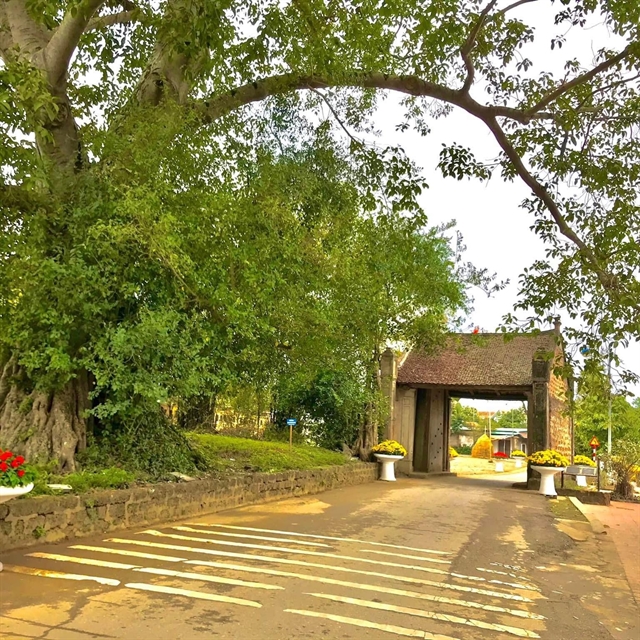
| Hà Nội plans to promote Sơn Tây Ward's tourism and make its Đường Lâm Village one of Best Tourism Village by UN Tourism before 2030. — Photos courtesy of Du Lịch Làng Cổ Đường Lâm |
HÀ NỘI — Hà Nội authorities have launched a plan to develop the ancient village of Đường Lâm in Sơn Tây Ward into one of the world's leading tourism villages, working with experts to enhance the area's potential.
At the same time, the ward's distinctive products, heritage sites and landmarks will be promoted to support local tourism development.
Nguyễn Trần Quang, deputy director of the city's Department of Tourism, told Việt Nam News at a recent promotion conference that Sơn Tây was blessed with favourable conditions for tourism development.
The area preserves the typical cultural values of the Đoài region, a land steeped in history and rich in tradition, with a unique collection of historical sites, ancient villages, festivals, spiritual practices and traditional crafts, alongside an ecological landscape rarely found elsewhere.
These values represent not only a precious cultural asset for Hà Nội but also an important resource for the sustainable development of the tourism economy.
Quang said Sơn Tây should not be viewed as an isolated destination, but integrated into the broader development of western Hà Nội.
By linking the area with cultural, ecotourism and resort sites, as well as craft village experiences, Sơn Tây could offer more diverse and compelling itineraries, contributing to the expansion of Hà Nội's tourism landscape.
Potential and challenges
Revealing the local development plan, Tây Sơn People's Committee Vice Chairman Hà Ngọc Quân said the area was home to a rich system of historical sites and intangible cultural values. Developing tourism alongside economic growth was a consistent strategic priority.
The local authority has mapped out plans to develop tourism infrastructure in conjunction with scenic attractions and transport networks.
Key initiatives include the full restoration of the Sơn Tây Ancient Citadel and the development of tourism at renowned Và Temple. These projects aim to leverage heritage values and create a driving force for local socio-economic development.
|
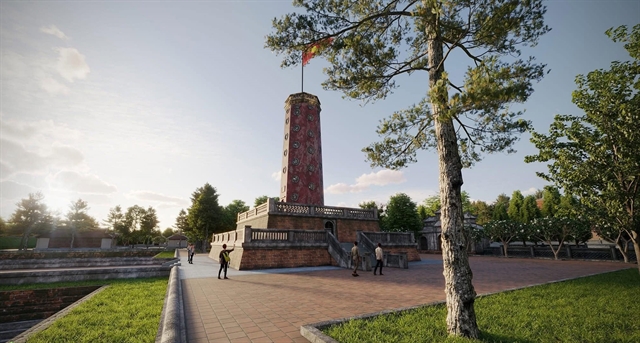
| Sơn Tây Ancient Citadel is one of four primary strategic fortresses built to protect the western approaches to the imperial capital of Thăng Long. — Photo courtesy of Sơn Tây Pedestrian Street |
The area also plans to diversify cultural activities and create distinctive tourism products, as local tourism has not yet reached its full potential.
In addition to traditional offerings such as the Ancient Citadel Mid-Autumn Festival, Sơn Tây plans to develop cultural tourism products including the Đả Ngư (Fishing) Festival at Và Temple, which is suitable for spiritual tourism.
Historical sites and festivals associated with King Ngô Quyền, Saint Tản Viên and other historical figures could further strengthen Sơn Tây's potential for spiritual and historical tourism.
Local specialities such as Phú Nhi rice cake, Đường Lâm roasted pork and peanut candy could also attract visitors through culinary tourism.
However, Quân acknowledged major challenges, including transport infrastructure, poor connectivity between tourism routes and attractions, and limited accommodation facilities.
Experts and representatives of tourism agencies offered proposals to help Sơn Tây overcome these difficulties.
Trần Thị Lan from the Việt Nam National Institute of Culture, Arts, Sports and Tourism suggested developing a 'Sơn Tây Heritage City' model built on heritage, driven by services, centred on the community and powered by digital transformation.
She proposed 10 groups of strategic tourism products, including night tours featuring 3D mapping light shows, village tours with local food-making experiences, a heritage loop connecting historical sites and landmarks as well as annual festivals showcasing cultural values.
Nguyễn Tiến Đạt, vice chairman of the Hà Nội Tourism Association, attributed Sơn Tây's appeal to the cultural identity of the Đoài region and its network of ancient houses.
He proposed developing a community-based tourism network guided by the principle 'Each ancient house is a product', while planning spaces for culinary and folk craft experiences and encouraging public-private partnerships to attract strategic investors.
Phạm Hải Quỳnh, director of the Asia Tourism Development Institute, suggested that Sơn Tây develop a distinctive brand identity under the theme Sơn Tây – Heritage Journey: Connecting the Past, Shaping the Future with the Community, with a community-centred approach and a focus on green and sustainable tourism.
Heritage attractions
Sơn Tây is an ancient land with a rich history and cultural heritage. Following the national administrative merger, the 23.05sq.km ward serves as the western gateway to Hà Nội and preserves 175 historical sites and 48 intangible cultural heritages.
|
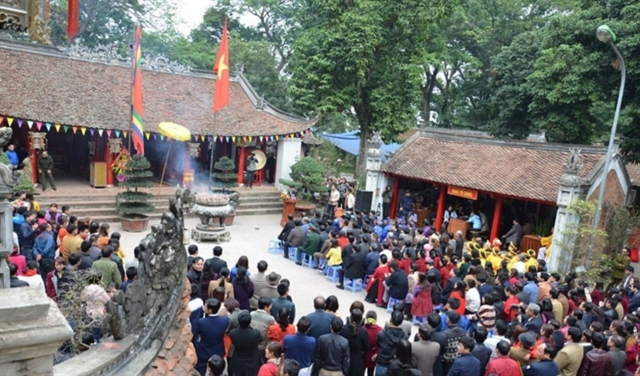
| The Và Temple Festival attracts a huge number of pilgrims every year. — VNa/VNS Photo |
Và Temple, one of the region's most sacred temples, stands atop a hill of ancient ironwood trees and is dedicated to Saint Tản Viên, one of the “Four Immortals” in Vietnamese folk belief. Known for its ancient architecture and sacred atmosphere, the temple hosts the annual Và Temple Festival, a National Intangible Cultural Heritage.
Built in 1822 to defend the western approach to Thăng Long, now Hà Nội, the Sơn Tây Ancien Citadel was constructed in the French style using laterite, a material abundant in the area. Its military architecture and majestic and tranquil character helped the citadel recognised as a national historical relic in 1994.
The Sơn Tây Temple of Literature is a cultural and educational landmark built to honour Confucius and other sages and pay tribute to local scholars. With its stone steles, ancient gates and tranquil courtyards, it reflects the region's long tradition of valuing education and scholarship.
Đường Lâm is the hometown of two kings, Phùng Hưng (761-802) and Ngô Quyền (808-944), and the birthplace of outstanding diplomat Giang Văn Minh in the late 16th and early 17th centuries.
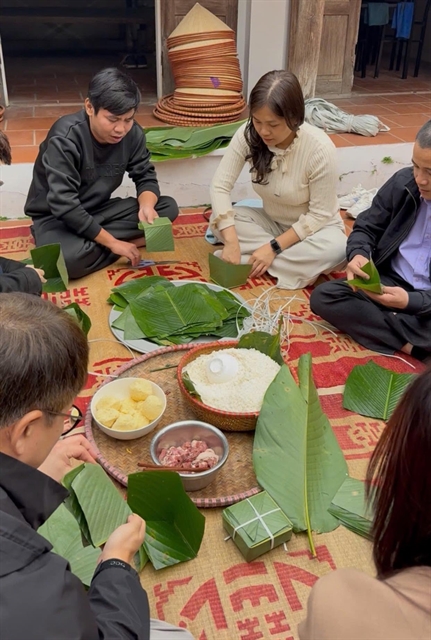
|
| Visitors take part in a chưng cake making show in Đường Lâm Village. |
It preserves the atmosphere of a traditional Vietnamese village, with its gate, communal house, pagoda, and centuries-old laterite houses, alongside rich tangible and intangible cultural values of the Northern Delta.
As Việt Nam's first national architectural and artistic village, Đường Lâm welcomes hundreds of thousands of visitors every year.
A plan is underway to seek recognition for Đường Lâm as a Best Tourism Village by UN Tourism before 2030. — VNS
Life & Style
 Life & Style
 Life & Style
 Life & Style
 Life & Style
 Life & Style
 Life & Style
 Life & Style
 Life & Style
 Life & Style
.jpg) Life & Style
Life & Style
 Life & Style
 Life & Style
 Life & Style
 Life & Style