 Life & Style
Sun PhuQuoc Airways launches daily HCM City–Shanghai route
1.
|
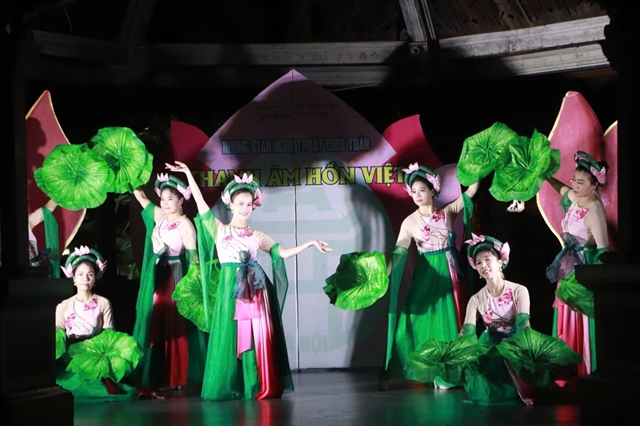
| Traditional dance performers take the stage during the weekend Community Music programme at the Octagonal House on Hà Nội's Hoàn Kiếm Lake walking street, creating an open and welcoming space where audiences of all ages can experience Việt Nam's performing arts heritage. — Photos courtesy of the organisers |
HÀ NỘI — On most weekends, the sound of street musicians and cheerful conversations fills Hoàn Kiếm Lake's walking street in the heart of the capital.
But on Saturday evening, it was the haunting melodies of cải lương (southern Vietnamese reformed theatre) that stopped passers-by in their tracks.
At the Octagonal House, visitors gathered not inside a theatre but in the open air, forming circles around a temporary stage where performers presented excerpts from Đêm Cuối Lý Chiêu Hoàng (The Last Night of Lý Chiêu Hoàng). Some had deliberately come for the show, while others stopped out of curiosity. Many stayed until the final curtain.
The performance became one of the highlights of the Âm Nhạc Cộng Đồng (Community Music) programme, demonstrating that traditional theatre can still resonate with contemporary audiences when presented in accessible and welcoming spaces.
For decades, cải lương has often been associated with older generations and formal theatre venues. Yet the atmosphere at Hoàn Kiếm Lake suggested a different story.
Without fixed seating or the conventions of a traditional auditorium, the performance dissolved the usual barriers between artists and audiences. Elderly spectators listened to every vọng cổ, the signature lyrical melody of cải lương, while younger visitors – many experiencing the art form for the first time – found themselves drawn into its emotional storytelling.
The programme also blended excerpts from classic cải lương with tân cổ (a fusion of modern songs and traditional vọng cổ), instrumental performances and well-loved songs inspired by the capital, including Hà Nội trái tim hồng (Hà Nội, the Pink Heart), Nồng nàn Hà Nội (Passionate Hà Nội) and Hà Nội của tôi (My Hà Nội), alongside graceful lotus dance performances.
The carefully curated mix created a natural bridge between generations. Some visitors may have arrived to hear familiar contemporary melodies, only to discover the enduring beauty of traditional theatre along the way.
|
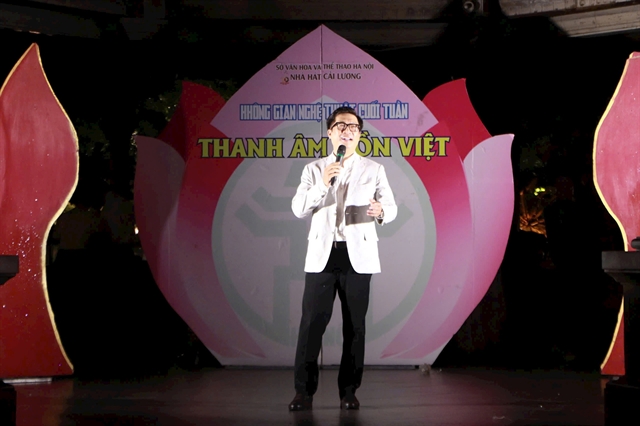
| A vocalist performs songs about Hà Nội during the Community Music programme at the Octagonal House on Hoàn Kiếm Lake's walking street. |
More importantly, the event reflects a broader vision for the future of culture in the capital.
Rather than preserving heritage solely within museums or theatre halls, Hà Nội is increasingly bringing cultural traditions into everyday public life, allowing them to evolve while remaining true to their roots.
Open-air performances such as these transform familiar urban spaces into living cultural venues where residents and visitors can engage with heritage in spontaneous and meaningful ways.
Such initiatives also reflect the city's ambition to become a creative, cultured and modern capital, where history and innovation complement rather than compete with one another. In this vision, culture is not merely something to be safeguarded but a dynamic resource that enriches public life, inspires creativity and reinforces the city's distinctive identity.
The Octagonal House has gradually become one of those gathering places. From concerts by young musicians and children's performances to cải lương, folk music and other traditional art forms, its weekend programmes continue to diversify the cultural experiences available in the heart of the city.
For performers, presenting traditional theatre outside conventional venues offers an opportunity to connect with audiences who might never have purchased a theatre ticket. For audiences, it removes the sense that traditional arts belong only to specialists or older generations.
The result is not simply greater accessibility, but a renewed relationship between heritage and daily life.
As Hà Nội continues building a creative, cultured and modern capital, performances like these show that safeguarding heritage is not simply about preserving the past. It is about ensuring that traditional arts remain part of the city's everyday rhythm, inspiring new generations while enriching contemporary urban life.
On a bustling weekend evening beside Hoàn Kiếm Lake, that vision came to life – one vọng cổ melody at a time. — VNS
Life & Style
 Life & Style
 Life & Style
 Life & Style
 Life & Style
 Life & Style
 Life & Style
 Life & Style
 Life & Style
 Life & Style
 Life & Style
 Life & Style
 Life & Style
 Life & Style
 Life & Style