 Life & Style

Vietnamese scientist wins ASEAN-US Science Prize for Women
1.
|
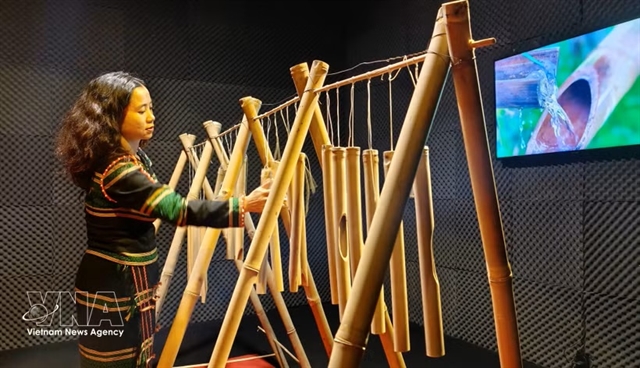
| The "Sound of Water, Fire and Light" space recreates familiar natural sounds, including flowing streams, cascading waterfalls and mountain winds. — VNA/VNS Photo |
LÂM ĐỒNG — Located in Bắc Gia Nghĩa Ward in the central province of Lâm Đồng, the Sound Exhibition House under the Lâm Đồng Museum has become a popular destination for visitors exploring the UNESCO Đắk Nông Global Geopark. Combining culture, history, nature and interactive technology, it offers an innovative approach to preserving and promoting cultural heritage.
Built in 2019, the 200-square-metre exhibition features eight display spaces centred on seven themes: stone, wind, water, wood, fire, light and people. Through interactive artworks created by French artist group Scenocosme, visitors can generate sounds, lights and movements, gaining a deeper appreciation of the relationship between humans and nature.
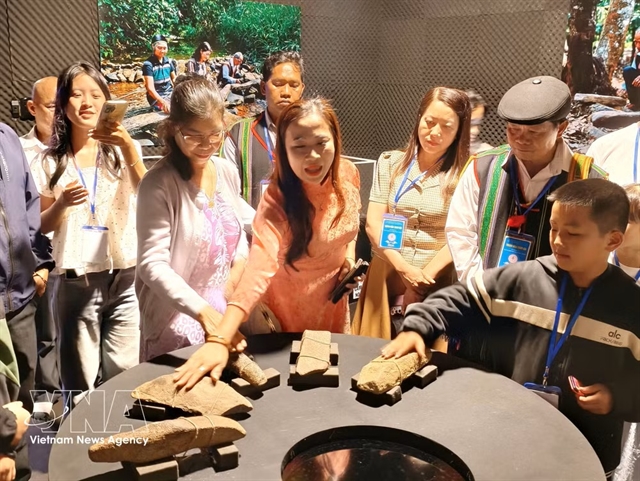
The journey begins with the Sound of Stone exhibition, inspired by the 2,000–2,500-year-old Đắk Kar lithophone, one of the oldest discovered in the Central Highlands. Interactive sensor-based installations allow visitors to recreate the instrument's sounds with a simple touch.
The next stop is the Sound of Wind installation, featuring a ceramic sphere symbolising the Earth's atmosphere. Visitors' breath activates different sound and lighting effects, creating an interactive dialogue between people and nature.
In the Sound of Wood section, light becomes a musical instrument. When visitors shine a mobile phone light onto flower-shaped sensors mounted on artistic tree branches, different musical notes are produced. Variations in light intensity alter the pitch and tone of the melodies. Meanwhile, the Sound of Water, Fire and Light space recreates familiar natural sounds, including flowing streams, cascading waterfalls and mountain winds, through advanced audio technology, delivering an immersive multi-sensory experience.
One of the exhibition's highlights is the Our Sound installation, where visitors become part of the artwork itself. As multiple participants interact simultaneously, sound and light merge into a shared composition, conveying messages of connection, sharing and collective responsibility for building sustainable communities in harmony with nature.
|
| Interactive sensor-based installations allow visitors to recreate the instrument's sounds with a simple touch. —VNA/VNS Photo |
The exhibition also showcases the rich cultural heritage of ethnic communities in the Central Highlands. Traditional gongs, flutes and other musical instruments of the M'nông, Ê Đê and Gia Rai ethnic groups are vividly presented, offering visitors greater insight into the region's cultural and spiritual life.
Điểu M'Brâng, a M'nông visitor from Nam Gia Nghĩa Ward, said the exhibition reminded him of his childhood and the sounds once played by his grandparents and parents. He described the preservation of these traditional sounds for younger generations as a meaningful way to safeguard ethnic cultural identity.
First-time visitor Trần Thị Thu Hương from Đông Gia Nghĩa Ward said the vivid sound and lighting effects helped her better appreciate the value of historical artefacts and traditional culture.
Nguyễn Thị Huyền Trâm, an official of the Lâm Đồng Museum, said the Sound Exhibition House is regarded as the only interactive sound exhibition space in Việt Nam and Southeast Asia. As the 31st destination among the 41 sites of the UNESCO Đắk Nông Global Geopark, it has welcomed around 7,000 visitors since the beginning of 2026. This space contributes to diversifying cultural tourism offerings while helping visitors gain a deeper understanding of the relationship between nature, geology, and the distinctive indigenous culture of the Lâm Đồng–Central Highlands region.
The museum plans to expand cooperation with schools, travel agencies and social organisations to organise educational and experiential programmes for students and tourists, she added.
By blending heritage with modern technology, the Sound Exhibition House is helping preserve the cultural memories of the Central Highlands while bringing traditional values closer to the public and younger generations. — VNA/VNS
Life & Style
 Life & Style
 Life & Style
 Life & Style
 Life & Style
 Life & Style
 Life & Style
 Life & Style
 Life & Style
 Life & Style
.JPG) Life & Style
Life & Style
 Life & Style
 Life & Style
 Life & Style
 Life & Style