 Life & Style
Top leader hails friendship association's role in nurturing Việt Nam–Denmark ties
1.
|
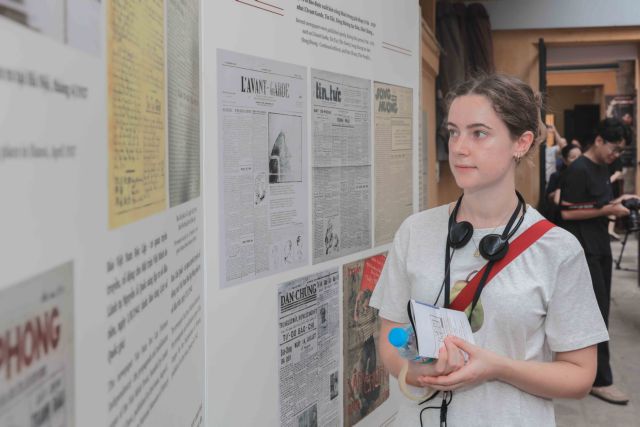
| A visitor at the Bút Thép Lòng Son (Steel Pen, Loyal Heart) exhibition. — VNA/VNS Photo Phan Phương |
HÀ NỘI — A thematic exhibition honouring revolutionary journalists across the different periods in history is being held at the Hỏa Lò Prison Relic Site in Hà Nội.
The exhibition, titled Bút Thép Lòng Son (Steel Pen, Loyal Heart), is jointly organised by the Management Board of the relic site and the Hà Nội Department of Culture and Sports in celebration of the 101st anniversary of Việt Nam Revolutionary Press Day on June 21.
From the launch of the first issue of Thanh Niên (Young People) newspaper, founded by the young patriot Nguyễn Ái Quốc, later known as Hồ Chí Minh, in Guangzhou, China on June 21, 1925, the revolutionary press has become a vanguard on the ideological front.
It has helped to spread patriotism, raise revolutionary awareness and encourage the people to struggle for national independence in the decades since.
The highlight of the exhibition is a section that vividly portrays steadfast writer-soldiers in prisons and on the front lines of war.
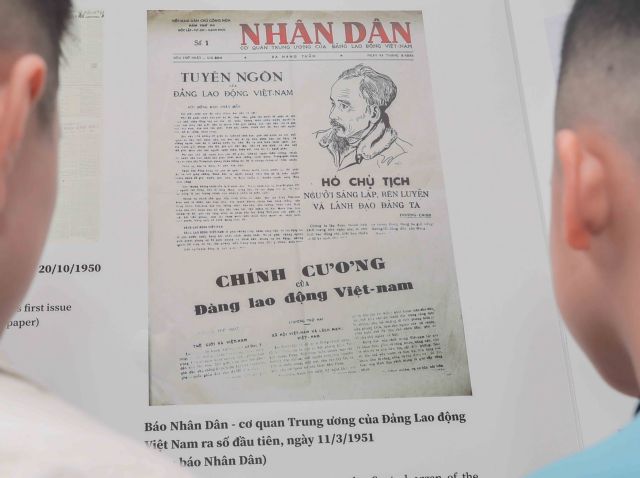
Despite the harsh conditions of imprisonment, several newspapers were still secretly published by prisoners, including those in Hỏa Lò Prison in Hà Nội, Sơn La, Côn Đảo, and Buôn Ma Thuột.
|
| A copy of the first Nhân Dân (People) newspaper published on March 11, 1951. — VNA/VNS Photo Phan Phương |
Publications such as Lao Tù Tạp Chí (Prison Labour Magazine), Con Đường Chính (The Main Path), Suối Reo (The Murmuring Stream) and Người Tù Đỏ (The Red Prisoner) reflected the lives of political prisoners and helped sustain their fighting spirit, while also disseminating revolutionary ideals.
At Hỏa Lò Prison, revolutionary prisoners cleverly hid journalistic materials under floorboards and within wall crevices, before secretly passing them to readers.
These handwritten newspapers became a vital source of spiritual encouragement, fostering solidarity among inmates and spreading faith in the eventual victory of the revolution.
Beyond prison walls, the revolutionary press accompanied the nation's soldiers across battlefields.
The exhibition presents numerous stories of journalism carried out amid bombs and bullets, from the distribution station of Cứu Quốc (National Salvation) newspaper during the resistance war against the French, to the front line newsroom of Quân Đội Nhân Dân (People’s Army) newspaper at Ngựa Hí Hill during the Battle of Điện Biên Phủ in 1954.
Others included press agencies at the Central Office for South Việt Nam base and the underground newsroom of Nhân Dân (People) newspaper during the B-52 bombing raids on Hà Nội in December 1972.
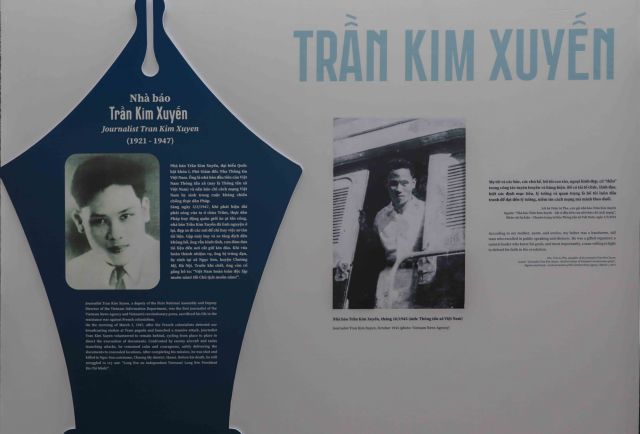
A special space is dedicated to honouring fallen journalist-soldiers on the information front, including such notables as Trần Kim Xuyến, Bùi Đình Túy, Phạm Thị Ngọc Huệ, Dương Thị Xuân Quý and Lương Nghĩa Dũng.
They were individuals who, undeterred by danger, ventured into the front lines to capture authentic images and footage and write about the nation’s struggle.
|
| A special space is dedicated to honouring fallen journalist-soldiers on the information front, such as Trần Kim Xuyến (1921–1947), the first reporter of the Vietnam News Agency to sacrifice his life while on duty during the resistance war against the French.— VNA/VNS Photo Phan Phương |
The final section of the exhibition, titled Tiếp Nối Dòng Chảy (Continuing the Flow), showcases today’s generation of journalists who carry forward the proud tradition of Việt Nam’s revolutionary press, constantly innovating, truthfully reflecting social life and accompanying the country’s development.
“In my view, journalists in peacetime already face many challenges. However, those working under conditions of hardship, like imprisonment and wartime, faced far greater difficulties,” said visitor Nguyễn Thị Thu Hương, principal of Triều Khúc Primary School in Thanh Liệt Ward, Hà Nội.
“Through this exhibition, I can see how extraordinarily creative and courageous revolutionary fighters were in disseminating information and bringing the Party’s guidelines and policies to the public, especially to workers.”
In addition to documents, images and artefacts, visitors can scan QR codes to access audio guides on online platforms such as Spotify and Apple Podcasts, offering more interactive and modern experiences.
Steel Pen, Loyal Heart is open to the public until November 15. — VNS
Life & Style
 Life & Style
 Life & Style
 Life & Style
 Life & Style
 Life & Style
 Life & Style
 Life & Style
 Life & Style
 Life & Style
 Life & Style
 Life & Style
 Life & Style
 Life & Style
.jpg) Life & Style
Life & Style