 Life & Style

OPPO Find X10 Pro Max to Debut Globally with MediaTek’s 2nm Flagship Dimensity 9600 Pro
1.
|
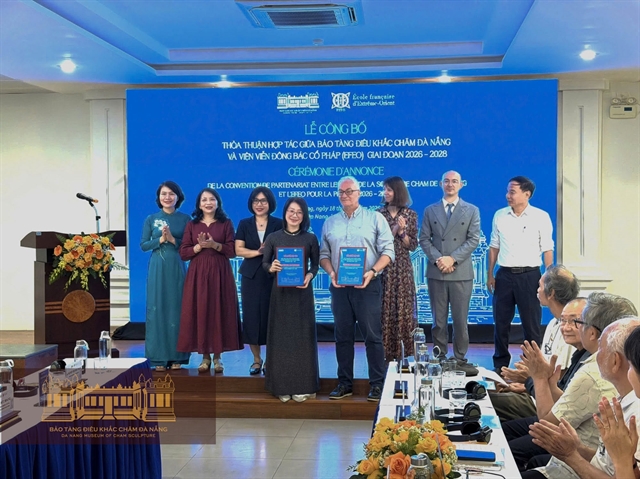
| The signing ceremony for the Memorandum of Understanding MoU between the Museum of Chăm Sculpture of Đà Nẵng, and L’Ecole Française d’Extrême-Orient. —Photo courtesy of the Museum of Chăm Sculpture of Đà Nẵng |
ĐÀ NẴNG — The Museum of Chăm Sculpture of Đà Nẵng, in cooperation with L’Ecole Française d’Extrême-Orient (the Far East Archaeological Research Institute, or EFEO), has signed a Memorandum of Understanding (MoU) on research, academy exchange and expansion of exhibition items in 2026-28, setting up a milestone in international cooperation.
The MoU also recognised that EFEO is a strategic partner in the development and promotion of Chăm Culture value.
|
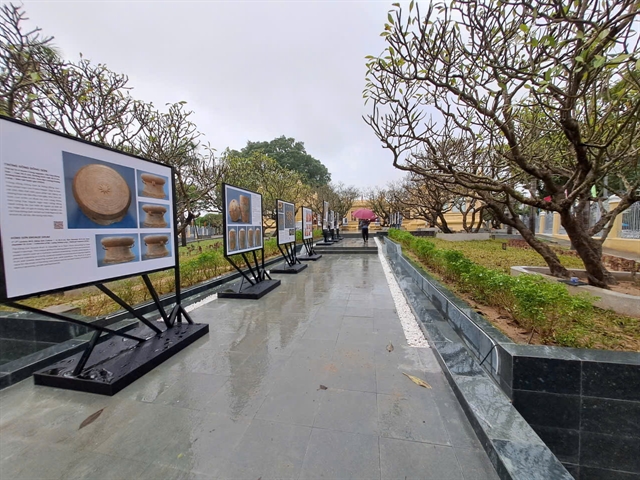
| The Museum of Chăm Sculpture of Đà Nẵng. The museum is one of the most visited destinations in Đà Nẵng City. — VNS Photo Công Thành |
It also marks a new development phase restoration and decoration of exhibition space at the museum after a restoration project on sand-stone sculpture works and showrooms of Mỹ Sơn and Đồng Dương.
Collections of Chăm sculptures were sent for display in Paris in 2006 as an effort to promote and introduce the value of ancient Chăm culture to the world.
Vietnamese and French experts and researchers stated that EFEO had early contributed to the development of Chăm Sculpture Museum in Đà Nẵng City in the late 19th century and early 20th century.
A collection of 40 old photos displayed by French researchers show that the EFEO helped establish the Chăm Sculpture Museum from the Tourane (former name of Đà Nẵng from the French Colonial) Sculpture Garden to the 1915-built Henri Parmentier Museum (in honour the significant contributions from Henri Parmentier, a leading archaeologist with the Far East Archaeological Research Institute) between the 19th century and the 20th century.
|
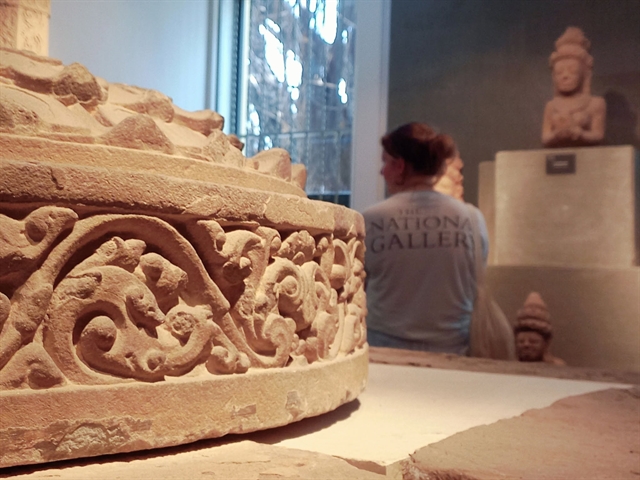
| A Chăm sculpture at the museum. The museum, which situated at the west bank of the Hàn River, welcomes around 200,000 visitors per year including more than 100,000 international tourists. — Photo courtesy of Lý Hòa Bình |
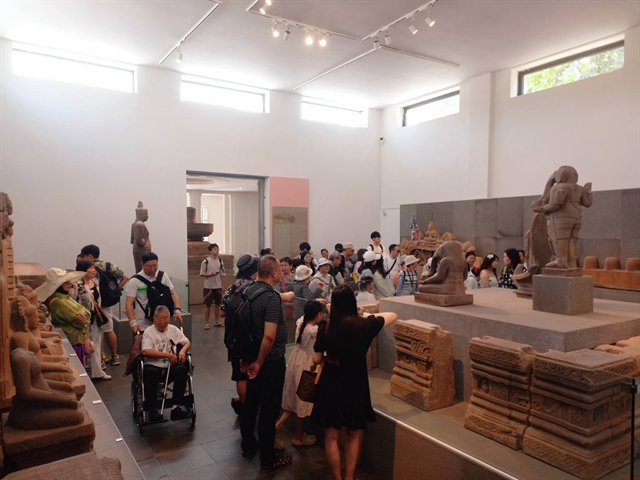
The Chăm Sculpture Museum remains as one of the most visited destinations in Đà Nẵng City and contains Sa Huỳnh and Champa cultures that shaped the central region of Việt Nam from the seventh to the 13th century.
The museum, situated at the west bank of the Hàn River, is regarded as a unique showcase, displaying thousands of artefacts and sandstone statues uncovered at numerous Chăm towers and excavations, including items from the Sa Huỳnh Culture, which date back 2,500 to 3,000 years in the central region.
The museum preserves iconic sculptures and artworks of Chăm culture from the 5th to 15th century, and national treasures for public display, including the Trà Kiệu Pedestal, the Mỹ Sơn E1 Pedestal, the statue of Tara/Avalokiteshvara, the Đồng Dương Pedestal and two sandstone statues – Ganesha, one of the best-known and most worshipped deities in the Hindu pantheon - and Gajasimha, a mythical hybrid animal in Hindu mythology.
|
| Visitors at the Museum of Chăm Sculpture of Đà Nẵng. The museum displays and stores thousands of items from the Sa Huỳnh and Champa cultures. — Photo courtesy of Lý Hòa Bình |
The museum has played a key role of a centre of world heritage sites including the ancient town of Hội An, Mỹ Sơn Sanctuary, Huế Monument Complex in central Việt Nam.
In 2025, nearly 200,000 visitors, of which 54 per cent were foreigners. — VNS
Life & Style
 Life & Style
 Life & Style
 Life & Style
 Life & Style
 Life & Style
 Life & Style
 Life & Style
 Life & Style
 Life & Style
 Life & Style
 Life & Style
 Life & Style
 Life & Style
 Life & Style