 Life & Style

LANDMARK Launches ‘Destination CENTRAL’: A District-Wide Invitation to Explore the Dynamism, Luxury, and Soul of Central
1.
|
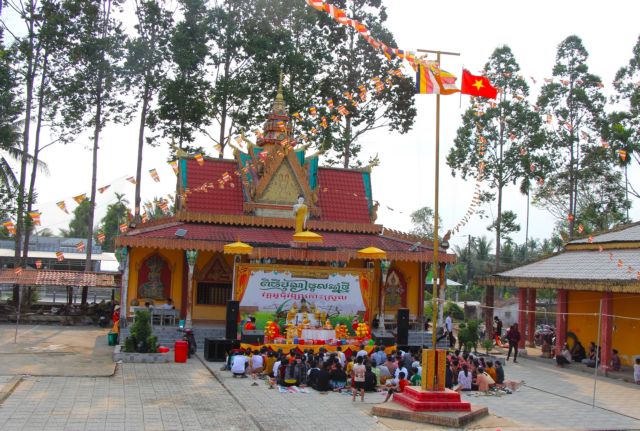
| Important religious ceremonies of the Khmer community are often held at pagodas. — VNA/VNS Photo |
HCM CITY — Authorities and communities across the southern region are intensifying efforts to safeguard and promote Khmer heritage as rapid social and economic changes reshape traditional community life.
The Khmer are among Việt Nam’s largest ethnic minority groups, with a population of more than 1.3 million people living mainly in the southern region.
Over generations, the community has created, maintained and passed down a rich legacy reflected in its language, script, beliefs, religion, traditional festivals, folk performing arts, handicrafts, architecture, costumes and cuisine.
Many localities have strengthened efforts to preserve and promote Khmer heritage, helping revive traditional arts, handicrafts and festivals while securing official recognition for many cultural practices.
Traditional festivals such as Chol Chnam Thmay (New Year Festival), Sene Dolta (Ancestor Worship Festival) and Ok Om Boc (Moon Worship Festival) continue to be celebrated in areas with large Khmer populations.
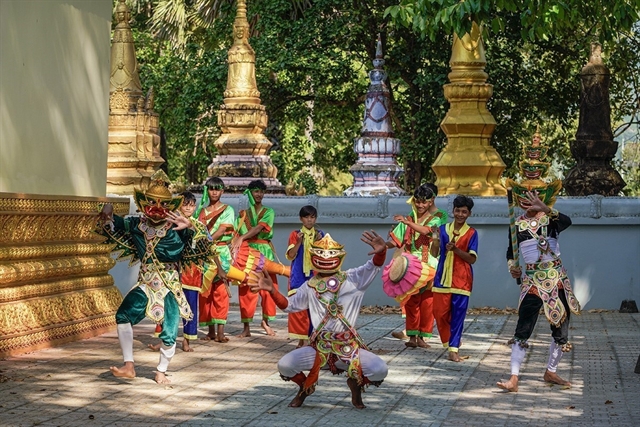
Several outstanding Khmer heritage elements have been recognised as national intangible cultural heritage, including Southern Khmer Dù Kê (a unique style of the Khmer musical theatre), Rô Băm (a classical dance-drama of the Khmer royal stage), Ngũ Âm (Khmer music based on a pentatonic scale), and the craft of making cốm dẹp (glutinous rice flakes).
|
| Members of the Khmer folk dance troupe in An Giang Province’s Ô Lâm Commune. — VNA/VNS Photo |
In Cần Thơ, efforts to safeguard and promote traditional values have received significant attention and achieved positive results.
The city is home to 120 Khmer Theravada Buddhist pagodas, including several recognised heritage sites, and six artisans honoured for their contributions to preserving intangible cultural heritage.
Nguyễn Thị Ngọc Điệp, Deputy Chairwoman of the Cần Thơ People’s Committee, said: “The role of religious dignitaries, artisans and respected community members continues to be strengthened in teaching, preserving and passing traditional values on to younger generations.”
The city will continue to implement ethnic minority policies effectively, increase investment in grassroots cultural activities and support the preservation of the Khmer language, script and traditional arts to strengthen national solidarity, she said.
|
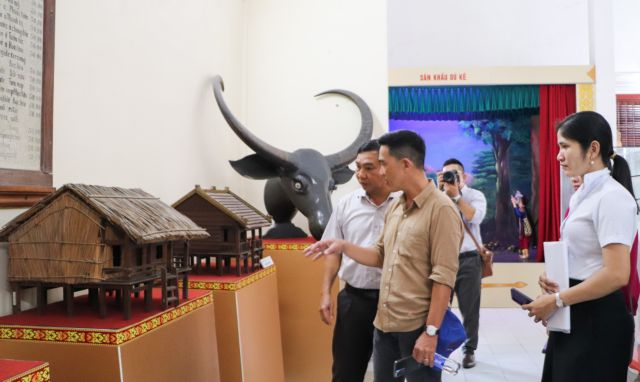
| Visitors explore exhibits at the Khmer Cultural Display House in Cần Thơ City’s Sóc Trăng Ward. The venue showcases more than 400 artefacts and models under themes including daily life, spiritual culture and festival traditions. — VNA/VNS Photo |
Besides Cần Thơ, southern provinces have adopted various measures to protect and promote the ethnic group's identity.
Ngô Sô Phe, rector of Trà Vinh University's School of Southern Khmer Language, Culture and Arts and Humanities, said the school continues to train human resources in Khmer language, cultural studies and traditional arts.
It is also promoting scientific research, digitising Khmer heritage and expanding international co-operation to mobilise additional resources for preserving and advancing ethnic cultural identity in the new era, he said.
According to the Ministry of Culture, Sports and Tourism, the Cửu Long (Mekong) Delta is home to more than 450 Khmer Theravada Buddhist pagodas. These pagodas play a vital role in community life.
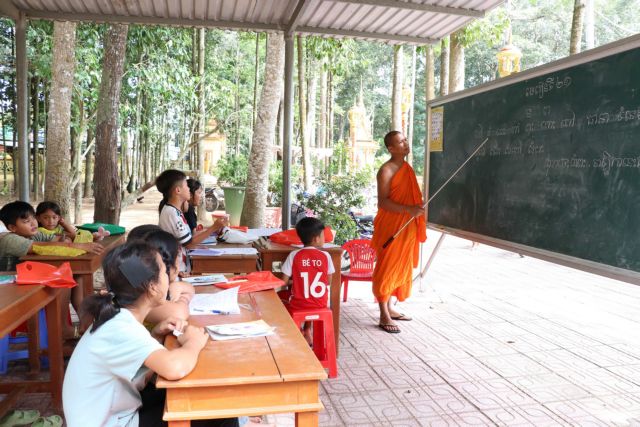
They serve not only as centres of religious activities but also as places where the Khmer language and script are taught, ancient manuscripts are preserved, folk arts are practised and long-standing traditions are passed on to younger generations.
|
| A Khmer language class during the summer holiday at Âng Pagoda in Vĩnh Long Province’s Nguyệt Hóa Ward. — VNA/VNS Photo |
Speaking at a recent conference on preserving and promoting traditional Khmer cultural values held in Cần Thơ, Trịnh Thị Thủy, Deputy Minister of Culture, Sports and Tourism, said the implementation of Party guidelines and State policies on ethnic affairs and cultural development had delivered positive outcomes.
She highlighted national target programmes and projects aimed at preserving ethnic minority heritage as important contributors to those achievements.
The cultural life of Khmer people has also improved steadily, she said.
However, she warned that some traditional art forms are facing the risk of disappearing. Many artisans are ageing and efforts to pass traditional knowledge on to younger generations remain difficult.
She added that urbanisation, the market economy and international integration are changing long-established community spaces within Khmer settlements.
“Preserving Khmer culture is not only a cultural task but also an important political and social responsibility that contributes to strengthening national solidarity and promoting the country’s sustainable development,” she said.
|
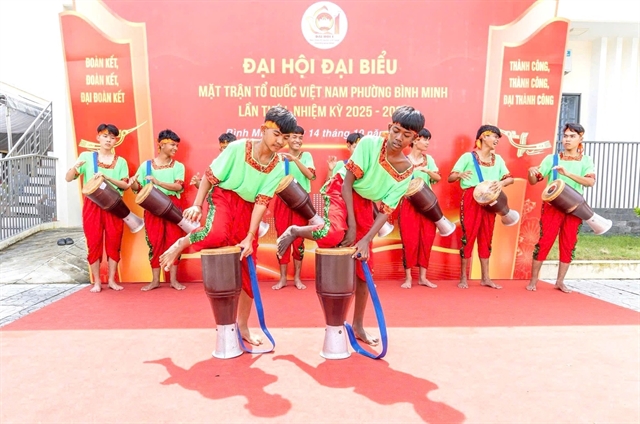
| The Chhay-dăm drum dance club of Khmer students from the Tây Ninh Province Ethnic Minority Boarding School performs at a local event. — VNA/VNS Photo |
Nguyễn Hoàng Hành, deputy director of the Department of Communications for Ethnic and Religious Affairs under the Ministry of Ethnic and Religious Affairs, said the greatest concern was not only cultural decline but also the risk of a break in transmission among younger generations.
Policies in some areas remain fragmented and poorly connected, while safeguarding activities are sometimes overly administrative or campaign-driven, he said.
Some traditional values are also at risk of commercialisation and excessive stage adaptation, becoming detached from the communities where they originated, he said.
He stressed the need for a new approach to cultural governance.
“The State should act as a facilitator of development, while communities must be the central actors in safeguarding, creating and promoting culture,” he said. — VNS
Life & Style
 Life & Style
 Life & Style
 Life & Style
 Life & Style
 Life & Style
 Life & Style
 Life & Style
 Life & Style
 Life & Style
 Life & Style
 Life & Style
 Life & Style
 Life & Style
 Life & Style