 Life & Style
Viettel’s Unitel in Laos a symbol of Việt Nam-Laos friendship: Prime Minister
1.
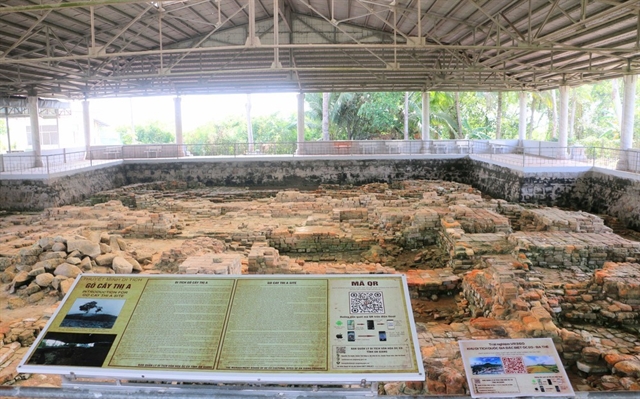 |
| Using VR 360 and 3D technology, the Óc Eo–Ba Thê Archaeological Complex in An Giang Province sets a new standard for interactive heritage tourism, demonstrating how digital transformation can preserve and promote cultural history. — VNA/VNS Photo Công Mạo |
HÀ NỘI — Việt Nam plans to digitise all cultural platforms by 2030, requiring 100 per cent of heritage assets to meet national data-sharing standards under a new government project.
This is a key component of the project "Digital Transformation in Culture through 2030, with a Vision to 2045", recently approved by Deputy Prime Minister Nguyễn Chí Dũng.
The project aims to comprehensively modernise the national digital cultural ecosystem to preserve and promote Việt Nam's advanced culture, which is deeply rooted in national identity, fosters creativity and pursues proactive international integration.
Specific targets for 2030 include the establishment of shared digital platforms across 100 per cent of cultural sectors.
Additionally, 100 per cent of digitised cultural heritage must be standardised under the national framework and shared in accordance with regulations.
The project also aims for 80 per cent of public digital heritage to be assigned digital identifiers (IDs) to clarify ownership and management, encouraging organisations and individuals to do the same and support market development.
The scheme functions as a strategic orientation rather than just a technical checklist, according to Phan Tâm, deputy minister of Culture, Sports and Tourism.
"It aims to set a core reference for digital transformation by aligning awareness, vision and methodology with concrete action," said Tâm.
"As a result, it creates a vital foundation for the cultural sector to achieve a harmonious and effective digital transition, rooted in humanistic values."
The project mandates a 100 per cent digital literacy rate for all management leaders, civil servants, public employees, artists and students within cultural and arts institutions, ranging from universities to vocational colleges.
Long-term vision
By 2045, Việt Nam envisions the completion of a comprehensive, smart and highly interactive digital cultural ecosystem.
This system aims to balance the preservation of national identity with the proactive promotion of Vietnamese culture globally.
Digital culture is set to become a primary driver for holistic human development and a catalyst for enhancing national soft power.
According to Professor Dr Từ Thị Loan, former head of Việt Nam Institute of Culture and Art Studies, digital transformation in culture differs fundamentally from technical sectors.
"Rather than focusing solely on economic gains, the mission is to uphold cultural identity and historical depth," Loan said.
"For the cultural sector, digital technology is a means, not the goal, serving to amplify the preservation and global reach of national heritage.
"This necessitates an approach that moves past simple data entry. It calls for a transformation of mindset in how society interacts with culture, ensuring that digital platforms become a space for creative expression, where traditional values are protected from distortion or loss of essence.
The project aims to digitalise and store at least 80 per cent of intangible cultural heritage in ethnic minority areas in specialised cultural databases.
All state management agencies in the cultural sector will connect and synchronise specialised databases, and all public cultural institutions will develop suitable digital transformation roadmaps.
National libraries, national museums of history and culture, and public museums nationwide will complete digital library and digital museum systems, develop smart operational models and expand data integration and sharing within domestic and international networks.
At least 70 per cent of museums, libraries, theatres, art troupes, sports federations, tourism sites, press agencies and digital content enterprises are expected to connect their data with the shared infrastructure of the Ministry of Culture, Sports and Tourism.
Expanding public access to digital cultural activities will be one of the project's targets, ensuring that 75 per cent of residents in remote, border and island areas and 80 per cent of communes in ethnic minority and mountainous regions can access and participate in cultural activities in digital environments.
Emphasis is also placed on strengthening digital infrastructure, ensuring cybersecurity within the cultural sector and fostering international cooperation and integration.
The project will directly contribute to the implementation of Resolution 57, adopted by the Communist Party of Việt Nam, focusing on breakthroughs in science and technology development, innovation and national digital transformation. — VNS
Life & Style
 Life & Style
 Life & Style
 Life & Style
 Life & Style
 Life & Style
 Life & Style
 Life & Style
 Life & Style
 Life & Style
 Life & Style
 Life & Style
Life & Style
Life & Style
 Life & Style
 Life & Style