 Life & Style
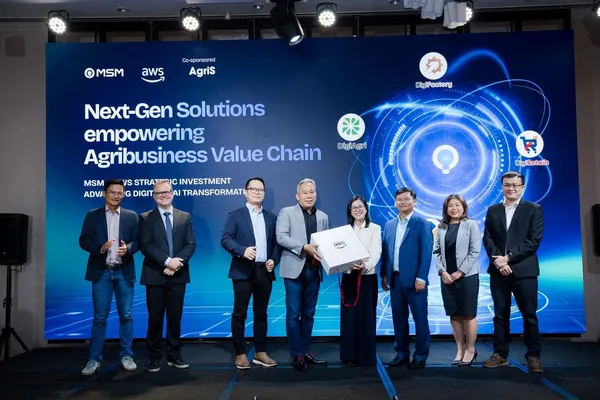
MSM chooses AWS to accelerate next-generation technology solutions for agribusiness value chain
1.
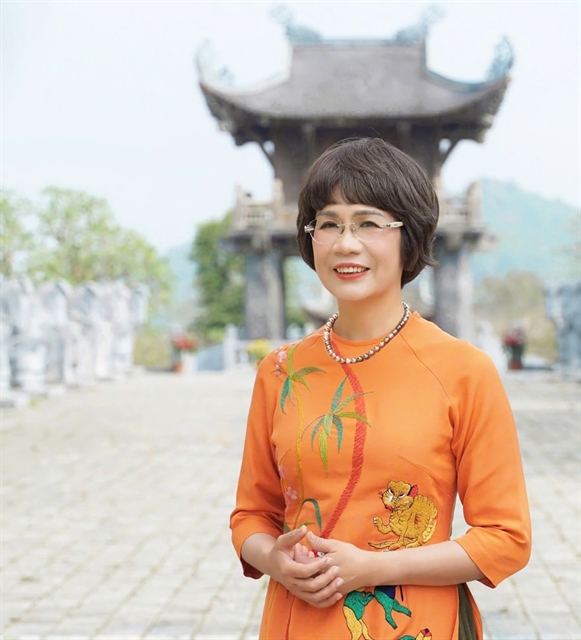 |
| Nguyễn Thị Thu Phương, head of the Việt Nam Institute for Culture, Arts and Tourism Study. Photo hanoimoi.vn |
Artistic events are expanding in scale and becoming more professionally organised, while scientific forums continue to attract an increasing number of leading voices from across the country and around the world.
Nguyễn Thị Thu Phương, head of the Việt Nam National Institute of Culture Arts and Tourism Studies (VICAST), spoke about these efforts to position culture and creativity at the core of sustainable development at both local and national levels.
In your view, what should Hà Nội and other localities do to foster and strengthen the creative workforce?
I think that 2026 presents a timely opportunity to shift from an initial phase of momentum-building to one centred on establishing a solid and sustainable foundation for the creative workforce.
The priority now is to continue improving the institutional framework to foster an enabling environment where creative ideas can be nurtured, tested and scaled. This involves strengthening policy support for creative enterprises, broadening public–private collaboration and promoting the commissioning of creative projects linked to urban development, tourism and community engagement.
At the same time, Hà Nội and other localities should make strategic investments in creative social infrastructure, including networks of creative spaces, as well as training, incubation and market connection programmes, thus gradually building competitive and scalable creative value chains.
Above all, it is essential to foster genuine and effective collaboration among the State, the creative community and businesses.
When creativity is properly recognised, supported by appropriate mechanisms and integrated into concrete local development agendas, the creative workforce can become a vital endogenous driver of cultural growth and the creative economy in the country’s next phase of development.
What specific activities and roles does VICAST undertake to expand connections with, and support, creative spaces?
Organising academic forums that create spaces for dialogue and bring together policymakers, researchers, businesses and the creative community nationwide is one of VICAST’s core areas of activity.
We also continue to expand our networks and work closely alongside creative spaces in Hà Nội, HCM City, Đà Lạt and Hội An, which have all become part of the UNESCO Creative Cities Network.
A scientific conference held last year is a notable example. In addition to discussions on theoretical underpinnings, international experience and forward-looking institutional solutions, it also gathered a wide range of proposals from local authorities in the context of implementing a two-tier local government model – an issue of significant practical relevance to the ongoing process of institutional reform.
The Asia Creative Forum held at the end of last year was a particularly notable initiative launched by VICAST to create a platform for multi-stakeholder dialogue and regional connectivity between Việt Nam and other countries in Asia.
Could you talk more about the Asia Creative Forum?
The forum brought together experts, researchers, artists and creative communities, as well as representatives from universities, research institutes and creative spaces across the region.
It reviewed a dynamic, multi-dimensional picture of contemporary creative life in Asia. The models, stories, challenges and opportunities shared at the forum all point toward a common goal: connecting creative resources through an interdisciplinary approach, guided by a global outlook while remaining closely attuned to the specific contexts of each locality.
Building on that spirit, along with our regional partners we have agreed to develop the forum into a biennial platform – not only for exchange and dialogue, but also as a step toward shaping a creative connectivity map of the region and beyond, opening up new avenues for collaboration among Asia’s creative communities.
Along with cultural policymakers and scholars, what role and voice does the creative community bring to scientific conferences?
Many young voices have taken part in VICAST’s scientific forums over the past year, confidently sharing their stories and experiences.
Most importantly, they have contributed ideas for solutions related to the role of the artistic community, creative enterprises and the wider creative industries, public–private partnerships and the aspirations, efforts and challenges encountered in the establishment, as well as the operation and growth of creative business models.
We hold in high regard the contributions and dedication of the creative community, particularly young people. The deeper we engage with the realities of creative practice, the more clearly we see the rich and varied contours of a generation forging its own path marked by unfinished entrepreneurial journeys, bold ideas still taking shape and sincere reflections on how creativity can be sustained, matured and translated into meaningful value for the community.
Could you tell us more about the Cửa Nam Art Ward model, which was presented at a forum on developing the arts in the context of globalisation and digital transformation?
Cửa Nam Ward is a distinctive artistic gateway in Hà Nội, where the old quarter and the Văn Miếu Temple heritage complex intersect. It is home to a dense concentration of heritage assets, alongside a vibrant network of commerce and services that together foster a rich and dynamic community life.
It is precisely this ecosystem that has cultivated a powerful reservoir of community-driven creative energy. The Cửa Nam Art Ward model has been developed on the basis of a theoretical framework constructed by the research team and distilled from international experience.
Through this model, we aim to underscore that community arts should be viewed as a central driver of local creative capacity, laying the groundwork for new forms of urban development rooted in heritage and cultural identity.
Cửa Nam Ward represents an ideal micro-level setting for piloting the 'art ward' model in the next phase of development for Hà Nội, which joined the UNESCO Creative Cities Network in 2019 in the field of design.
Sustainable urban creativity cannot overlook the awakening of communities within their own living spaces. Urban cultural development must begin with empowering communities to create, enabling each ward to evolve into a dynamic creative cell of the city. — VNS
Life & Style
 Life & Style
 Life & Style
 Life & Style
 Life & Style
 Life & Style
 Life & Style
 Life & Style
 Life & Style
 Life & Style
 Life & Style
 Life & Style
 Life & Style
 Life & Style
 Life & Style