 Life & Style
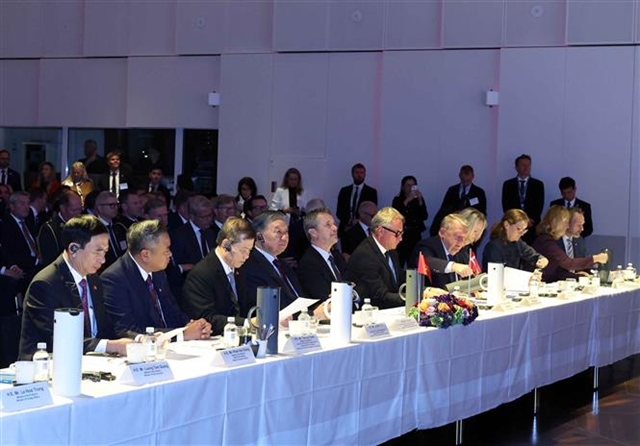
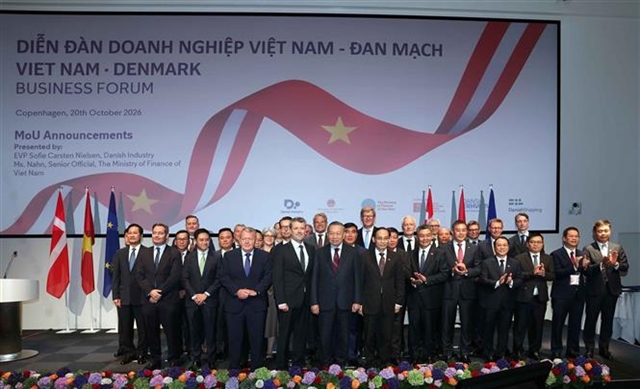
General Secretary and President Tô Lâm witnesses exchange of Việt Nam-Denmark cooperation agreements
1.
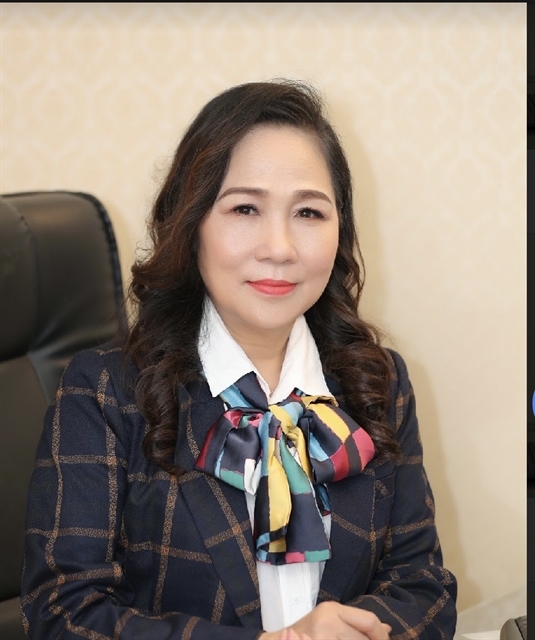 |
| People Artist Thúy Mùi. — Photo nld.com.vn |
Trịnh Thúy Mùi, 64, is the only People’s Artist running for election to the 16th National Assembly. She is President of the Việt Nam Theatre Artist Association and Vice President of the Việt Nam Union of Literature and Arts Associations. Mùi, who emerged from the traditional art of chèo (traditional opera), has played a significant role in bringing chèo and other traditional theatres closer to younger audiences. She spoke to the media about the Vietnamese traditional stage and how Resolution 80 promotes enjoyment through theatre.
As a former chèo performer, how do you view the place of traditional arts within the flow of modern life?
Traditional artists often take the arrival of spring, the beginning of a new year, as a moment to reflect on their journey.
I often recall the image of traditional artists in the past who were deeply embedded in community life. They travelled with touring troupes, performing at village festivals, communal houses and water wharves. When the spring comes, they would follow the rhythm of local celebrations back to the countryside. The traditional artists did not stand apart from their audiences, they lived among them, sharing in their joys and sorrows.
In Việt Nam, not only tuồng (classical theatre) and chèo (traditional opera), but also cải lương (reformed theatre) and water puppetry were once integral to the fabric of community cultural life.
In the past, the artists performed age-old works which were rich in moral lessons, laughter and tears. It was a distinctive form of 'mobile culture', in which the stage did not remain confined to a theatre but moved in step with the rhythms of everyday life.
It is precisely this direct bond with audiences that sustains the vitality of the traditional stage. As long as spectators could recognise themselves in the stories performed on stage, they saw their own lives and customs. The traditional stage retains its relevance.
The challenge today is how to preserve that spirit while finding new approaches, allowing the traditional stage to continue evolving alongside modern society.
How has the stage changed over time?
It has changed profoundly. The stage is no longer the sole source of entertainment. Television, cinema and social media now command much of the audience’s time and attention.
As a result, theatre artists face far greater competitive pressures, while their livelihoods remain less stable than in other professions. Today, many young artists find themselves at a crossroads, questioning whether to remain committed to the stage or pursue a different path altogether.
Does the stage still retain its role in reflecting social realities?
The stage has always served as a mirror of life. Traditional and modern-themed performances exploring family value, war and social conflict, the stage has consistently placed the human experience at its core.
I think about the artists who rarely appear in the spotlight or make noise on social media. They work quietly, rehearsing, staging productions, sustaining training classes and passing their craft on to the next generation.
What role do young audiences play in preserving and advancing traditional theatre?
I do not expect the theatre to suddenly attract large numbers of young audiences overnight. I hope the theatre will move forward slowly but steadily, preserving its quality and depth.
When young people come to the theatre, they need to encounter sincerity and genuine value, not chase trends.
I simply hope the artists who devote themselves to the stage have enough patience and faith. Theatre does not need noise or haste. As long as there are individuals who remain sincere in their craft and believe in the spiritual values it carries, then whether at year’s end or the spring coming, the theatre lights will continue to shine warm and enduring.
Resolution 80 sets out a range of specific goals and targets to drive culture development. What should be the key priorities for cultural investment in the future?
The priority must be to strengthen the system of cultural institutions. Without theatres, cinemas, galleries, museums and libraries, even the most compelling works will struggle to reach the public.
Each province and city should have dedicated venues for high-end performances, ensuring residents have access to quality cultural experiences and opportunities to refine their appreciation.
At the same time, every commune and ward needs appropriate cultural spaces that meet the community’s spiritual and social needs.
When this network is developed in a coordinated manner, the gap in cultural access between regions can gradually be narrowed, paving the way toward more balanced and integrated development.
The next crucial factor is the people. Greater emphasis must be placed on training young artists, cultural managers and a strong force of theorists and critics. For culture to develop sustainably, it must be built on a foundation of knowledge and high-quality human resources.
An indispensable factor is digital technology. In the digital age, culture must harness new platforms to disseminate its values and expand its reach. At the same time, any innovation must be grounded in the principle of preserving and promoting national identity. — VNS
Life & Style
 Life & Style
 Life & Style
 Life & Style
 Life & Style
 Life & Style
 Life & Style
 Life & Style
 Life & Style
 Life & Style
 Life & Style
 Life & Style
 Life & Style
 Life & Style
 Life & Style
.jpg)