 Life & Style
HCM City plans Tết support for 370,000 disadvantaged workers
1.
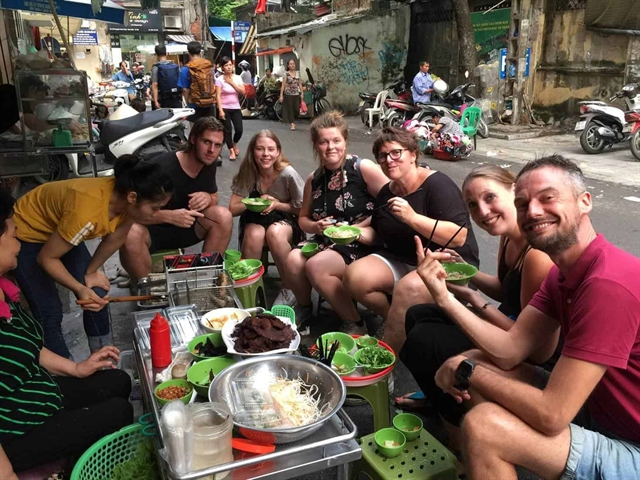 |
| Foreign tourists enjoy street food in Hà Nội. — Photo threeland.com |
HÀ NỘI — As global tourism develops an ever stronger appetite for culinary experiences, Việt Nam is increasingly well placed to turn its rich and distinctive food heritage into a powerful national asset capable of shaping its image and attracting visitors.
In the global tourism landscape, where cuisine is emerging as a distinctive language through which countries present themselves to the world, Việt Nam has a clear opportunity to transform gastronomy into a defining pillar of tourism development.
According to the World Food Travel Association, more than 80 per cent of international travellers consider local cuisine a primary motivation for travel, with food and beverage spending accounting for around 30 per cent of total tourism expenditure. This highlights cuisine not merely as a complementary experience but as a significant driver of travel demand.
In recent years, Vietnamese cuisine has received growing international recognition. At the World Culinary Awards, Việt Nam was named Asia's Best Culinary Destination 2025 while Hà Nội was honoured as Asia's Best Emerging Culinary City 2025. Hồ Chí Minh City ranked fourth among the world’s top 20 culinary capitals in 2025 as selected by UK-based Time Out magazine.
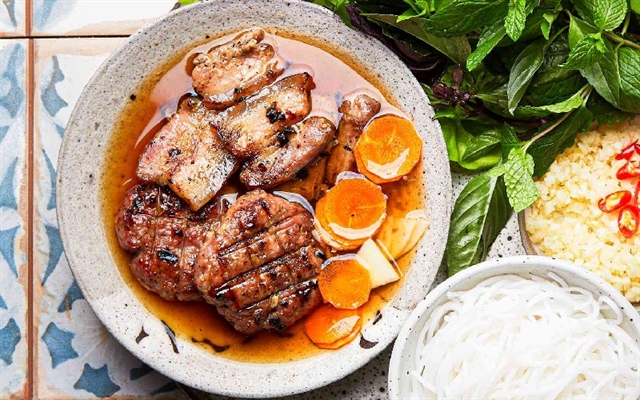 |
| 'Bún chả' (rice vermicelli with grilled pork and fresh herbs), together with some other dishes, has moved beyond everyday meals to become cultural icons admired worldwide. — Photo mia.vn |
Also last year, iconic Vietnamese dishes such as bánh mì (baguette), nem rán (fried spring roll), bún bò Huế (Huế-style beef noodle) and Vietnamese coffee were listed among the world’s most appealing foods by leading platforms and travel magazines, including TasteAtlas, CNN Travel and Condé Nast Traveller.
From kitchen to cultural capital
Tourism businesses note that cuisine represents a distinctive competitive advantage for Việt Nam. Food tours are increasingly developed as standalone tourism products, with each dish connected to cultural narratives and layered storytelling.
Beyond ingredients and cooking techniques, visitors are introduced to dining customs and local knowledge, allowing cuisine to become not only a sensory experience but also a gateway to history, traditions and indigenous wisdom.
Dishes such as phở bò (beef noodle), bún chả (rice vermicelli with grilled pork and fresh herbs), nem rán (fried spring rolls) and bánh xèo (sizzling rice crepe) have moved beyond everyday meals to become cultural icons recognised worldwide.
Experts, however, note that the key challenge lies not in culinary uniqueness but in how effectively Vietnamese cuisine can be developed into a standardised and well-invested national tourism product.
Several localities have taken proactive steps. In 2022, the tourism authority of northern Hải Phòng City launched the digital food map Hải Phòng Foodtour, distributed free of charge at transport hubs and public venues to guide visitors on dishes, locations and optimal tasting times.
In the northern tourism hub of Quảng Ninh, cuisine has been integrated into public spaces as well as cultural, sports and festival events to help stimulate tourism demand.
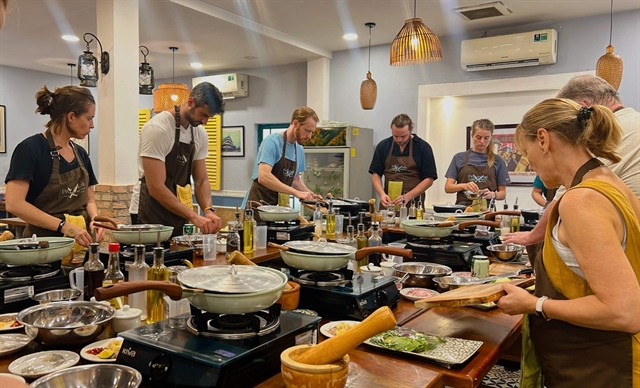 |
| Foreign tourists participate a Vietnamese cooking class in HCM City. — Photo ssttravel.vn |
Across the country, large-scale culinary events such as the Hà Nội Culinary Culture Festival, the Huế Vegetarian Food Festival, the Nam Định Phở Festival and the Southern Traditional Cake Festival have attracted growing numbers of visitors.
These initiatives demonstrate that when cuisine is effectively positioned within development strategies, it can become a genuine reason to travel rather than merely an ancillary service.
Building foundations for integration
If culinary diversity represents a valuable resource, human capital remains the decisive factor in ensuring quality and competitiveness. The Vietnam Tourism Association (VTA) has for many years pursued a strategy aimed at standardising the culinary workforce and, in 2025, intensified efforts to elevate cuisine as a distinctive tourism product.
National-scale events such as the Vietnam Bánh Mì Festival 2025 and the first Vietnamese Rice Noodle Festival not only attracted large crowds but also strengthened Việt Nam’s culinary brand presence in international media.
Vietnamese chefs competing in international contests in 2025 also secured numerous gold and silver medals, further reinforcing the country’s position on the global culinary map.
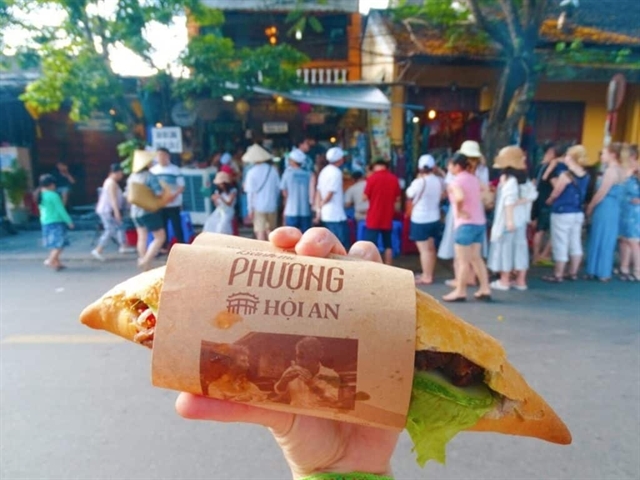 |
| Guests queue outside a popular bánh mì shop in Hội An. — Photo wheregoesrose.com |
While countries such as Japan, France and South Korea have long-established professional title systems for chefs, Việt Nam is taking initial but foundational steps. The VTA has introduced a national recognition system for culinary artisans covering cooking, baking, beverage preparation and fruit and vegetable carving.
VTA Chairman Vũ Thế Bình noted that the artisan title serves a dual mission, preserving culinary heritage while standardising the profession in line with international benchmarks. Candidates are assessed not only on technical skills but also on cultural knowledge, culinary history, ingredients and food safety standards, helping ensure the title aligns with globally recognised certifications.
From a business perspective, a representative of Vietravel stressed the need to refine policies, develop unified branding criteria, strengthen public and private partnerships and invest in human resources through closer cooperation between schools, businesses and artisans.
As experiential tourism expands, cuisine is increasingly emerging as a lasting travel memory. To build a national culinary brand, Việt Nam must align heritage, the food and beverage industry and artisan standardisation, laying the groundwork for a stronger global presence and elevating Vietnamese cuisine as a tourism icon. — VNA/VNS
Life & Style
 Life & Style
 Life & Style
 Life & Style
 Life & Style
 Life & Style
 Life & Style
 Life & Style
 Life & Style
 Life & Style
 Life & Style
 Life & Style
 Life & Style
 Life & Style
 Life & Style