 Life & Style
UK Royal Navy’s patrol vessel pays second visit to HCM City
1.
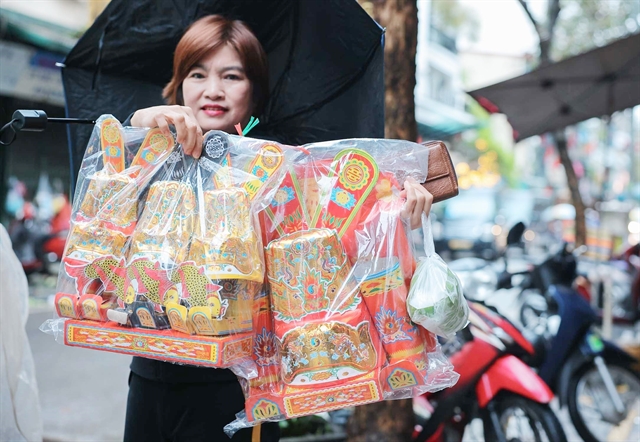 |
| A woman holds sets of paper shirts, hats and shoes offered to Ông Công and Ông Táo (Land Genie and Kitchen Gods) on the 23rd day of the lunar month. — VNA/VNS Photo Hoàng Hiếu |
HÀ NỘI — The 23rd day of the 12th lunar month, which falls on February 10 this year, has long marked a defining moment in the cultural and spiritual life of the Vietnamese, signalling the formal start of the Tết, or Lunar New Year, season.
On this day, families across the country perform the ritual of worshipping and bidding farewell to Ông Công and Ông Táo (the Land Genie and Kitchen Gods), who are believed to return to heaven to report to the Jade Emperor on events in the household over the past year. The ceremony officially ushers in preparations for Tết, the most important traditional holiday in Việt Nam.
According to folklore, the Kitchen Gods comprise three deities — two males and one female — tasked with overseeing the kitchen, maintaining family order and recording the merits and faults of each household. The kitchen is therefore regarded not merely as a place for cooking but as a symbol of warmth, connection and happiness within every Vietnamese family.
Beyond its spiritual significance, the ritual embodies profound humanitarian values. Through the ceremony, families express hopes for peace, harmony and prosperity in the year ahead while reflecting on the past year to adjust behaviour and uphold family ethics and ways of life.
“The Kitchen Gods symbolise family values, the moral principles of the household, and the witnessing of human actions, both good and bad, over the course of a year,” said Lê Quý Đức, former deputy director of the Institute of Culture and Development at the Hồ Chí Minh National Academy of Politics.
“The ceremony to send the Kitchen Gods back to heaven serves as a reminder for people to live more responsibly towards their families and society.”
Rituals and offerings
In folk belief, carp are the means by which the Kitchen Gods travel through the celestial gate to heaven. As a result, the tradition of releasing carp on the 23rd day of the lunar calendar represents a symbolic farewell and conveys wishes for smooth progress, advancement and good fortune. In many localities, the practice also adds to the festive atmosphere, signalling that Tết is close at hand.
The worship ceremony for the Kitchen Gods is traditionally held on the 23rd day of the lunar calendar. For families with busy schedules, it may be conducted one or two days earlier.
Offerings to the Kitchen Gods vary by region but typically include incense, flowers, water, betel leaves and areca nuts, a plate of savoury or vegetarian food, live carps, as well as paper money and garments made for ritual purposes. Cultural experts note, however, that sincerity is the most important element, rather than the presentation or abundance of offerings.
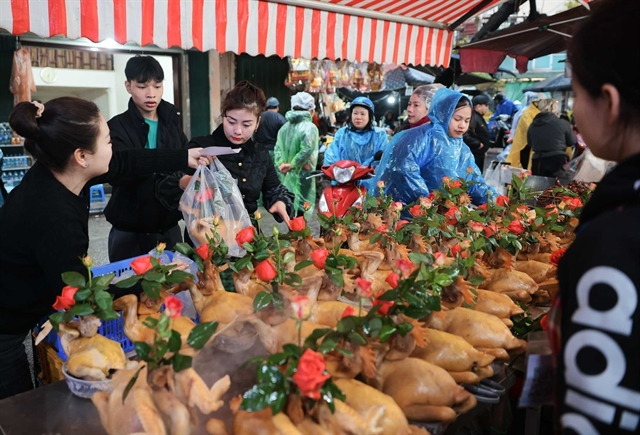 |
| People shop for boiled chicken as an offering to Land Genie and Kitchen Gods. — VNA/VNS Photo Hoàng Hiếu |
Before the ceremony, families usually clean and tidy the kitchen as a sign of respect for the deities believed to govern the stove. This also provides an opportunity to begin a thorough cleaning of the home in preparation for the Lunar New Year.
Environmental awareness
In recent years, alongside the preservation of traditional customs, many localities and individuals have placed greater emphasis on civilised practices and environmental protection during the ceremony to bid farewell to the Kitchen Gods.
Carp are released carefully in designated areas, with efforts made to avoid littering or discarding plastic bags into rivers and lakes, helping to protect the landscape and the ecological environment.
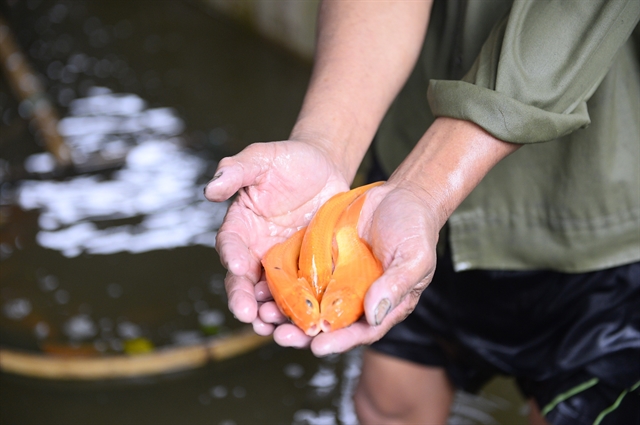 |
| In folk belief, carp carry the Kitchen Gods through the celestial gate to heaven. — VNA/VNS Photo Hoa Mai |
“There have been many cases where carp are released into unsuitable water sources, leading to their immediate death, or where people release them along with plastic bags and paper offerings, causing environmental pollution. From a moral and cultural perspective, this contradicts the humanitarian spirit of the custom,” Đức said.
According to him, the core aspect that needs to be preserved in the worship ceremony for the Kitchen Gods is not the form of the offerings but the spiritual significance behind the ritual.
“From this perspective, it is entirely appropriate to choose lightweight offerings such as paper carp, fruits and simple incense while conducting the ceremony in a solemn and respectful atmosphere, in line with tradition. Conversely, if the offerings are abundant or even elaborate but carried out in an extravagant manner, it would be difficult to say that the true ‘spirit’ of the custom is preserved,” he said.
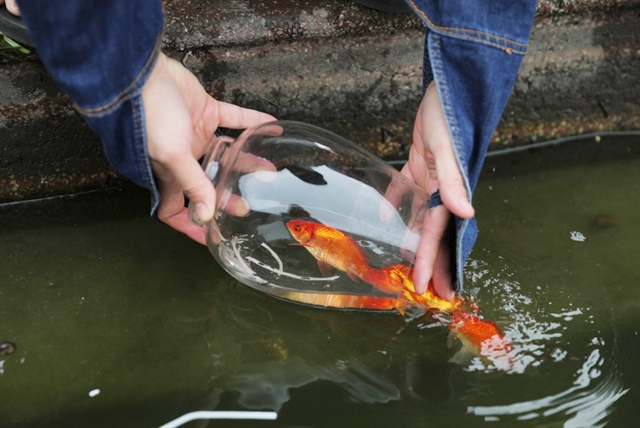 |
| The release of carp is increasingly associated with environmental awareness. — VNA/VNS Photo Thành Đạt |
Đức added that correct understanding is essential to correct practice in modern life, rather than merely copying or following the mindset of others.
“Tradition is not about replicating exactly what the ancestors did; it lies in preserving the core values they imparted," he said. "As long as sincerity and an awareness of environmental protection are upheld, that remains a civilised way to continue the tradition.” — VNS
Life & Style
 Life & Style
 Life & Style
 Life & Style
 Life & Style
 Life & Style
 Life & Style
 Life & Style
 Life & Style
.jpg) Life & Style
Life & Style
 Life & Style
 Life & Style
 Life & Style
 Life & Style
 Life & Style