 Life & Style

Ping An Digital Bank Deepens Trade Finance to Serve the Real Economy with Financial Services
1.
|
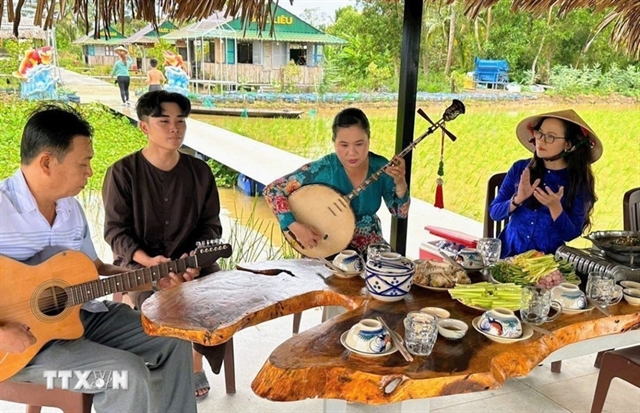
| A đờn ca tài tử performance at the Cánh Đồng Cậu Ba agricultural eco-tourism site, HCM City. —Photo VNA/VNS |
HCM CITY — HCM City’s merger with Bình Dương and Bà Rịa-Vũng Tàu has formed an expansive mega-city, broadening the scale and diversity of its cultural heritage landscape while presenting fresh opportunities and challenges that demand a more coordinated and forward-looking preservation strategy aligned with the city’s long-term development goals.
The southern city is home to a rich pool of intangible cultural heritage, including three elements recognised by UNESCO: ca trù ceremonial singing, southern amateur music (đơn ca tài tử), and the Mother Goddess worship of the Three Realms, along with 15 traditions listed in the national intangible cultural heritage inventory. Many of these legacies, ranging from festivals and folk knowledge to traditional crafts, have been safeguarded for generations and now serve as distinctive cultural draws for visitors.
According to the municipal Department of Culture and Sports, conservation work has gained momentum through a series of targeted programmes.
In 2025, the city implemented projects to preserve southern amateur music and promote the traditional costumes of Việt Nam’s ethnic minority groups. It also enhanced the cultural value of the Nguyên Tiêu (First Full Moon) Festival of the Hoa (Vietnamese of Chinese origin) community and prepared dossiers seeking national heritage recognition for the Hẩu dance art of the Hoa people in former Bình Dương Province.
Grassroots initiatives have also expanded, particularly in culturally rich areas. Localities such as Gia Định Ward, Chợ Lớn ward and Côn Đảo special zone have introduced heritage protection and promotion plans, while cultural and sports service centres have intensified public awareness campaigns. Many heritage elements are increasingly being incorporated into tourism development, helping shape culturally distinctive travel products.
Dr Nguyễn Minh Nhựt, Deputy Head of the Culture and Social Affairs Committee of the HCM City People’s Council, said tourism models featuring intangible heritage such as đờn ca tài tử, the Nghinh Ông Festival in Cần Giờ, and the death anniversary of Lady Phi Yến have deepened local cultural narratives, diversified tourism offerings, and helped “animate heritage” by transforming it from static preservation into living practice, performance, and community engagement.
Experts have recommended crafting a comprehensive heritage preservation strategy that strengthens connectivity among the three areas forming the city’s mega-urban structure, while ensuring conservation efforts are balanced with the utilisation and promotion of heritage in daily life, tourism and economic activities.
Dr Nguyễn Thị Thu Trang of the HCM City University of Culture suggested prioritising the integration of intangible cultural heritage into urban planning and management. This approach would help sustain traditional knowledge, customs, crafts and local livelihoods, while reinforcing social cohesion, encouraging public participation and advancing inclusive development.
She also underscored the importance of shifting from fragmented, monument-centred preservation to safeguarding living heritage ecosystems, including zoning and protecting spaces where heritage is practised, such as riverfront areas associated with the Nghinh Ông Festival, Hoa community assembly halls and streets hosting the Nguyên Tiêu Festival, training grounds for lion and dragon dance, and cultural houses staging đờn ca tài tử performances.
Scholars stressed that maintaining the vitality of heritage is crucial for a fast-urbanising metropolis like HCM City. Heritage, they noted, should be viewed not as a constraint on development but as a valuable asset, with preservation efforts advancing in tandem with promotion to ensure heritage remains relevant in contemporary urban life.
Dr Phạm Ngọc Hương of the Southern Institute of Social Sciences highlighted the need for solutions that combine safeguarding both tangible and intangible heritage with development, alongside stronger application of science, technology and digital transformation in conservation and promotion.
He noted that preserving folk festivals is most effective when they remain embedded in daily community life, citing long-standing events such as the Nguyên Tiêu Festival in Chợ Lớn and the Bà Pagoda Festival in Bình Dương, which have become cultural hallmarks of HCM City and the southern region.
Meanwhile, Dr Lê Xuân Hậu of the Regional Academy of Politics 2 said that in the 2026–2030 period, with a vision to 2045, HCM City aims to evolve into a regional service, cultural and creative hub, and a leading financial, trade, science and technology centre in Southeast Asia. In this trajectory, cultural tourism is expected to emerge as a key growth driver, helping boost economic development while enhancing national cultural identity and the city’s global image.
He added that the city should develop distinctive cultural tourism products, particularly festival-based experiences combining education, entertainment and interaction. Expanding tours linked to traditional crafts and folk music, while strengthening connectivity among wards and communes, would help visitors gain deeper insights into local lifestyles and creativity. Strengthening community participation by training artisans and residents to serve as guides and heritage storytellers would further promote cultural knowledge and values, he noted. — VNA/VNS
Life & Style
 Life & Style
 Life & Style
 Life & Style
 Life & Style
 Life & Style
 Life & Style
 Life & Style
 Life & Style
 Life & Style
 Life & Style
 Life & Style
 Life & Style
 Life & Style
 Life & Style