 Life & Style
Sales, marketing congress discusses growing influence of AI
1.
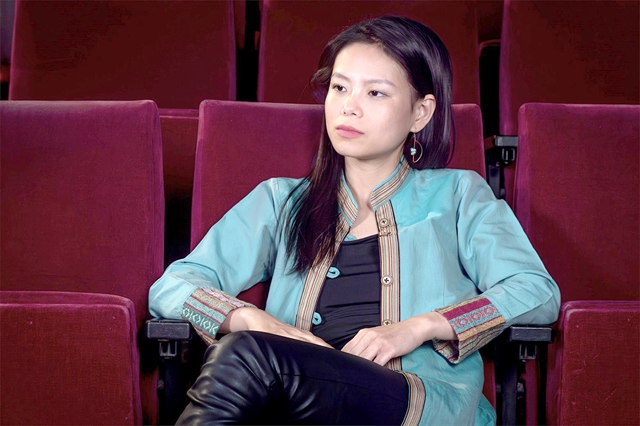 |
| Musician Phạm Thị Tâm. — Photo courtesy of Tống Khánh Hà |
Vietnamese multimedia composer, improviser and performer Phạm Thị Tâm, who is now based in Hamburg, is set to bring her boundary-pushing sound work to Hà Nội on December 5 in a one-night experimental concert.
Ahead of the performance, Việt Nam News and Law reporter Nguyễn Bình sits down with Tâm to discuss her creative journey and what audiences can expect.
Could you introduce your performance at a Hà Nội concert?
I will perform đàn bầu (Vietnamese monochord) and electronics, an improvisational piece that combines the sound of the traditional đàn bầu with new sounds created using extended techniques I have discovered, such as multiphonics with glasses or a bow, e-bow and different objects like a head massager or bag-sealing clip... etc.
My solo improvisation is often inspired by the feeling of the moment, the space where I perform and the energy from the audience is also an element that influences the performance rather than following a fixed composition.
Every performance is different and unrepeatable. The result is a constantly evolving conversation between đàn bầu and the effects I create using Max/MSP software, offering the audience a fresh and unique listening experience each time.
How could you prepare an improvised performance with Japanese Tomomi Adachi and Vietnamese Tuấn Nị?
To prepare an improvised performance with Tomomi Adachi and Tuấn Nị, we first need to know in advance what instruments we use, what equipment must be prepared and how we will set up our gear. On the day of the performance, we will have a rehearsal.
During that time, we will explore how we can interact with each other and shape the performance together.
The piece is built on spontaneity – focusing on what happens in the moment, listening to ourselves, listening to each other and sharing responsibility for creating the music collaboratively. We allow space for something unpredictable and unplanned.
It can be challenging, but it’s also exciting and full of discovery. It could be a challenge, but interesting to be in.
How’s about your solo đàn bầu performance with real-time sound processing, could you explain the piece in detail?
Solo đàn bầu with real-time sound processing means I use the live sound of the đàn bầu itself as my main creative material on stage.
To prepare, I design and programme multiple recording and playback modes in Max/MSP. These patches allow the acoustic sound to be transformed instantly – for example through pitch shifting, time stretching and stereo motion, placing the sound across left and right speakers.
I also work with subtle effects such as reverb and delay, along with sound exploration techniques like freezing, layering and sonic sustain. The piece evolves freely in the moment, shaped by listening and interaction between the instrument and the live electronics.
How did your journey with đàn bầu begin? When did you learn the instrument and where?
When I started planning my study abroad, I thought it would be meaningful to bring a Vietnamese instrument with me to Europe. That’s why I chose the đàn bầu – a way to introduce Vietnamese culture through music to the places where I would later live. Việt Nam has so many beautiful and rich experiences beyond the narrative of war.
Before moving to Germany, I learned the basics from my friend Quỳnh Hương, who taught me the fundamental techniques. After settling in Hamburg, I was determined to continue developing my skills. However, I soon realised how difficult it was to find scores or high-quality learning resources online. There were very few instructional videos and reliable materials available.
This led me to create a long-term educational project called Learning Đàn Bầu, supported and published by Hamburg Open Online University. The project includes multiple sections: the history of the instrument, foundational techniques, folk and traditional music, and new contemporary compositions for đàn bầu. Collaborators include Thanh Tâm and Ngô Trà My.
The section on basic techniques has already been released, and the remaining parts are currently in development and will be published step by step.
Through building this project, I not only practised the instrument, but also gained a deeper understanding of how Vietnamese music speaks through the unique voice of đàn bầu.
Đàn bầu is a unique Vietnamese instrument, when did you begin using it as a medium for experimental music?
I have been exploring improvisation and experimental music since 2013, using prepared piano and found objects as instruments in Việt Nam. In 2016, I began discovering new sounds on đàn bầu, continuing my exploration of timbre and sonic possibilities. I found đàn bầu to have great potential for experimental music.
Being a Vietnamese musician playing this instrument in Germany gives me a unique perspective. Very few people here can play it and I can draw from my deep understanding of the instrument its cultural context and my personal connection to it, creating a distinctive approach to experimental performance.
Being part of the active experimental scene in Berlin and Hamburg, I have learned from other musicians, which helped me reflect on and develop my skills on this instrument.
You have taught đàn bầu at the Hochschule für Musik und Theater Hamburg. Could you tell about it?
Yes, I’m teaching đàn bầu courses at the Hochschule für Musik und Theater Hamburg. It is a free module, part of the Asian Music Department, open to students who are interested in Vietnamese music and this instrument.
The lessons take place weekly. Most of my students are Chinese or Korean and some are German, Israeli or Italian.
At the end of each semester, I organise a performance to motivate the students to practise and to share Vietnamese culture with the local community.
I have received a lot of positive feedback. The Vietnamese community in Hamburg is proud and happy to see events like this taking place.
How often do you perform in Việt Nam? And what is your next performance in the fatherland?
I don’t perform frequently in Việt Nam, but whenever I return to visit family, I organise several events such as workshops, presentations on German contemporary music, concerts or performances with dancers. I want to contribute to the art scene here as much as I can.
My next event is Đàn Bầu and Beyond on December 12 at Anatolia, Hà Nội. — VNS
Life & Style
 Life & Style
 Life & Style
 Life & Style
 Life & Style
 Life & Style
 Life & Style
 Life & Style
 Life & Style
 Life & Style
 Life & Style
 Life & Style
 Life & Style
 Life & Style