 Life & Style
Data, AI boosting value in Việt Nam's textile and garment industry
1.
 |
| An art group plays gongs during a ritual in Đắk Lắk. VNA/VNS Photo Lê Đông |
ĐẮK LẮK —The cultural space of the gongs in the Central Highlands has left an enduring imprint, becoming a signature cultural symbol since UNESCO recognised it as a Masterpiece of the Intangible Heritage of Humanity on November 25, 2005, said Đào Mỹ, vice chairman of the Đắk Lắk Provincial People's Committee.
The Đắk Lắk Provincial People's Committee recently held a conference to review 20 years of efforts in preserving and promoting the cultural space of the gongs in the province with a focus on orientations leading up to 2030.
According to the vice chairman, Đắk Lắk is home to 49 ethnic groups each with a distinctive and deeply rooted cultural heritage and identity.
Among them, the cultural space of the gongs in the Central Highlands was designated as a Masterpiece of the Oral and Intangible Heritage of Humanity by UNESCO in 2005 and later inscribed in the Representative List of the Intangible Cultural Heritage of Humanity in 2008.
"This is a unique cultural symbol, a source of pride shared not only by the people of Đắk Lắk but also for the entire Vietnamese nation. The sound of the gongs goes beyond music -- it represents the voice of the mountains and forests, the heartbeat of the community and a symbol of strong connectivity and vitality,” he said.
He highlighted the importance of preservation and promotion of gongs in the new context, adding that it needed to be linked with the development of cultural tourism and integrated with digital technology to create unique and attractive products.
“As a result, the heritage is not only preserved in its original form but also becomes an important resource for sustainable socio-economic development. Preserving and promoting traditional cultural values, including the cultural space of the gongs in the Central Highlands, remains not only the responsibility of the cultural sector or local authorities but also a duty of the entire society, contributing to the preservation of national identity and enhancing the country’s position on the international stage,” he said.
 |
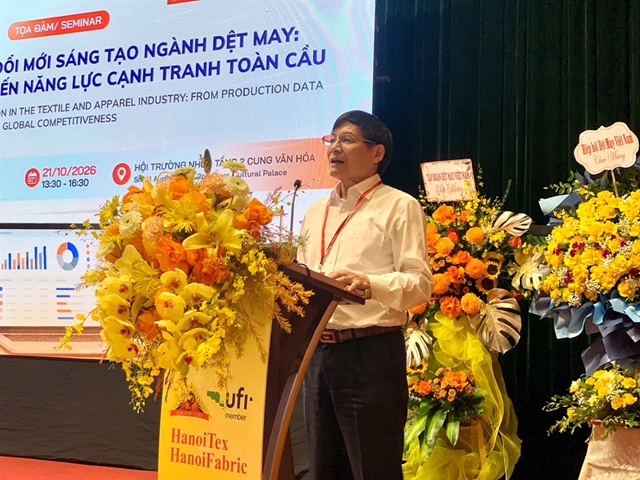
| Nguyễn Viết Cường, deputy director of the Department of Cultural Heritage under the Ministry of Culture, Sports and Tourism, speaks at the conference. VNA/VNS Photo Nguyên Dung |
The echo of tradition
Nguyễn Viết Cường, deputy director of the Department of Cultural Heritage under the Ministry of Culture, Sports and Tourism (MCST), said the Government continues to carry out various programmes aimed at preserving and sustainably promoting the cultural heritage values of Việt Nam.
"The provinces and cities across the country have effectively implemented programmes aimed at preserving and promoting the cultural values of the ethnic minorities,” he said.
“In the coming time, based on the legal regulations concerning cultural heritage, Đắk Lắk Province should develop a project for the management and promotion of the gong culture for review by the MCST and approval by the Provincial People's Committee. At the same time, policies need to be strengthened for heritage clubs, artisans and stakeholders.”
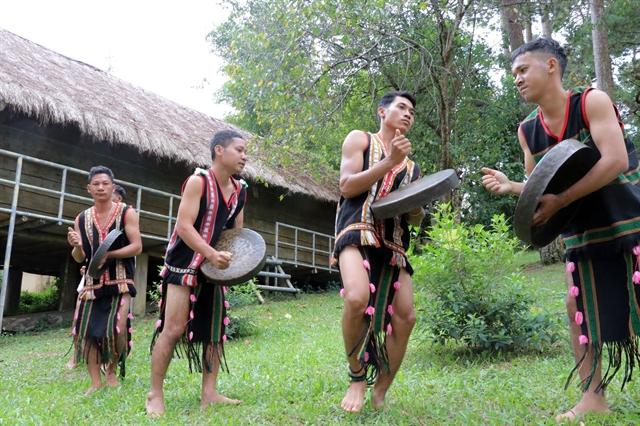 |
| The cultural space of the gongs in the Central Highlands of Việt Nam was recognised as a Masterpiece of the Intangible Heritage of Humanity by UNESCO on November 25, 2005. VNA/VNS Photo Chu Quốc Hùng |
The report presented at the conference showed that the values of gong heritage have truly been upheld, making it a lasting cultural symbol.
Efforts to preserve and promote the cultural value of the heritage in the province have achieved significant results, such as restoring traditional festivals, maintaining hundreds of gong teams, opening classes to teach the younger generation, promoting the heritage internationally and linking safeguarding work with the development of cultural tourism.
By 2024, the province had a total of 1,603 sets of gongs owned by various ethnic minority groups, including 1,178 sets of Ê Đê gongs, 219 sets of M'nông gongs, 118 sets of Jrai gongs, and 88 other sets.
Notably, there are 3,749 gong players who are preserving various forms of heritage, including 1,015 young ones. The province has provided 214 sets of gongs of various types and 1,140 sets of traditional costumes to gong teams and clubs, resulting in tangible cultural revitalisation..
Alongside the achieved results, preservation efforts are facing numerous difficulties and challenges, such as the decline of traditional knowledge, the risk of disruption in the transmission of skills, the impacts of urbanisation and digital technology, challenging economic conditions in ethnic minority areas and the strong influence of modern culture.
Charting a future
According to local authorities, Đắk Lắk will continue to implement the commitments outlined in the UNESCO submission document during the period from 2025 to 2030, with a focus on directions heading towards 2035.
The province aims to introduce the value of the heritage to both domestic and international friends and more effectively safeguard and elevate this cultural heritage during the period of national industrialisation and modernisation, thereby creating momentum to boost the province's tourism development.
On the occasion, the province also awarded certificates of merit and congratulatory letters to units and individuals who have made significant contributions to the preservation and promotion of the cultural heritage of gongs in the province from 2005 to 2025.
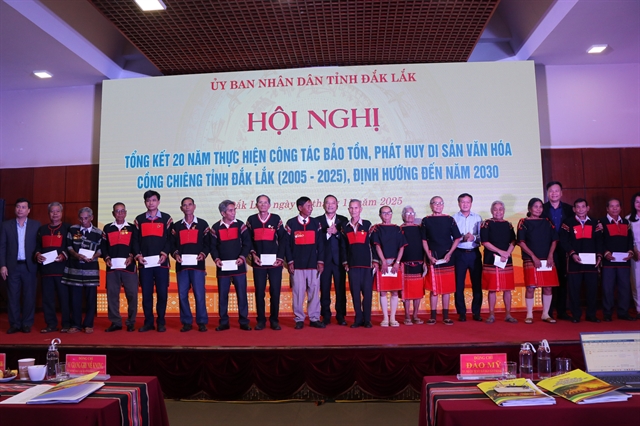 |
| Units and individuals who have made significant contributions to the preservation and promotion of the cultural heritage of gongs are honoured at the event. VNA/VNS Photo Nguyên Dung |
Gongs date back to the Đông Sơn Culture around 3,500–4,000 years ago. Today, the cultural space of gongs covers three Central Highlands provinces, namely Đắk Lắk, Lâm Đồng and Gia Lai.
Gongs have become a form of communication linking communities to gods and the supernatural world. Gongs are considered the most sacred and valuable asset in every ethnic family. —VNS
Life & Style
 Life & Style
 Life & Style
 Life & Style
 Life & Style
 Life & Style
 Life & Style
 Life & Style
 Life & Style
 Life & Style
 Life & Style
 Life & Style
 Life & Style
 Life & Style
.jfif) Life & Style
Life & Style




