 Environment

Việt Nam, EU and Belgium seek deeper, practical cooperation
1.
|
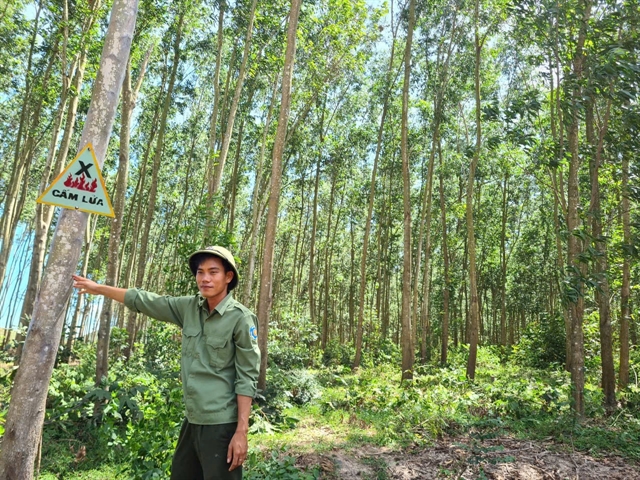
| A large-timber plantation model in Gia Lai Province. — VNS Photo Tố Như |
HÀ NỘI — A US$96-million project is expected to boost sustainable forest management, expand agroforestry and support efforts to reduce greenhouse gas emissions while strengthening Việt Nam's forest carbon framework.
The Reduction of Emissions in the Central Highlands and South Central Coast of Việt Nam (RECAF) project will run from 2026 to 2031 across the provinces of Đắk Lắk, Gia Lai, Lâm Đồng, and Khánh Hòa covering about 145,000ha, according to the International Fund for Agricultural Development (IFAD).
Speaking at an online seminar on Wednesday, Nguyễn Ngọc Quang, IFAD's country programme coordinator for Việt Nam, said about 60 per cent of the project's budget would directly support local communities through training, capacity building, sustainable production models and livelihood transition funds.
The project aims to support Việt Nam's REDD+ Action Programme by promoting community-based forest management, developing deforestation-free value chains and protecting around 500,000 hectares of high-value natural forests.
RECAF is expected to reduce or avoid about 6.68 million tonnes of carbon dioxide equivalent over a 12-year period, Quang said.
Climate finance and forestry expert Đỗ Trọng Hoàn said the project would prioritise agroforestry systems such as integrating perennial trees into coffee plantations, cultivating medicinal plants under forest canopies and growing bamboo in suitable areas.
He added that agroforestry systems in the project area have the potential to absorb between 5 and 21 tonnes of carbon dioxide equivalent per hectare.
Rather than generating carbon credits, RECAF will focus on delivering verified emission reductions to help Việt Nam meet its nationally determined contribution targets under the Paris Agreement, while improving rural livelihoods, project officials said. — VNS
Environment
 Environment
 Environment
 Environment
 Environment
 Environment
 Environment
 Environment
 Environment
 Environment
 Environment
 Environment
 Environment
 Environment
 Environment