 Environment
General Secretary and President Tô Lâm witnesses exchange of Việt Nam-Denmark cooperation agreements
1.
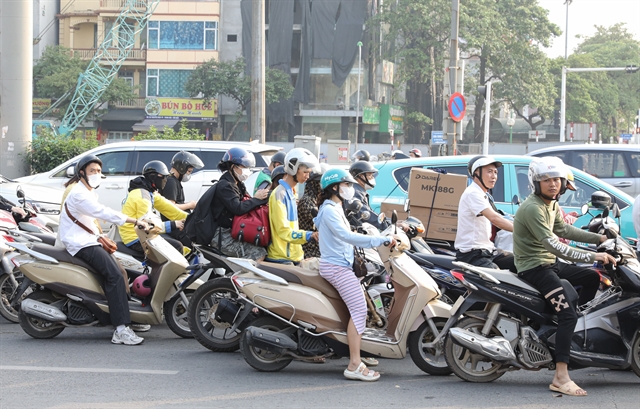 |
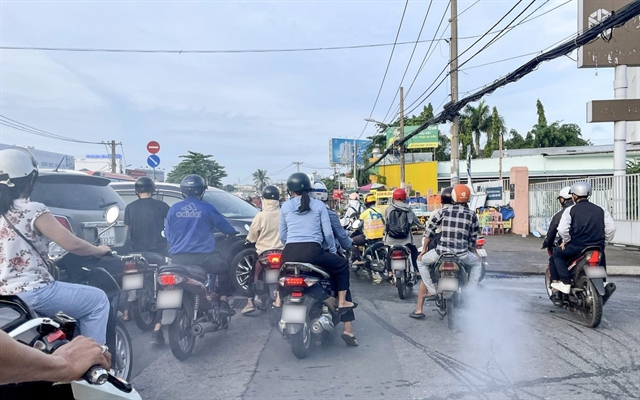
| Motorists travel in Hà Nội. — VNA/VNS Photo |
HÀ NỘI — Hà Nội will not require all petrol-powered vehicles to switch to electric models in 2026, but will instead follow a phased roadmap to give residents and businesses time to adapt, Deputy Director of the Hà Nội Department of Construction Đào Việt Long said.
Speaking at a recent talk event themed "Hà Nội’s time-based restriction on petrol motorbikes: "What are the implications for infrastructure and livelihoods?," Long stressed the city would not impose a universal mandate, but set specific timelines for different vehicle groups.
For motorbikes used in transport services, Hà Nội aims for a 20 per cent shift to electric vehicles (EVs) by January 1, 2027, rising to 50 per cent by 2028 and 100 per cent by 2030.
For taxis and passenger cars with up to eight seats, all new or replacement vehicles must use clean energy from July 1, 2026, with half converted to non-petrol by 2028. By 2030, all new or alternative vehicles must be electric or run on other clean energy.
“This regulation applies only to new or replacement vehicles, not all existing ones. Vehicles that remain roadworthy and meet technical standards will continue on the road,” Long said, adding that misinformation on social media had caused unnecessary public anxiety.
Hà Nội is drafting a resolution on the green transport transition, including multiple policies to support residents and enterprises. Financial incentives will cover 20 per cent of an EV’s cost, capped at VNĐ5 million (US$190) per vehicle. Low-income households could receive full support of up to VNĐ20 million ($760), and near-poor households up to 80 per cent, capped at VNĐ15 million ($570).
The city will also offer a 30 per cent interest subsidy for 12 months to those buying EVs on installments, while working with manufacturers to reduce retail prices, noting EVs are already far more affordable than five to seven years ago.
Transport companies, including passenger, freight and public-service operators, will receive up to a 30 per cent subsidy on loan interest for five years, along with access to preferential funding, reflecting their high operating frequency and current emissions.
Other incentives include a 50 per cent reduction in registration fees for electric motorbikes, with full exemptions for poor and near-poor households. Taxis and buses converting to clean energy will also be exempt from registration fees if they retain existing plates, while EV and bicycle renting providers could be exempt from pavement and roadway usage fees for up to five years.
To accelerate EV charging infrastructure, Hà Nội plans to cover 50 per cent of site clearance costs, waive land rental fees for five years, offer a 30 per cent interest subsidy for approved clean-energy charging projects and streamline investment procedures to facilitate development. — VNS
Environment
 Environment
 Environment
 Environment
 Environment
 Environment
 Environment
 Environment
 Environment
 Environment
 Environment
 Environment
 Environment
 Environment
 Environment