 Economy

Environmental protection needs smart governance
1.
|
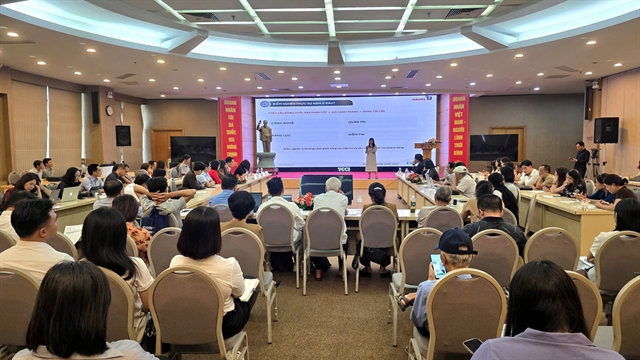
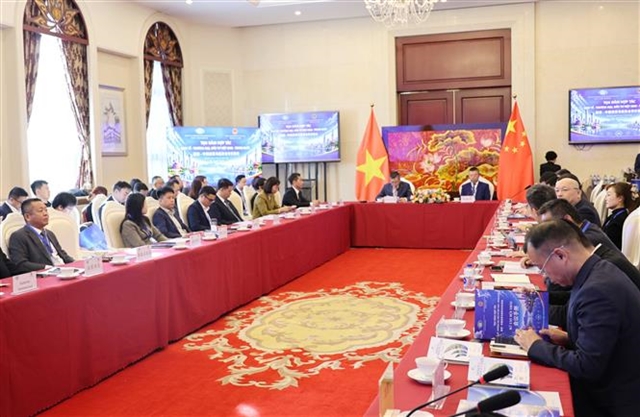
| Delegates attend the workshop on Tuesday morning. — VNS Photo Ly Ly Cao |
By Ly Ly Cao
HÀ NỘI — Businesses need to strengthen production capacity, meet international buyers' standards and improve access to finance to capture more orders from global supply chains, speakers said at a business workshop in Hà Nội on October 27.
Việt Nam's export growth and rising foreign direct investment (FDI) are creating opportunities for local suppliers, particularly in supporting industries and manufacturing.
However, the challenge is to translate these opportunities into greater domestic participation in supply chains, according to presentations by industry representatives.
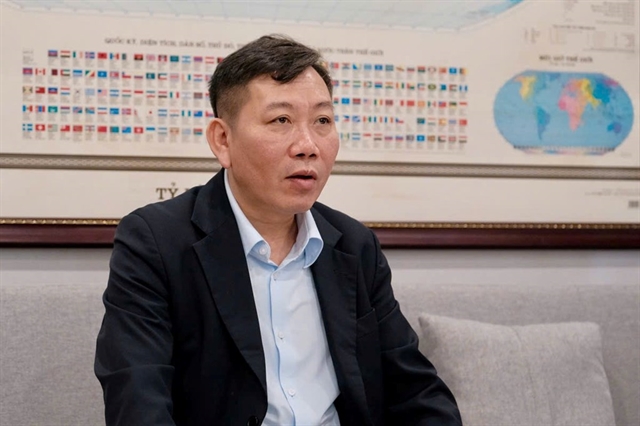
Speaking at the workshop themed 'Connecting Order Opportunities – Enhancing Supply Capacity and Financing Solutions for Businesses', Dr Nguyễn Trung Kiên, general director of CNCTech Group, said orders followed a company's capabilities, highlighting the need for Vietnamese businesses to prepare for the requirements of global buyers rather than rely solely on the availability of investment and market demand.
Data showed that registered FDI reached US$50.36 billion in the first nine months of 2026, up 76.4 per cent year on year, while disbursed FDI totalled $21.07 billion, its highest level in five years. Manufacturing and processing accounted for 82.6 per cent of disbursed FDI.
Merchandise exports reached $434.3 billion during the period, up 24.5 per cent. Exports of computers, electronic products and components rose by 59.6 per cent to $123.66 billion, while machinery and equipment exports increased by 27.9 per cent.
These developments are generating demand for components, moulds, equipment and services in Việt Nam. Yet domestic firms still face difficulties in securing a larger share of that demand.
Kiên said that foreign-invested enterprises accounted for 80.7 per cent of the country's exports in the first nine months, equivalent to $350.4 billion, up 29.4 per cent.
Domestic enterprises exported $83.89 billion, an increase of 7.5 per cent.
Kiên added that each component or service that foreign-invested manufacturers still import represents a potential order for Vietnamese suppliers. The task is to develop the capabilities required to qualify as suppliers and maintain those relationships over time.
|
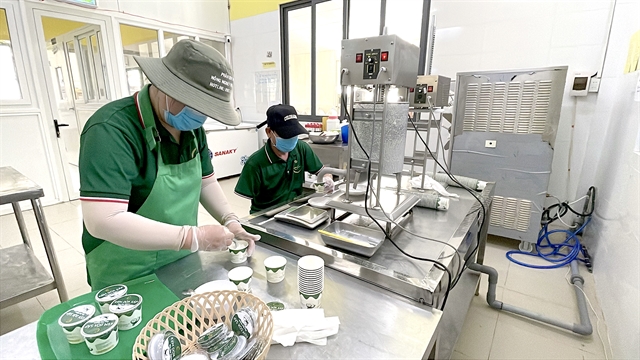
| Workers packaging products at a plant in Vĩnh Long Province. — VNA/VNS Photo |
From production capability to reliable supply
Trần Thị Thu Trang, chairwoman of Hanel PT and the Bac Ninh Industrial Manufacturing Association, said buyers did not simply purchase products that met specifications at a particular moment.
They selected suppliers they believed could maintain quality and delivery performance over the longer term.
She identified the gap between a company's existing capabilities and buyers' actual requirements as a key production bottleneck.
Suppliers must simultaneously offer good products, competitive prices and reliable delivery, supported by appropriate technology, management systems and organisational capabilities.
Reducing costs therefore requires more than cutting input expenses. Businesses need to improve the value generated from existing resources through technological innovation, continuous improvement and investment targeted at specific production bottlenecks.
Trang also emphasised standardising processes before digitalising them. Production knowledge, operating procedures, data, quality controls and improvement mechanisms need to be embedded in the organisation rather than concentrated in a few experienced employees.
For companies seeking to enter global supply chains, the process should extend beyond initial introductions, Trang said.
Businesses need to identify suitable buyers and supply chains, assess gaps against buyer standards, undergo supplier evaluations and trial production, and then work towards repeat orders. Repeated orders demonstrate operational capability, while longer-term partnerships reflect buyer confidence.
Policy support is also available to help domestic manufacturers upgrade.
Nguyễn Văn Hội, general director of the Vietnam Institute of Strategy and Policy Research for Industry and Trade, under the Ministry of Industry and Trade, said that measures under Decree No. 205/2025/NĐ-CP, which amended the framework for supporting industries, include support for machinery, equipment, software, technology transfer, testing, certification, research and development, and specialist consultancy.
Decision No. 929/QĐ-TTg, dated May 25, 2026, approved the Supporting Industry Development Programme for 2026–2035, with priorities including technological upgrading, digital transformation, smart factories, green standards and stronger links between domestic suppliers and multinational manufacturers.
Access to finance remains another constraint, particularly for small and medium-sized enterprises (SMEs) that must pay for materials, labour, electricity and logistics before receiving payment from buyers.
A representative from BIDV highlighted challenges including long production cycles, large receivables, limited collateral, investment needs exceeding existing assets, difficulties demonstrating creditworthiness, exchange-rate fluctuations and international payment risks.
Businesses may need to wait 60–90 days to collect payment even after producing and delivering goods.
Under supply-chain finance, suppliers may obtain early payment against invoices issued to larger buyers, helping ease cash-flow pressure and reduce the risk of delayed payment.
BIDV also presented warehouse financing, under which goods stored at partner logistics facilities can serve as collateral.
The bank said SMEs could improve their access to credit by maintaining transparent financial statements, clear cash-flow records, documented customer orders and contracts, and credible business plans with repayment schedules. — BIZHUB/VNS
Economy
 Economy
 Economy
 Economy
 Economy
 Economy
 Economy
 Economy
 Economy
 Economy
 Economy
 Economy
 Economy
 Economy
 Economy