 Economy


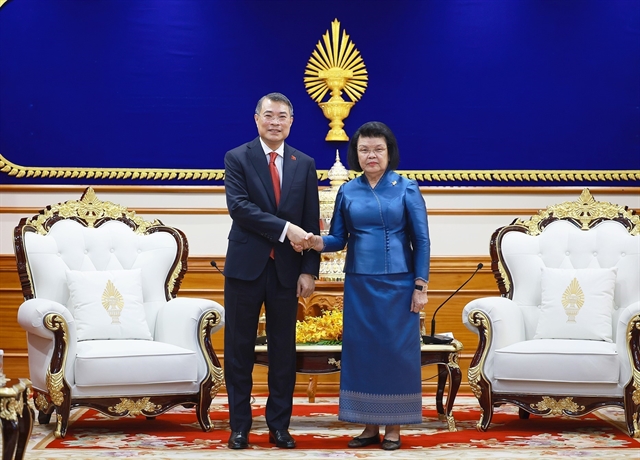
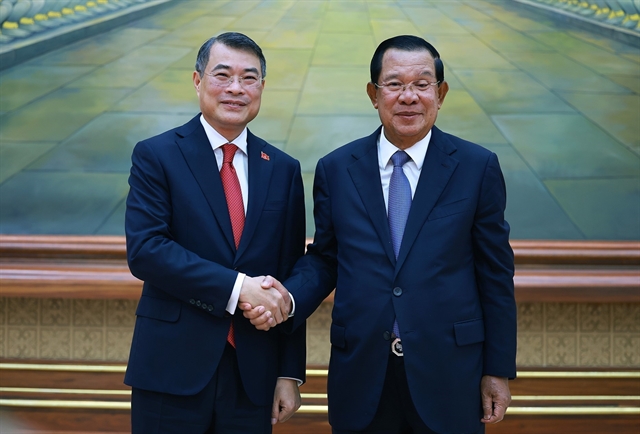
Vietnamese Prime Minister meets Cambodian National Assembly President
1.

|
| Representatives of the Việt Nam–Laos inter-sectoral coordination group sign the minutes of the meeting. — Photo courtesy of the Ministry of Industry and Trade |
HÀ NỘI — An inter-sectoral coordination group between Việt Nam and Laos conducted an inspection in the northwestern province of Điện Biên from August 26 to 28 to review the implementation of the 2007 Hanoi Agreement on facilitating the movement of people, vehicles and goods across the shared border, the Ministry of Industry and Trade said on August 29.
The inspection aimed to assess implementation results, identify difficulties and obstacles, and discuss measures to further facilitate cross-border movement and trade between the two countries.
The agreement between the Vietnamese and Lao Governments on facilitating the movement of people, vehicles and goods across the border, signed in Hà Nội on September 14, 2007, provides an important framework for promoting investment and trade cooperation between the two countries.
After nearly two decades of implementation, it has become an important mechanism for facilitating cross-border activities, contributing to trade and investment growth as well as socio-economic development in border areas, while strengthening the traditional friendship, special solidarity, comprehensive cooperation and strategic cohesion between Việt Nam and Laos.
As part of the inspection, the joint inter-sectoral delegation conducted a field survey at the Tây Trang International Border Gate in Điện Biên Province and its Pang Hok counterpart in Phongsaly Province.
They also held discussions with border-gate authorities on the implementation of regulations concerning immigration, import–export activities, vehicle management, cargo inspection and control, and trade facilitation.
The two sides assessed border-gate infrastructure, connecting roads, inspection and control areas, warehouses and other facilities serving import and export.
They also discussed difficulties arising during the implementation of the 2007 Hanoi Agreement.
The delegation acknowledged positive results in coordination between competent authorities and local administrations on both sides of the border.
Regular exchanges of information and coordination in addressing issues arising at border gates have been maintained, creating favourable conditions for the movement of people, vehicles and goods while ensuring effective state management, as well as national defence, security and public order along the border.
At a working session following the field inspection, the two sides held a meeting to comprehensively review the agreement implementation, with particular attention to the period from 2023 through the first half of 2026.
Discussions covered procedures for people and vehicles crossing the border; import, export and transit of goods; quarantine; payment mechanisms; border-gate infrastructure and transport connectivity; information technology and digital transformation; and coordination mechanisms among competent authorities of the two countries.
The two sides also identified several issues requiring further cooperation to address, including inadequate transport and border-gate infrastructure in some areas, limited warehousing, cargo inspection and transshipment facilities, and modest logistics services.
They agreed that regulations governing people, vehicles and goods should continue to be reviewed to ensure greater consistency with current laws and management practices.
The two sides agreed to study measures to further facilitate cross-border trade and the circulation of goods, particularly agricultural products; improve connectivity between border-gate and border-trade infrastructure; accelerate digital transformation and modernise border management; and enhance coordination among competent authorities.
A key focus of the inspection was reviewing the provisions of the 2007 Hanoi Agreement after nearly 20 years of implementation.
Based on conditions along the border and recommendations from ministries, sectors and localities, the two sides discussed provisions that may need to be amended or supplemented to align with current legislation, administrative reform requirements, digital transformation and development in cross-border trade, transport and logistics.
They agreed to continue working closely on amendments and supplements to the agreement and submit proposals to competent authorities for consideration, with a view to completing the process in 2027.
The move is expected to provide a stronger legal framework for facilitating the movement of people, vehicles and goods across the Việt Nam–Laos border, thereby promoting bilateral trade, investment and socio-economic development in border areas. — VNA/VNS
Economy
 Economy
 Economy
 Economy
 Economy
 Economy
 Economy
 Economy
 Economy
 Economy
 Economy
 Economy
 Economy
 Economy
 Economy