 Economy



HCM City tops national Chinese chess championship in Bắc Ninh
1.
|
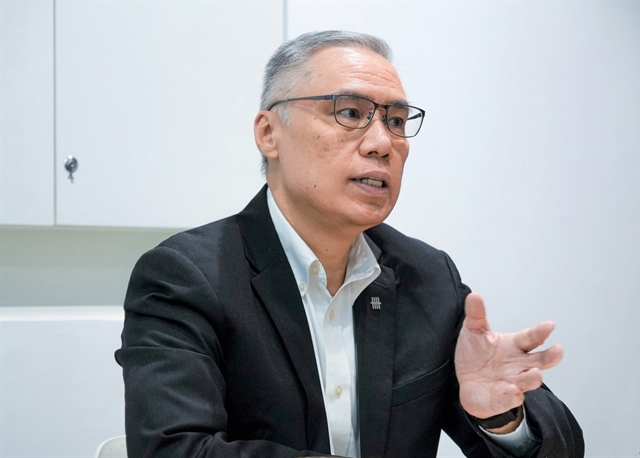
| Suan Teck Kin, CFA, Head of Research at UOB Global Economics & Markets Research, speaks at the event. — Photo courtesy of UOB Vietnam |
HCM CITY — Despite global market volatility and monetary pressures, UOB remains positive about Việt Nam’s growth prospects, infrastructure spending, artificial intelligence demand, exports, foreign direct investment (FDI) and tourism expected to remain key drivers.
Speaking at a media roundtable on market updates for the third and fourth quarters of 2026 organised by UOB Việt Nam in HCM City on September 18, Suan Teck Kin, CFA, Head of Research at UOB Global Economics & Markets Research, said Việt Nam’s growth momentum remained positive despite geopolitical conflicts, oil price volatility, tariffs and interest rate uncertainty.
UOB forecasts Việt Nam’s GDP to expand by about 8.5 per cent in 2026 and 8.4 per cent in 2027.
He highlighted the global AI investment cycle, with capital expenditure by major technology companies expected to reach US$760 billion in 2026 and exceed $900 billion in 2027. This trend is creating spillover effects across technology supply chains, including Việt Nam, supporting exports and FDI amid supply chain diversification and relocation.
Exports remain an important growth driver, while continued AI investment is expected to benefit manufacturing, he said, adding that government efforts to accelerate infrastructure investment are another source of support.
Tourism is also expected to contribute, with UOB forecasting 2026 to set another record for international visitor arrivals, supporting retail and services sectors.
FDI disbursement remained robust, reaching about $17.3 billion in the first eight months of 2026. If the current pace is maintained, full-year disbursement is expected to exceed $24 billion.
Exchange rate remains relatively stable
UOB experts noted that USD/VND had remained relatively stable despite the latest US Federal Reserve (Fed) rate hike and Việt Nam recording a trade deficit of more than $20 billion in the first eight months of 2026.
Suan said the Fed’s latest rate hike would put modest downward pressure on the Vietnamese đồng as the interest rate differential between the US and Việt Nam had widened.
Đinh Đức Quang, Country Head of Global Markets at UOB Việt Nam, said UOB expected the Fed to raise rates once more in late 2026 and again in Q1 2027, by around 25 basis points each time.
Further rate increases could raise funding costs for businesses borrowing in foreign currencies. However, Quang said the VND interest rate differential remained attractive enough to encourage individuals and businesses to hold VND rather than US dollars.
The VND had appreciated by about 1 per cent against the US dollar since the beginning of the year. UOB expects USD/VND to fluctuate by only about 1–2 per cent over the remainder of 2026 and in 2027.
Quang said the interbank rate had eased from about VNĐ26,300 per US dollar at the end of 2025 to around VNĐ26,000 currently, while the unofficial market rate was around VNĐ25,800, below commercial bank rates.
Several billion US dollars held by businesses and individuals had also been converted into VND savings since the beginning of the year, increasing dollar supply and easing exchange rate pressure.
Measures by the State Bank of Vietnam (SBV) requiring crypto investment flows to go through domestic exchanges have also helped curb foreign currency outflows and channel funds back into the domestic market. Together with steady FDI disbursement, these measures have helped offset the trade deficit, Quang said.
UOB forecasts USD/VND at VNĐ26,200 at the end of 2026, with the rate potentially falling slightly below VNĐ26,000 by mid-2027 if external conditions improve.
Suan said the SBV was likely to keep its policy rate unchanged while balancing economic growth needs against inflationary pressures and rising domestic interest rates. Although policy room is narrowing, the central bank still has tools including foreign exchange reserves, the daily central exchange rate mechanism and credit growth management.
UOB also maintains a positive long-term outlook for gold.
Suan said gold purchases by central banks around the world remained an important driver, as monetary authorities diversified their reserves amid changing confidence in the US dollar. Strong private-sector demand, particularly for investment and jewellery in India and China, was also supporting gold prices.
Short-term movements, however, could still be influenced by interest rates and geopolitical developments. — VNS
Economy
 Economy
 Economy
 Economy
 Economy
 Economy
 Economy
 Economy
 Economy
 Economy
 Economy
 Economy
 Economy
 Economy
 Economy