 Economy



Việt Nam, China seek stronger substantive parliamentary cooperation
1.
|
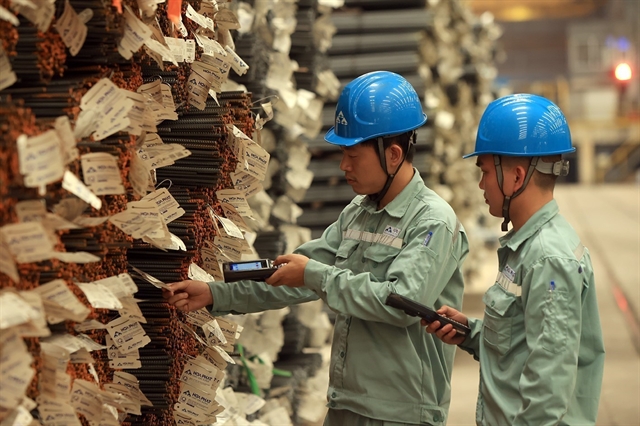
| Construction steel of Hoà Phát Dung Quất Steel. Trade defence measures played an important role in ensuring fair competition, protecting domestic production capacity and helping Vietnamese goods maintain and expand export markets. — VNA/VNS Photo Tuấn Anh |
HÀ NỘI — Việt Nam needs to shift from reacting to trade defence investigations on a case-by-case basis to proactively managing trade risks amid the increasing use of trade remedies measures globally, experts said at a forum on September 18.
The shift will help protect domestic production capacity, support exporters in maintaining and expanding overseas markets and create conditions for sustainable economic growth, Deputy Minister of Industry and Trade Nguyễn Sinh Nhật Tân said at the 3rd Trade Remedies Forum held by the ministry in Hải Phòng.
The ministry's statistics showed that Vietnamese goods faced 27 new trade defence investigations in the first nine months of 2026, already more than four above the total number recorded in all of 2025. This highlights the need for businesses and authorities to strengthen early-warning systems and improve their ability to manage trade risks.
Tân said trade defence measures played an important role in ensuring fair competition, protecting domestic production capacity and helping Vietnamese goods maintain and expand export markets.
He called for a shift from case-by-case responses towards proactive risk management, with closer coordination among regulators, industry associations and businesses.
The focus should be on strengthening early warnings, improving data quality and raising businesses' ability to use trade defence instruments, he said.
Lê Sỹ Giảng, director of GH Consults, said basic industrial products such as metals, chemicals, plastics and construction materials accounted for a large share of trade defence cases amid overcapacity and intensifying price competition.
He also pointed to the wider use of anti-circumvention and origin-fraud measures, as well as new trade instruments such as US; Section 232 and Section 301 tariffs and the European Union's Carbon Border Adjustment Mechanism.
These developments require Vietnamese businesses to actively monitor markets, identify risks and prepare responses, he said.
Chu Thắng Trung, deputy head of the Trade Remedies Authority of Vietnam, said the country should move beyond handling individual cases and adopt a more systematic and proactive approach to managing trade risks.
Measures should include stronger early-warning systems, standardised data, greater capacity among industry associations and businesses, closer enforcement coordination and closer integration of trade defence policy with industrial development policy, he said.
Within the framework of the forum, the Trade Remedies Authorities of Việt Nam also provided instructions to businesses to identify signs that an investigation could be launched and prepare applications for trade defence investigations.
Việt Nam has also taken a more proactive approach to trade defence with the initiations of 62 trade defence investigations and impositions of 37 measures on imported goods. — VNS
Economy
 Economy
 Economy
 Economy
 Economy
 Economy
 Economy
 Economy
 Economy
 Economy
 Economy
 Economy
 Economy
 Economy
 Economy