 Economy
Việt Nam seeks deeper role in global semiconductor value chain
1.
|
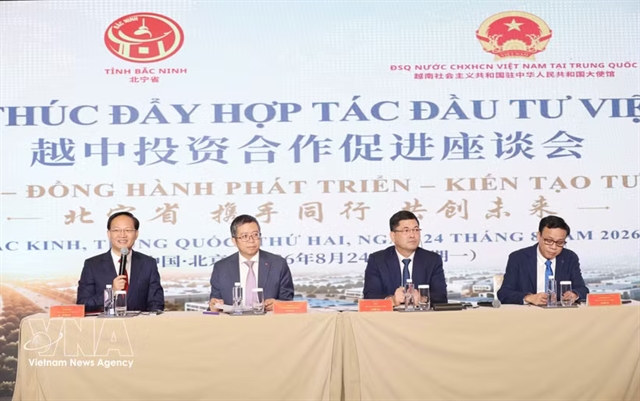
| Representatives of the Vietnamese Embassy in China and Bắc Ninh province at the seminar in Beijing on August 21. — VNA/VNS Photo |
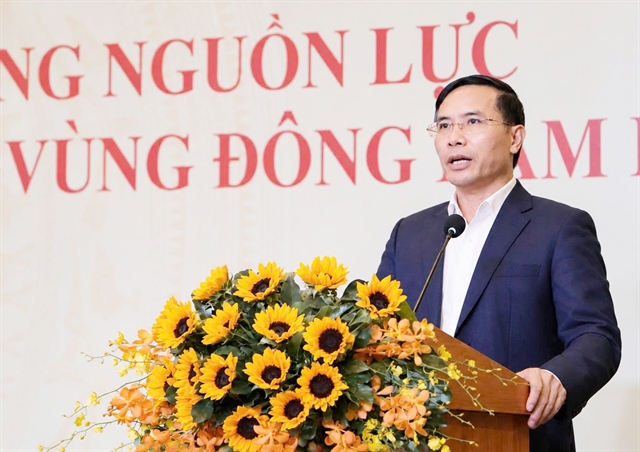
BEIJING — The Vietnamese Embassy in China and the northern province of Bắc Ninh co-hosted a seminar in Beijing on Monday to promote investment cooperation between Việt Nam and China, with nearly 300 representatives from Chinese agencies, organisations, business associations and companies in attendance.
Addressing the seminar, Vietnamese Ambassador to China Phạm Thanh Bình said the state visit to China by General Secretary of the Communist Party of Vietnam Central Committee and President Tô Lâm in April 2026 opened up a new phase in bilateral relations and created a solid foundation for investment cooperation.
The seminar offered an opportunity for Chinese businesses to gain a better understanding of investment potential and opportunities in Bắc Ninh, he said, adding that Việt Nam is seeking high-tech projects with high added value.
With strengths in technology, manufacturing and new energy, Chinese companies have considerable room to expand investment in Việt Nam. Meanwhile, Bắc Ninh's strategic location, well-developed infrastructure and dynamic policies make it an attractive destination for Chinese investors, he said.
Vice Chairman of the Bắc Ninh People's Committee Phạm Văn Thịnh said the province is working towards becoming a centrally run city, with the goal of developing into a leading semiconductor and artificial intelligence (AI) hub in Việt Nam. Its gross regional domestic product (GRDP) grew 10.27 per cent last year and 10.56 per cent in the first half of this year.
Major enterprises, including MCC, Goertek, Luxshare-ICT and JA Solar, have invested in the province. Bắc Ninh plans to develop 70 industrial parks, 39 of which are currently operational with total area covering 11,387ha. It has around 600ha of ready-to-use industrial land and expects the figure to reach 1,000ha the first quarter of next year.
The province is encouraging investment in five strategic areas: semiconductors, integrated circuits and new materials; aviation, unmanned aerial vehicles (UAVs) and smart logistics; robotics, AI and smart manufacturing; pharmaceuticals, biomedicine and advanced medical equipment; and green energy, smart electrical equipment and sustainable industries, according to Thịnh.
Liu Chun, chairman of the China Chamber of Commerce for Import and Export of Machinery and Electronic Products (CCCME), said the chamber and Bắc Ninh have built a solid foundation since 2023 through trade and investment activities and the establishment of a government-to-business connection channel.
A CCCME delegation visited Bắc Ninh's industrial parks in March 2024 and identified the province as a leading electronics manufacturing centre in northern Việt Nam and a key destination for Chinese machinery and electronics companies, he said.
Liu proposed strengthening government-to-business connectivity, expanding collaboration in smart manufacturing and green transformation, enhancing legal compliance guidance, and deepening cooperation between CCCME, the Vietnamese Embassy, and industry associations.
Representatives of Kinh Bac City Development Holding Corporation and Chinese investors in Bắc Ninh, including JA Solar, Sunwoda and Tarry, shared their experience in implementing projects in the province.
At the closing session, Secretary of the Bắc Ninh provincial Party Committee Nguyễn Hồng Thái said it’s a strategic milestone for Bắc Ninh to become a centrally run city. He affirmed that the province regards Chinese businesses as important partners and prioritises high-tech, environmentally friendly, and high-value-added projects.
The province will accompany investors throughout the life cycle of their projects and welcomes Chinese businesses to visit and explore investment opportunities in Bắc Ninh, he added. — VNA/VNS
Economy
 Economy
 Economy
 Economy
 Economy
 Economy
 Economy
 Economy
 Economy
 Economy
 Economy
 Economy
 Economy
 Economy
 Economy