 Economy


Việt Nam, EU and Belgium seek deeper, practical cooperation
1.
|
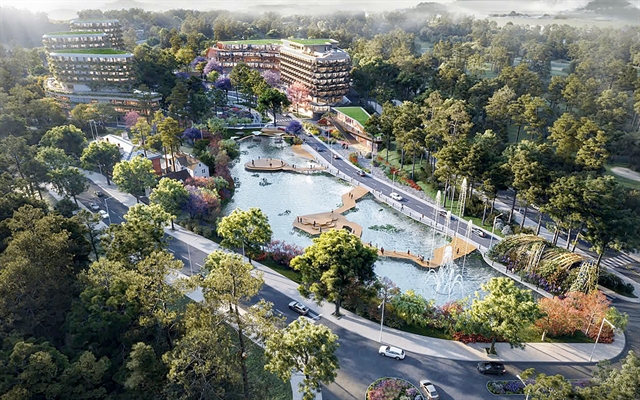
| Green infrastructure in Đà Lạt supports Lâm Đồng's climate-resilient urban development. — VNA/VNS Photo |
LÂM ĐỒNG — The central province of Lâm Đồng is stepping up efforts to build climate-resilient cities through pilot projects, green infrastructure and smart urban development.
The programme forms part of the province's long-term strategy to improve urban resilience against climate change while promoting sustainable and low-carbon growth.
The provincial People's Committee has issued Plan No. 10662/KH-UBND to continue implementing the Prime Minister's Decision No. 438/QĐ-TTg, dated March 25, 2021, approving the national programme on developing Vietnamese cities in response to climate change during the 2021–30 period.
The plan also implements Directive No. 04/CT-TTg, issued on February 13, 2026, which calls on localities to accelerate climate adaptation and strengthen disaster resilience in urban areas.
According to the province, climate change has become one of the greatest challenges to urban development, with increasingly frequent extreme weather events causing flooding, landslides, prolonged drought, water shortages and environmental degradation.
Rapid urbanisation has further increased pressure on technical infrastructure and natural ecosystems, making climate adaptation an urgent priority for local authorities.
The new plan aims to integrate climate adaptation into every stage of urban development, from strategic planning and land use to infrastructure investment, construction management and public services.
Authorities also seek to improve the capacity of urban areas to prevent, withstand and recover from natural disasters while maintaining economic growth and improving residents' quality of life.
By 2030, Lâm Đồng targets a synchronised urban infrastructure system capable of responding effectively to climate-related risks, including flooding, landslides, drought and declining water resources.
Urban planning will increasingly incorporate nature-based solutions, green spaces and modern technologies to reduce environmental impacts while improving resilience.
Three cities have been selected as pilot urban areas under the national programme: Phan Thiết, La Gi and Gia Nghĩa.
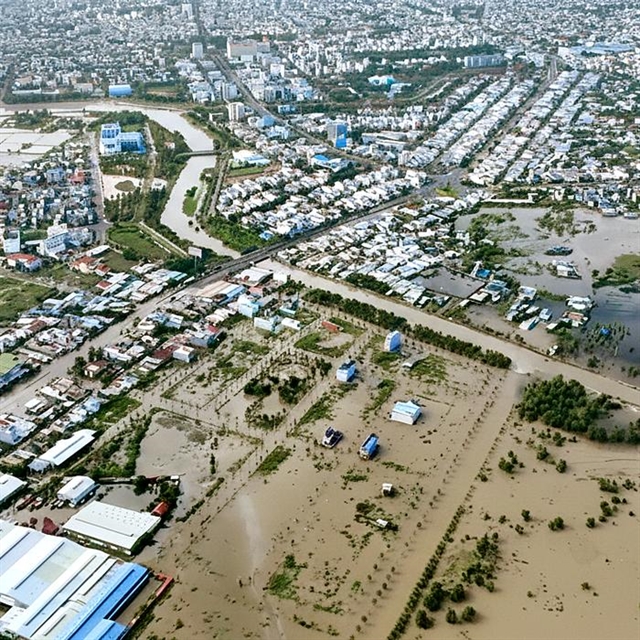
Phan Thiết and La Gi, formerly belonging to Bình Thuận Province before the recent administrative restructuring, are among Việt Nam's coastal urban centres most exposed to flooding, coastal erosion, saltwater intrusion and freshwater shortages.
Pilot projects in these cities will focus on strengthening coastal protection, improving stormwater drainage systems, expanding green public spaces and enhancing the resilience of water supply infrastructure.
Gia Nghĩa, previously part of Đắk Nông Province, represents the mountainous urban model under the national programme.
The city is increasingly vulnerable to prolonged drought, flash floods, landslides and groundwater depletion.
Local authorities will prioritise slope stabilisation, watershed protection, flood mitigation measures and sustainable water resource management.
Another major component of the programme is the promotion of green growth and smart urban development.
Lâm Đồng will continue implementing the Green Urban Village project in Xuân Trường Ward of Đà Lạt, where environmentally friendly construction, renewable energy, landscape conservation and digital management technologies are being introduced to support sustainable urban expansion.
|
| Phan Thiết is upgrading urban infrastructure to strengthen climate resilience. — VNA/VNS Photo |
The province also plans to study and implement additional pilot projects in key urban centres during the 2026–27 period, creating practical models that can later be replicated across other localities.
Urban adaptation measures will be tailored to the characteristics of different geographical areas.
Highland urban centres, including Đà Lạt, Bảo Lộc, Đức Trọng, Di Linh, Ea T'Ling and Đức Linh, will prioritise flood prevention, landslide mitigation, protection of reservoirs and headwater forests, as well as ecological restoration to improve water retention and reduce disaster risks.
Coastal towns such as Phan Rí Cửa and Liên Hương will focus on preventing shoreline erosion, adapting to sea-level rise, upgrading drainage networks, strengthening coastal embankments and protecting coastal buffer zones.
Meanwhile, drought-prone urban areas including Lạc Tánh, Chợ Lầu and Thuận Nam will invest in water supply systems, rainwater harvesting, wastewater recycling and climate-resilient infrastructure to improve water security and reduce vulnerability during prolonged dry seasons.
To provide scientific support for future planning, Lâm Đồng will work with central ministries and agencies to assess climate change impacts across both existing and planned urban areas through 2030.
The province will also establish an Urban and Climate Atlas together with an integrated database containing information on climate hazards, disaster risks and vulnerable urban zones.
These data will serve as an important foundation for urban planning, investment decisions, disaster forecasting and emergency response while supporting digital transformation in urban management.
Climate adaptation requirements will be integrated into provincial, urban and rural planning, urban development programmes and infrastructure investment projects.
Priority will be given to upgrading water supply and drainage systems, flood control facilities and landslide prevention works, while high-risk residential areas will be identified for protection or relocation where necessary.
The province also intends to encourage the construction of climate-resilient housing and public buildings capable of withstanding increasingly severe weather conditions.
To mobilise investment, Lâm Đồng will expand cooperation with international organisations, development partners and the private sector.
Authorities aim to attract official development assistance (ODA), climate finance and other funding sources to support green infrastructure projects and climate adaptation initiatives.
The province will also promote research and wider application of environmentally friendly construction materials, recycled materials, energy-saving technologies, renewable energy solutions, carbon emission reduction measures and digital technologies to improve urban governance.
Public awareness campaigns, technical training programmes and capacity-building activities for government agencies, businesses and local communities will also be strengthened to improve preparedness and encourage greater participation in climate adaptation efforts.
By 2030, Lâm Đồng expects to complete its Urban and Climate Atlas, update planning regulations and technical standards for climate-resilient urban development, and identify priority infrastructure investment projects.
Provincial authorities expect these measures to create a greener, smarter and more resilient urban system capable of supporting sustainable economic growth while reducing the long-term impacts of climate change. — VNS
Economy
 Economy
 Economy
 Economy
 Economy
 Economy
 Economy
 Economy
 Economy
 Economy
 Economy
 Economy
 Economy
 Economy
 Economy