 Economy
WB raises Việt Nam’s 2026 growth forecast to 7.4 per cent on strong AI-related exports
1.
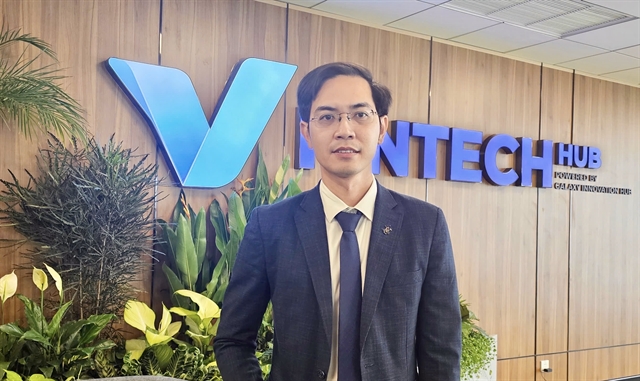 |
| Nguyễn Hữu Huân, vice chairman of the executive agency of the Vietnam International Financial Centre in HCM City. — VNS Photo Xuân Hương |
Despite HCM City’s efficient seaports and massive import-export cargo volumes, most high-value maritime financial services with the largest profit margins, including trade finance, ship financing, marine insurance and reinsurance, international payments and logistics risk management, continue to be handled overseas.
In this context, the International Maritime Financial Ecosystem initiative has been launched as one of the four core components of the Vietnam International Financial Centre in HCM City (VIFC-HCMC), aiming to gradually retain within Việt Nam billions of US dollars generated from Việt Nam’s trade and maritime transport activities.
Nguyễn Hữu Huân, PhD, vice chairman of the executive agency of VIFC-HCMC, and Nguyễn Hoàng Anh, project director at global strategy consulting firm Roland Berger, speak to Việt Nam News about the vision behind the initiative and the city’s ambition to become a regional maritime finance hub.
Việt Nam News: Could you share VIFC-HCMC’s plans for developing a maritime financial centre?
Nguyễn Hữu Huân: Our strategy is to build a comprehensive maritime financial ecosystem. In the initial phase, we will focus on several key pillars.
The first is leasing, particularly ship-related financial leasing. We aim to integrate advanced technologies with appropriate control mechanisms to develop more modern leasing models, creating a distinct competitive edge over existing maritime financial centres worldwide.
The second is the development of cross-border payments and the application of financial technology. These models will comply with the State Bank of Vietnam's regulations while being implemented under a regulatory sandbox to support new payment methods.
Our goal is to shorten processing times for maritime financial transactions such as letters of credit, international payments and clearing services. Transactions will become faster and more efficient through the application of advanced technologies, thereby enhancing the competitiveness of Việt Nam’s maritime financial centre.
We are also working with partners to develop a broader maritime finance ecosystem, particularly studying the establishment of a maritime financial exchange. The platform would connect ports, logistics firms, insurers, banks and other service providers, improving the flow of data, cargo, and capital while reducing costs and speeding up transactions.
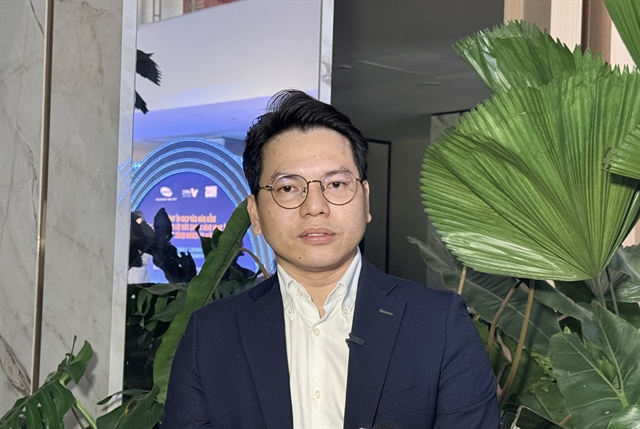 |
| Nguyễn Hoàng Anh, project director at global strategy consulting firm Roland Berger. — VNS Photo Xuân Hương |
Việt Nam News: Việt Nam handles massive shipping volumes, yet a significant portion of high-value maritime services is still conducted abroad. What solutions or sectors should HCM City, and Việt Nam in general, focus on to increase the value retained from maritime services?
Nguyễn Hoàng Anh: Việt Nam is at the forefront of regional container throughput growth; however, its maritime industry continues to be predominantly engaged in low value-added activities such as stevedoring, transportation and forwarding. Most high value-added services, including trade finance, insurance, freight brokerage, risk management and legal services, are still conducted through international maritime financial centres such as Singapore and Hong Kong.
In my view, Việt Nam should follow a three-phase roadmap. First, we need to leverage the existing policies for the VIFC's in HCM City and Đà Nẵng while capitalising on HCM City’s strength as a major cargo hub to develop products such as trade finance, maritime insurance and shipping-related services.
In the medium to long term, HCM City can move towards developing more specialised products such as derivatives, ship financing, and ship sale and purchase services. As Việt Nam’s largest economic and financial hub, together with strong Government support, HCM City is well positioned to attract international investors, financial institutions, insurers and major maritime enterprises.
Once a strong maritime and maritime finance ecosystem is established, Việt Nam will have the opportunity to attract capital flows to support cargo movements within its international maritime financial centre.
Việt Nam News: What policies are needed to accelerate the development of a maritime financial centre? How soon could the Maritime Financial Centre become a reality?
Nguyễn Hữu Huân: For the maritime financial centre to officially begin operations, the first priority is to complete the regulatory framework for the Việt Nam International Financial Centre. Once the framework is approved and the licensing process for new members is in place, we will then be able to formally build this maritime financial ecosystem within the VIFC.
However, building a fully fledged maritime financial centre will be a long-term process because it involves numerous legal and operational issues.
Fundamentally, the maritime financial ecosystem within the Việt Nam International Financial Centre in HCM City will be an open ecosystem where businesses and corporations can participate, cooperate and jointly develop the sector.
Nguyễn Hoàng Anh: Việt Nam already has Resolution 222, which provides special mechanisms for the Việt Nam International Financial Centres in HCM City and Đà Nẵng. However, in my view, establishing a maritime financial centre will require additional breakthrough and sector-specific policies tailored to the maritime sector. For example, there should be dedicated mechanisms related to ship registration, capital flows for ship sale and purchase, and investment in the maritime sector.
Việt Nam will need substantial investments in port infrastructure, shipping fleets, and logistics infrastructure, so more open mechanisms are needed to attract such investment.
In addition, it is necessary to build a legal framework with international competitiveness to attract financial transactions and capital flows to the VIFC, within which the maritime financial centre would serve as a key pillar.
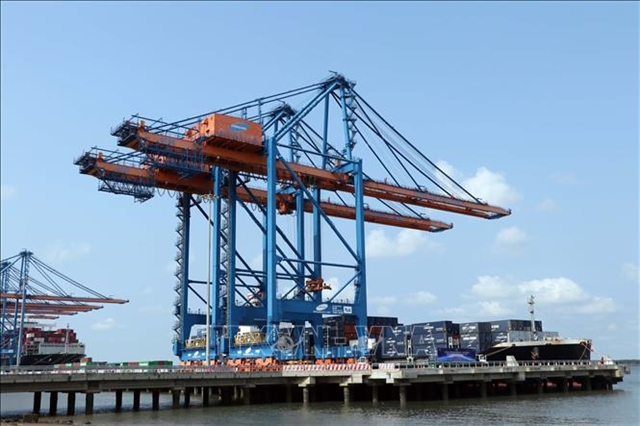 |
| A corner of Gemalink deep-sea port phase 1 in HCM City. The city is rapidly establishing itself as Việt Nam’s premier finance, trade, and logistics hub, laying the groundwork for the development of the country’s first international maritime centre. — VNA/VNS Photo Đoàn Mạnh Dương |
Việt Nam News: What will convince global investors and financial institutions to bring maritime financial transactions to Việt Nam?
Nguyễn Hữu Huân: Through discussions with international partners, we have identified their concerns when conducting transactions in Việt Nam.
The first is the legal framework. They seek assurance that transactions are governed by internationally recognised standards and practices. The VIFC addresses this need by incorporating an international arbitration centre and an international court aligned with global norms, providing investors and business partners with greater confidence when conducting financial transactions in Việt Nam.
The second issue is capital mobility. Previously, capital flows in Việt Nam were subject to certain restrictions. Within the VIFC, however, capital will be able to move more freely both within the centre and between the VIFC and global markets, reducing barriers for international investors and facilitating cross-border financial transactions.
Việt Nam currently handles enormous cargo volumes, with the combined value of goods, logistics services and related financing needs estimated at more than US$1 trillion annually. If maritime financial services can be provided more efficiently within the country, businesses will have stronger incentives to conduct both their trade and financial transactions domestically rather than routing them through regional hubs as they do today.
This represents a significant opportunity for HCM City to attract a larger share of these transaction flows and strengthen its role as a regional maritime and financial centre.
We are working closely with both local and international partners to better understand investors’ needs and develop appropriate incentive mechanisms that can attract capital flows and financial transactions to Việt Nam.
We are also partnering with domestic financial institutions, corporations and logistics companies to build a collaborative ecosystem, while actively engaging international businesses and encouraging them to participate. Attractive incentives will be introduced to encourage them to establish a presence and conduct business within the centre.
Việt Nam News: What role will Vietnamese banks play in building an international maritime financial centre?
Nguyễn Hoàng Anh: For the banking sector, trade finance and import-export financing are already quite common in Việt Nam. However, significant room for growth still exists in financing large-scale projects such as port infrastructure, logistics, and ship acquisitions, creating major opportunities for domestic banks.
There are still barriers preventing domestic banks from participating more deeply in this field. For example, many ships are built overseas or structured under international legal frameworks, making it difficult for Vietnamese banks to access and finance such transactions.
However, if Việt Nam adopts more open mechanisms regarding collateral, investment funds specialising in ship acquisitions, and large-scale project financing models, particularly through cooperation between domestic and foreign banks, Vietnamese banks can gradually expand their role in the maritime finance sector. — VNS
Economy
 Economy
 Economy
.jpeg) Economy
Economy
 Economy
 Economy
 Economy
 Economy
 Economy
 Economy
 Economy
 Economy
 Economy
 Economy
 Economy