 Economy


Tighter controls on livestream sales
1.
|
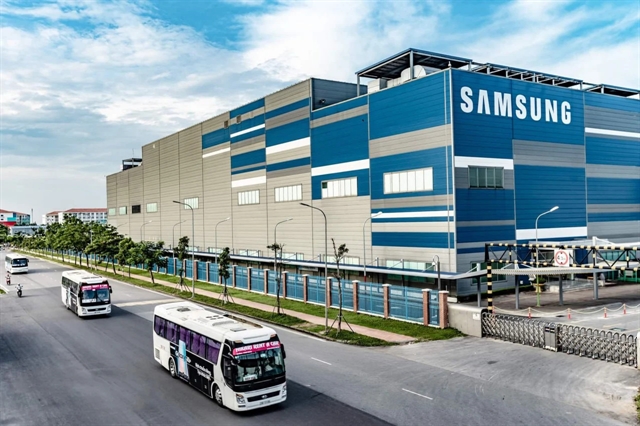
| Aside from the increase in the number and value of FDI projects, new capital flows into Việt Nam are also expected to have a higher technological content, contributing to the transformation of the country’s growth model. — Photo baochinhphu.vn |
HÀ NỘI — FDI capital in Việt Nam is expected to continue growing positively, potentially reaching US$38-40 billion annually during the next five years, honorary chairman of the Vietnam Association of Foreign Investment Enterprises Associate Professor Dr Nguyễn Mại said.
According to Mại, the wave of foreign investment continues to be strengthened by traditional giants like Samsung, LG, Sumitomo and Mitsubishi, as well as emerging high-tech corporations such as Microsoft and Nvidia, with large-scale projects worth billions of US dollars.
Aside from the increase in the number and value of FDI projects, new capital flows into Việt Nam are also expected to have high technological content, contributing to the transformation of the country’s growth model.
The ‘eagle nesting’ trend is predicted to become more pronounced, as more and more large multinational corporations choose Việt Nam as a strategic investment destination.
Việt Nam is an attractive destination in a world of significant changes due to geopolitical conflicts, supply chain disruptions and increasing protectionist trends. The country has a stable political and economic foundation, along with a market size of over 100 million people.
Foreign investors also value the Vietnamese Government's efforts to improve institutions, investment incentives and administrative procedures towards transparency and efficiency, shortening processing times and reducing costs for businesses.
“The development of a ‘constructive government’ model, promoting e-government and digital government, also contributes to improving the quality of governance and creating a more favourable and attractive investment environment for both domestic and foreign investors,” Mại said.
Việt Nam's advantages also stem from its extensive participation in free trade agreements with the European Union, the US and many major partners, as well as the establishment of comprehensive strategic partnerships with dozens of important countries.
As a result, Việt Nam's position on the international stage is increasingly enhanced, with trade volume exceeding $800 billion in 2025 and expected to potentially reach $1 trillion in the near future.
The Southeast Asian nation's positive macroeconomic indicators also contribute to increasing investment attractiveness. These include per capita income exceeding $5,000 and GDP reaching approximately $520 billion, ranking Việt Nam 33rd in the world.
According to Dr Trần Toàn Thắng, head of the International and Integration Policy Department at the Institute of Economic and Financial Strategy and Policy, many multinational corporations are accelerating investment restructuring under the impact of global uncertainties. Việt Nam is thus seen as sending positive signals regarding its investment environment at the right time to welcome a wave of capital relocation.
Changes in the administrative apparatus towards streamlining are especially expected to open up new development space and improve management efficiency and national competitiveness, which will help increase the interest of foreign investors in the country.
“With favourable factors emerging, the FDI capital flow into Việt Nam this year is expected to increase by approximately $1-2 billion compared to 2025, reaching up to $29 billion,” Thắng predicted.
To effectively capitalise on this opportunity, Việt Nam will prioritise attracting investment in key sectors, such as semiconductors and high technology, green transportation, digital infrastructure and AI, fintech and renewable energy.
These sectors are considered pillars that will help the country participate more deeply in the global value chain and anticipate new development trends in the global economy.
However, amid increasingly fierce competition to attract FDI, Việt Nam needed to upgrade its investment attraction platform instead of continuing to rely on cost incentives, Thắng noted.
Specifically, the country needed to shift rapidly towards forms of non-taxable investment support, while designing conditional incentives linked to the country's selective FDI attraction strategy.
The focus should be on further simplifying investment procedures, increasing policy transparency, ensuring long-term legal stability and strengthening intellectual property protection, Thắng said. — BIZHUB/VNS
Economy
 Economy
 Economy
 Economy
 Economy
 Economy
 Economy
 Economy
 Economy
 Economy
 Economy
 Economy
 Economy
 Economy
 Economy