 Economy


Tighter controls on livestream sales
1.

|
| A customer is making payment via QR code at a coffee shop. The Ministry of Finance has proposed new regulations on taxable revenue thresholds for household businesses. — VNA/VNS Photo Phạm Tuấn Anh |
HÀ NỘI — The finance ministry is seeking to make tax thresholds more flexible for household businesses and introduce a tax-free revenue level for small firms, in a move aimed at adapting to economic pressures and supporting growth.
The Ministry of Finance has proposed new regulations on taxable revenue thresholds for household businesses just four months after the current policy took effect, while also considering the introduction of the first-ever tax exemption threshold for small enterprises.
In a draft law amending several articles of the laws on personal income tax, corporate income tax and value-added tax, the ministry proposed scrapping the fixed revenue threshold of VNĐ500 million. Instead, it suggested the threshold be set by the Government based on prevailing economic conditions.
Under current regulations, which took effect on January 1, 2026, individual and household businesses with annual revenue below VNĐ500 million (US$19,600) are exempt from personal income tax and value-added tax. The threshold is deducted before applying personal income tax rates to those with higher revenue.
The ministry said the proposal would help ensure tax policy remains flexible and responsive to evolving domestic conditions, while improving transparency and supporting revenue collection.
It noted that adjustments are needed as the economic environment shifts following revisions to the personal income tax law in late 2025, citing rising input costs, weakening demand and ongoing difficulties faced by household businesses. Global uncertainties also continue to weigh on trade, investment and overall economic performance, it added.
The ministry said the proposed changes would help align tax policy with the development of the digital economy and discourage tax evasion.
The proposal is also intended to support small-scale and vulnerable business households, while encouraging them to transition into formal enterprises in line with broader policies on private sector development.
By allowing the Government to determine the threshold, authorities would have a clearer legal basis to adjust fiscal policy, including taxes and fees, more flexibly, particularly in urgent situations, the ministry said.
Tax exemption threshold proposed for small firms
|
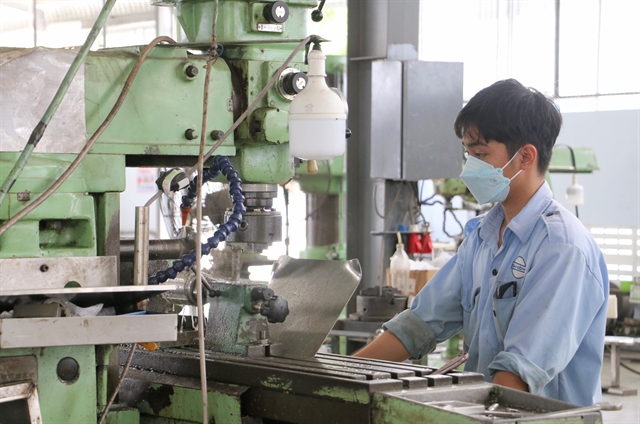
| Production at a company in An Giang Province. The ministry also proposed introducing a threshold for exemption of corporate income tax for small enterprises, a policy not currently under existing corporate income tax rules. — VNA/VNS Photo Công Mạo |
The ministry also proposed introducing a revenue threshold for corporate income tax exemption for small enterprises, a policy not currently provided for under existing rules.
Under the draft, a new provision would exempt companies from corporate income tax if their annual revenue falls below a level to be determined by the Government.
The measure is expected to apply from the 2026 tax year, subject to approval.
The ministry said the proposal was intended to better support small and micro-sized enterprises, which account for nearly 94 per cent of about 900,000 businesses operating in Việt Nam.
It added that international experience showed many countries use tax incentives, including reduced rates or exemptions, to promote the development of small firms, which are widely seen as a key driver of economic growth.
Việt Nam already provides some tax incentives for small enterprises, including a two-year corporate income tax exemption for newly established businesses converted from household operations with annual revenue below VNĐ50 billion.
Preferential tax rates of 15 per cent are applied to firms with annual revenue not exceeding VNĐ3 billion and 17 per cent for those with revenue between VNĐ3 billion and VNĐ50 billion.
However, there is currently no revenue-based tax exemption threshold for small enterprises comparable to that applied to household and individual businesses.
The ministry said such a threshold would help improve policy consistency, enhance fairness and encourage household businesses to transition into formal enterprises.
The Ministry of Finance is seeking Government approval to submit the draft law to the National Assembly under expedited procedures at the first session of the 16th National Assembly, scheduled for April 20-23.
Under the Law on Support for Small and Medium-sized Enterprises 2017, small and medium-sized enterprises are defined as those with no more than 2,000 employees participating in social insurance and total capital not exceeding VNĐ100 billion or total revenue in the preceding year not exceeding VNĐ300 billion. — VNS
Economy
 Economy
 Economy
 Economy
 Economy
 Economy
 Economy
 Economy
 Economy
 Economy
 Economy
 Economy
 Economy
 Economy
 Economy