 Economy


Tighter controls on livestream sales
1.
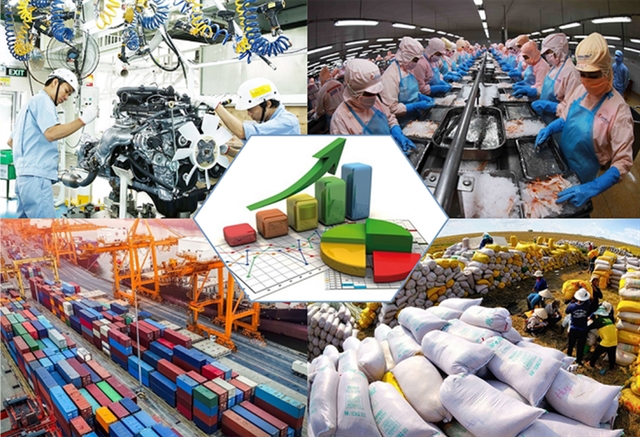 |
| Illustrative photo. |
HÀ NỘI — The Government has issued a resolution on an initiative to implement the Party policy outlining a five-year socio-economic development plan, with an overarching goal of achieving double-digit economic growth.
Resolution 109/NQ-CP, updating and supplementing the Government's action programme to implement the Resolution of the 14th National Party Congress and the Politburo’s conclusions includes plans for national finance, public debt and medium-term public investment for the next five years.
The resolution sets out a comprehensive reform agenda centred on establishing a new growth model, restructuring the economy and accelerating industrialisation and modernisation, with science, technology, innovation and digital transformation as key drivers.
Reforming governance
A central priority is to overhaul governance and implementation mechanisms to achieve sustained high growth while maintaining macroeconomic stability and improving living standards.
Authorities at all levels are instructed to treat the double-digit growth target as a core political task, embedding it into annual plans with clear responsibilities, outputs and accountability mechanisms.
Monitoring and evaluation will be based on measurable outcomes, while communications efforts will aim to strengthen public and business confidence.
The Government has emphasised the need to complete a legal and institutional framework to unlock productive forces and mobilise resources.
This includes shifting State management from pre-approval to post-audit mechanisms, alongside the development of standards and technical norms across sectors like education, health care, culture and science and technology.
Administrative reform will be accelerated, with a focus on cutting unnecessary business conditions, digitising procedures, improving transparency and reducing compliance costs for citizens and enterprises. Việt Nam aims to rank among the top three investment environments in ASEAN and the top 30 globally by 2028.
Legal reforms will also target bottlenecks in key areas including land, planning, trade, minerals, intellectual property and construction, while frameworks will be developed for emerging sectors such as fintech, digital assets, artificial intelligence and new economic models.
Infrastructure, new growth drivers
The resolution outlines mechanisms to mobilise resources for major strategic infrastructure projects, including high-speed rail, urban railways in Hà Nội and HCM City, nuclear power, offshore wind and national data centres.
It also promotes the development of new economic models like the digital, green, circular, sharing and night-time economies, alongside pilot regulatory sandboxes in emerging fields.
The private sector is identified as one of the most important drivers of the national economy, with policies aimed at improving access to resources and fostering the emergence of large, globally competitive domestic corporations.
Financial markets, macroeconomic stability
The Government plans to strengthen capital markets, including the stock and corporate bond markets, as key channels for medium- and long-term financing, reducing reliance on the banking system.
Efforts will also be made to upgrade Việt Nam's sovereign credit rating and stock market classification, while expanding foreign ownership limits in non-sensitive sectors.
The banking system will be modernised, with measures to address weak institutions and cross-ownership, improve credit quality and ensure system stability.
Fiscal policy will prioritise development investment, with reforms to public spending aimed at increasing efficiency and accelerating disbursement of public investment funds.
The Government will also focus on building a strong national industrial base, prioritising foundational and strategic industries such as energy, mechanical engineering, metallurgy, shipbuilding, digital technology, biotechnology and supporting industries.
Emerging sectors – including semiconductors, robotics, artificial intelligence, renewable energy and advanced materials – will receive targeted support, with the aim of gradually mastering key production technologies.
In agriculture, the policy direction emphasises green, circular and high-tech farming, along with flexible land-use policies to improve efficiency while ensuring food security.
The services sector will be modernised, with investments in logistics, e-commerce and high-value services. Tourism development targets 45–50 million international arrivals by 2030.
Human capital and innovation
A major pillar of the strategy is the development of a skilled workforce aligned with economic restructuring and global integration.
Reforms will include expanding vocational training, promoting STEM and digital education, and introducing artificial intelligence and digital skills from early education levels. English is expected to become a second language in schools.
The Government also plans to develop world-class universities and research centres, strengthen innovation ecosystems and attract top domestic and international talent.
The resolution calls for breakthroughs in science, technology, innovation and digital transformation, aiming to position Việt Nam among leading upper-middle-income countries in key technological fields.
Investment will be directed towards digital infrastructure, big data systems and high-tech research, including semiconductors and core technologies. National laboratories and innovation hubs will be expanded.
Digital transformation will be accelerated across all sectors, with a focus on building a digital government, economy and society, as well as promoting start-ups and innovation.
Public finance and debt management
Fiscal policy will focus on strengthening revenue sustainability, controlling budget deficits and ensuring national financial security.
A modern, transparent tax system will be developed, while public spending will be tightened, particularly on recurrent expenditures.
As for public debt management, the Government aims to improve transparency, manage risks and achieve an investment-grade credit rating.
Public investment priorities
Medium-term public investment will prioritise national target programmes, major national projects and interregional infrastructure.
A 10 per cent contingency reserve will be maintained, and the number of projects will be reduced by at least 30 per cent compared to the previous five-year period to avoid fragmentation and improve efficiency.
Local authorities will have greater autonomy in investment decisions under the principle of 'local decision-making, local implementation and local accountability'.— VNS
Economy
 Economy
 Economy
 Economy
 Economy
 Economy
 Economy
 Economy
 Economy
 Economy
 Economy
 Economy
 Economy
 Economy
 Economy