 Economy



Local flavours shape Việt Nam’s evolving dining scene
1.
|
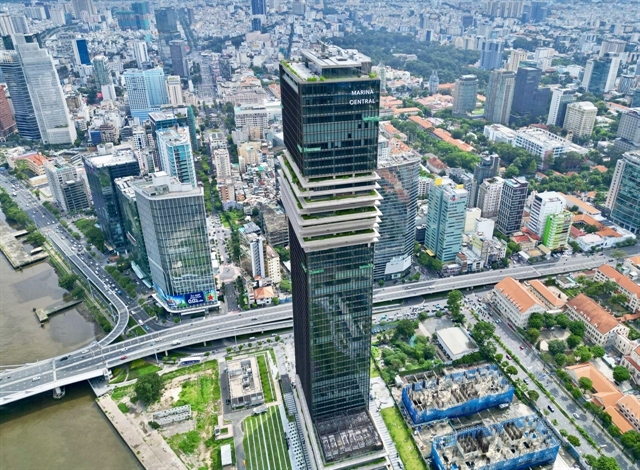
| Marina Central Tower in downtown HCM City. Việt Nam’s drive to build an international financial centre highlights fintech cooperation with Australia. — VNA/VNS Photo |
HCM CITY — Việt Nam’s push to build an international financial centre (IFC) is placing financial technology (fintech) cooperation with Australia at the centre of its long-term strategy, as policymakers seek to modernise the banking system and attract global capital.
But while momentum is building, questions remain over the country’sregulatory readiness, infrastructure and ability to compete with established financial hubs in the region.
Việt Nam is emerging as one of Southeast Asia’s fastest-growing digital banking markets, driven by rising cashless payments, widespread smartphone use, and banks’ increasing adoption of AI and data-driven models.
At a conference on the strategic vision for the Việt Nam International Financial Centre in HCM City (VIFC-HCMC) on April 14, Emma McDonald, Australia’s senior trade and investment commissioner, said that these factors position Việt Nam as a potential regional digital hub.
“A young population, macroeconomic stability and sustained GDP growth reinforce Việt Nam’s long-term potential,” she said, pointing to government initiatives such as regulatory sandbox programmes and plans to establish international financial centres.
However, analysts note that Việt Nam’s fintech ecosystem remains uneven. While digital payments and e-wallets have expanded rapidly, areas such as digital lending, wealth management and blockchain-based services are still at an early stage, constrained by evolving regulations and limited investor protection frameworks.
The State Bank of Vietnam has taken steps to pilot sandbox mechanisms for emerging business models, but a comprehensive legal framework covering areas such as peer-to-peer lending and digital assets has yet to be fully implemented.
Australia a strategic partner
Against this backdrop, Australia is emerging as a strategic partner.
With nearly 900 fintech firms, Australia’s ecosystem ranks among the most advanced globally, particularly in regulatory compliance, cybersecurity and data governance, areas increasingly critical as Việt Nam’s financial system becomes more digitised.
Australian firms have built expertise in operating within tightly regulated markets, giving them an edge in developing solutions for risk management, anti-money laundering and fraud detection.
For Australia, deeper engagement with Việt Nam offers access to one of Asia’s fastest-growing digital economies, as well as opportunities to expand into a market with strong long-term growth potential.
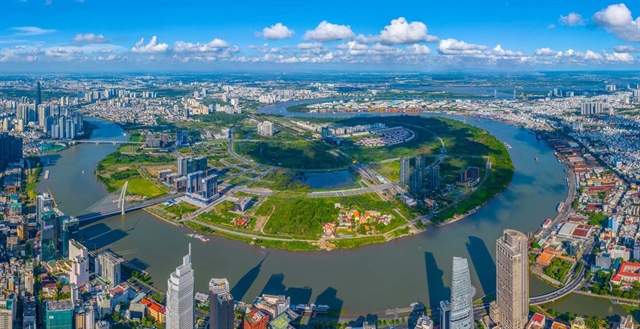
At the heart of the cooperation agenda is Việt Nam’s plan to develop an international financial centre in HCM City, seen as a key platform to channel global capital into the economy.
Rich McClellan, chief executive of the centre, said Việt Nam has moved from policy planning to operational design in less than 18 months.
Legal frameworks, governance structures, specialised courts and arbitration mechanisms have already been outlined, he said, marking a relatively fast transition compared to similar projects in other markets.
Yet, the centre remains in what he described as an “institutional activation” phase, focused on building the foundations needed to attract international investors.
“Investors are no longer looking only at growth,” he said. “They are looking at infrastructure readiness, regulatory reliability, and the ability to move capital safely and efficiently.”
|
| View of Thủ Thiêm New Urban Area, the planned core of Việt Nam’s International Financial Centre in HCM City, envisioned as a hub for a modern, globally connected financial and fintech ecosystem. — VNA/VNS Photo |
Cautious approach
One of the most closely watched aspects of the project is its proposed “offshore within onshore” model, which aims to create an internationally compatible investment environment within Việt Nam while maintaining overall regulatory control.
Under the model, the financial centre would be connected to global payment systems such as SWIFT and supported by advanced cybersecurity architecture, allowing foreign investors to operate under conditions closer to international standards.
Phạm Tuấn Anh, head of technology at the centre’s operating body, said the VIFC is being developed as a “capital transit hub”, targeting investment into major infrastructure projects, including metro systems and high-speed rail.
The centre is also building six core technology pillars, ranging from real-time data systems and central clearing infrastructure to regtech–suptech platforms and blockchain-based asset tokenisation.
Analysts say the approach could allow Việt Nam to experiment with more flexible capital flows without fully liberalising its financial account – a step that policymakers have historically approached with caution.
Despite strong prospects, challenges persist, including regulatory uncertainty, rising cybersecurity risks, competition from established hubs such as Singapore and Hong Kong, and a shortage of high-level expertise.
However, Việt Nam’s fintech sector is expected to expand alongside digital transformation, with international partnerships helping bridge gaps in technology and regulation, while plans for an international financial centre could boost capital inflows and strengthen the country’s role as a regional investment gateway. — VNS
Economy
 Economy
 Economy
 Economy
 Economy
 Economy
 Economy
 Economy
 Economy
 Economy
 Economy
 Economy
 Economy
 Economy
 Economy