 Economy



AIMCONNECT 2026 Held in Singapore, Bringing Global Automotive Leaders Together to Explore the Future of AI, Trust and Connected Mobility
1.
|
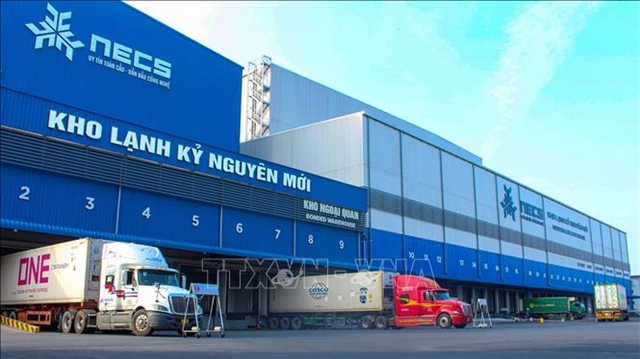
| The uneven distribution of cold storage in Việt Nam is challenging the nation's competitiveness and its agro-forestry-fisheries export targets for 2030. — VNA/VNS Photo |
HCM CITY — The uneven distribution of cold storage in Việt Nam is creating hurdles, driving up business costs and posing a challenge for the country’s competitiveness and its ambition to reach US$100 billion in agro-forestry-fisheries export turnover by 2030.
Nguyễn Thanh Tùng, New Era Cold Storage JSC in Tây Ninh Province, said logistics and cold storage are essential factors that help businesses cut costs, improve export quality, and reduce the pressure of rushed sales.
However, cold storage distribution is uneven. Most cold storage facilities are located in areas with good transportation and seaports, while production areas lack local storage.
Tùng said despite strong nationwide demand, most facilities are concentrated in the Southern region, particularly in the former Long An Province (now merged with Tây Ninh Province).
Because this area is close to highways and seaports, seafood companies in the Mekong Delta and Southeast region usually send their goods there for storage.
However, this creates disadvantages for producers. Products from the Mekong Delta, which are mainly agricultural products and seafood, have to be transported to Tây Ninh for cold preservation, driving up costs for businesses.
This lowers profits, increases risks, and makes Vietnamese goods less competitive globally.
Meanwhile, Đặng Phúc Nguyên, General Secretary of the Vietnam Fruit and Vegetables Association (Vinafruit), said cold storage demand is growing as more companies process and export frozen goods.
The fruit and vegetable sector also faces a similar challenge as many of the harvested crops must be transported to other areas for freezing after harvest due to a lack of local cold storage.
Nguyên said cold storage should be located in production areas that have good infrastructures. This will cut costs, reduce waste, and improve efficiency.
Deputy Minister of Agriculture and Environment Phùng Đức Tiến said to reach US$100 billion in agro-forestry-fisheries turnover by 2030, the sector must focus on improving quality, preservation, and processing, with cold storage acting as a key pillar. However, current cold storage capacity does not fully meet the needs of key export sectors, and facilities are unevenly distributed across regions.
He highlighted that cold storage should be treated as essential infrastructure, similar to transportation or seaports. Cold storage investment must follow a master plan that links production areas, logistics hubs, and export chains. Furthermore, these facilities must adopt green and digital practices to meet strict global standards, he added.
According to experts, cold storage must be developed near production areas and integrated with transport and power networks. It is also important to encourage investments of an appropriate scale using modern, eco-friendly technology. — VNS
Economy
 Economy
 Economy
 Economy
 Economy
 Economy
 Economy
 Economy
 Economy
 Economy
 Economy
 Economy
 Economy
 Economy
 Economy