 Economy


Data, AI boosting value in Việt Nam's textile and garment industry
1.
|
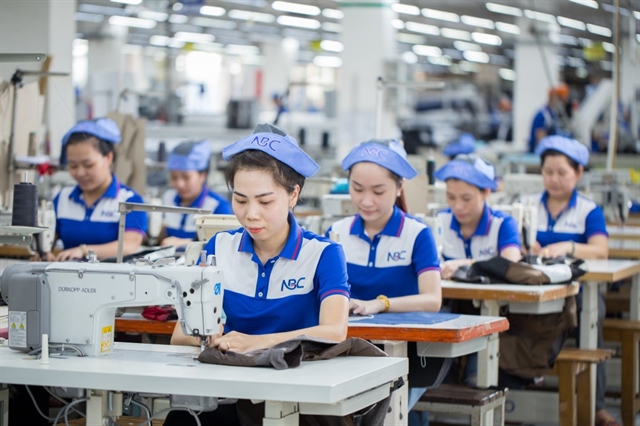
| Businesses maintaining stable production and business operations in HCM City are contributing to stronger economic growth. — Photo tapchikinhtetaichinh.vn |
HCM CITY — After posting a record-breaking budget performance last year, HCM City has set its sights even higher, aiming to collect close to VNĐ1 quadrillion (around US$40 billion) in budget revenue as early as 2026.
The strong revenue outcome recorded in the very first month of the year is seen as an encouraging signal, while also underscoring the need for sweeping reforms in implementation and governance.
According to the municipal Department of Finance, total State budget revenue collected in the city in January reached approximately VNĐ105 trillion ($4.2 billion), equivalent to nearly 13 per cent of the annual estimate and more than 10 per cent higher than the same period last year.
Notably, the continued rollout of policies granting exemptions and reductions for certain taxes and fees has proven effective in supporting investment as well as production and business activities.
These measures have helped create additional room for growth in budget revenue. As a result, many key taxes in January either met or exceeded the average monthly collection targets assigned by the municipal People’s Council.
Specifically, corporate income tax revenue was estimated at VNĐ42.3 trillion ($1.7 billion), fulfilling 30.2 per cent of the annual plan. Value-added tax reached VNĐ16.5 trillion ($660 million), equivalent to 11.3 per cent, while special consumption tax amounted to VNĐ4.2 trillion ($167 million), or 10.9 per cent of the yearly estimate.
In addition, revenues from dividends and shared profits, lottery operations, and various fees and charges all posted double-digit growth compared with the same period last year.
By contrast, land-related revenues, including land-use fees and land rentals, recorded relatively low ratios against the annual plan, reflecting the cautious movement of the real estate market in the early months of the year.
For 2026, the State budget revenue estimate assigned to the city was set at VNĐ805 trillion ($32.2 billion) for the first time.
Building on record revenue of VNĐ800 trillion ($32 billion) achieved in 2025, the municipal People’s Committee issued Decision No. 63/QĐ-UBND on January 1 adjusting the city’s budget revenue and expenditure targets for the year.
Under the revised plan, the city’s budget revenue target has been raised to VNĐ807.5 trillion ($32.3 billion), accounting for nearly 30 per cent of the nation’s total State budget revenue estimate for 2026.
Of this figure, domestic revenue is projected at VNĐ591 trillion ($23.7 billion), equivalent to 26.9 per cent of total domestic revenue nationwide.
Crude oil revenue is estimated at VNĐ39.5 trillion ($1.6 billion), while revenue from import–export activities is expected to reach VNĐ176.5 trillion ($7.1 billion).
Speaking at a socio-economic conference held on February 4, Nguyễn Văn Được, chairman of the municipal People’s Committee, said that in order to create sufficient momentum for double-digit economic growth, the city is striving to increase budget revenue by around 20 per cent, equivalent to a total collection of nearly VNĐ1 quadrillion in 2026.
According to the city’s leadership, this is an ambitious target, but one that is achievable if solutions are implemented in a synchronised and decisive manner from the very beginning of the year.
Relevant departments and agencies, particularly the Department of Finance, tax authorities and customs offices, have been instructed to draw up detailed plans for organising and executing budget collection tasks.
One of the key solutions highlighted by city leaders is the need to accelerate the processing and approval of investment projects.
Projects that have already received approval must swiftly complete procedures related to disbursement, site clearance, environmental impact assessments and land allocation.
This approach is expected to generate initial revenue from land while also enabling businesses to enter production and business activities sooner, thereby forming more sustainable tax revenue sources.
The city has also been urged to fully capitalise on special mechanisms provided under Resolution No. 260/2025/QH15, which amends Resolution No. 98/2023/QH15 on piloting specific development mechanisms for the city, as well as Resolution No. 188/2025/QH15 of the National Assembly on piloting special policies, particularly for the development of urban railway networks in Hà Nội and HCM City.
These mechanisms are designed to cut administrative processing times from years to just months, or even days, helping to remove long-standing bottlenecks in project implementation, especially for strategic projects.
From the perspective of line agencies, Nguyễn Toàn Thắng, director of the city’s Department of Agriculture and Environment, said his department is closely coordinating with the Department of Finance to speed up land price determination for investment projects.
In 2026, HCM City has been assigned a land-related revenue target of around VNĐ62 trillion ($2.5 billion) and aims to complete this task by the third quarter, thereby proactively preparing for the formulation of the 2027 budget plan.
To achieve this goal, from the outset of 2026, the Department of Finance and the Department of Agriculture and Environment have agreed on a list of 61 projects that must undergo land price determination during the year.
This is considered a crucial measure to both generate State budget revenue and resolve land-related procedural bottlenecks, while accelerating the issuance of land-use rights certificates for residents and businesses.
In January 2026 alone, land-related revenue reached VNĐ6.6 trillion ($265 million), accounting for roughly 6.3 per cent of the city’s total budget revenue. — VNS
Economy
 Economy
 Economy
 Economy
 Economy
 Economy
 Economy
 Economy
 Economy
 Economy
 Economy
.jpg) Economy
Economy
 Economy
 Economy
 Economy




