 Economy


Việt Nam, US seek to promote financial cooperation
1.
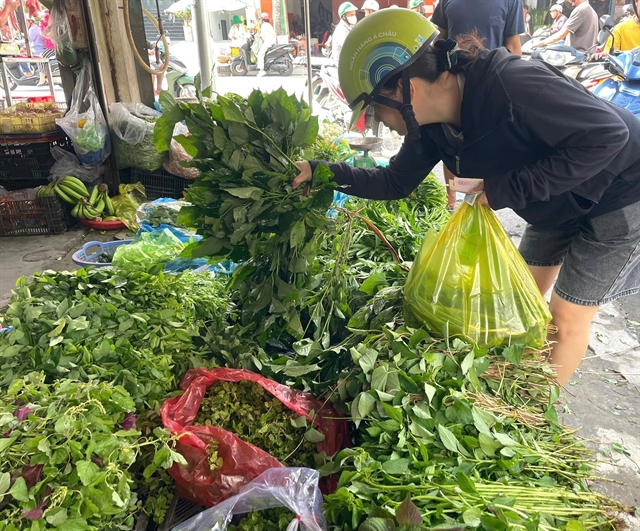 |
| A vegetable stall in HCM City. Vegetable prices in the city have surged in recent days as nationwide heavy rains and flooding sharply reduced output. VNA/VNS Photo |
As the Lunar New Year approaches and kitchen tables across HCM City begin to fill in anticipation, the city is stepping up efforts to secure a stable and ample vegetable supply for the 2026 holiday season, amid expectations of a sharp surge in festive demand.
Despite weather-related crop losses from prolonged rain and flooding across the southern region, municipal authorities are working closely with farmers, cooperatives and linked production zones to ensure sufficient volumes, smooth distribution and stable prices throughout the festive period.
With just over five weeks to go until the Lunar New Year, demand for agricultural and aquatic products, particularly fresh vegetables, has already begun climbing.
Recent extreme weather has damaged growing areas in the city and neighbouring provinces, heightening concerns over the reliability of holiday supplies.
In response, the city has intensified coordination with growers and supply chains to reinforce production capacity and safeguard market stability.
Farmers race the weather
Across specialised vegetable-growing zones in Bà Rịa-Vũng Tàu, farmers and agricultural cooperatives have been working intensively to prepare land for the final planting cycle of the year.
Many growers said persistent rainfall and poor drainage had damaged large portions of crops, leaving several fields waterlogged and complicating preparations for the New Year season.
Despite this, farmers are mobilising resources and adjusting planting schedules to ensure sufficient output for the holiday market.
At the Châu Pha Agricultural Production and Service Cooperative, 60 members cultivate 55 hectares of vegetables, including three hectares of greenhouses.
Drawing on long-term experience in managing adverse weather, the cooperative has implemented a series of measures to restore damaged fields, prepare seedlings and accelerate crop rotation.
To meet expected market demand, the cooperative plans to significantly increase output of leafy greens and spring onions compared with normal periods.
Cooperative Director Nguyễn Viết Tự said daily supply of major leafy vegetables such as sweet mustard, green mustard, Chinese mustard, amaranth, spinach and water spinach would rise by one to three tonnes, bringing total daily output to between five and seven tonnes.
Spring onion production is expected to increase to 3.5 tonnes per day, compared with the usual one tonne.
The cooperative supplies traditional markets and the Bách Hóa Xanh retail chain.
“With our preparations in place, we will begin full-scale production as soon as conditions permit, ensuring stable supply for the holiday season,” he said.
Other agricultural cooperatives have adopted similar strategies.
At the Tuấn Ngọc Trading and Service Cooperative, high-tech cultivation models have ensured stable production despite prolonged rainfall.
The cooperative has also strengthened linkages with production zones in the former province of Bình Thuận, now part of the enlarged Lâm Đồng Province, to diversify supply sources.
According to Cooperative Chairman Lâm Ngọc Tuấn, affiliated farms can deliver 80-100 kilogrammes per day and that the cooperative is now prioritising high-demand New Year vegetables such as mustard greens and water spinach, while phasing out less popular varieties.
“We expect to increase output by 20-30 per cent and maintain consistent quality throughout the holiday period. Additional measures are ready should demand surge further,” he said.
Stabilising supply and prices
The HCM City Department of Agriculture and Environment has noted that the Lunar New Year vegetable season requires early planning, with growers beginning preparations in November and planting from December to match consumption cycles.
Despite weather disruptions, supply is expected to meet market demand thanks to production from specialised zones in HCM City such as Vũng Tàu, Bình Dương and the suburban areas of Củ Chi and Bình Chánh.
Deputy Director Võ Thành Giàu said the department had recommended that the city secure supplies both locally and through linkage chains with Lâm Đồng and Mekong Delta provinces.
In addition to increasing production, multiple agricultural cooperatives in the city had committed to stabilising vegetable prices before, during and after the Lunar New Year to ensure consumers have access to safe and affordable produce.
To achieve this, cooperatives had secured input materials early, allocated labour efficiently and adopted advanced cultivation technologies to maintain productivity.
Chairman Tuấn said entities participating in the city’s price-stabilisation programme maintained prices 10-15 per cent lower than market levels, even in peak trading periods. “This has been our consistent practice for many years,” he said.
Beyond supplying supermarkets, wholesale markets and fresh-produce retailers, several cooperatives plan to expand distribution through mobile sales trips organised with the city's Department of Industry and Trade (DIT).
Mai Văn Khánh, director of the GAP Clean Vegetable Cooperative, said the cooperative could raise output by up to 50 per cent during the peak season and would be prepared to supply companies and industrial zones to ensure workers have access to safe, affordable produce.
“We are ready to join mobile sales programmes and have prepared festive vegetable sets and clean-produce gift baskets for the New Year season,” he said.
The DIT had urged enterprises, agricultural cooperatives and distribution systems to adjust planting schedules, strengthen connections with raw-material regions and expand supply to meet rising demand.
The city is also preparing to supplement supplies with produce from Lâm Đồng and Mekong Delta provinces via established linkage chains.
DIT Deputy Director Nguyễn Nguyên Phương said the department was monitoring production closely and would be ready to support businesses facing difficulties.
“Our priority is to maintain steady output, balance supply and demand, and stabilise prices during the peak Lunar New Year period,” he said.
Vegetable consumption in the city typically rises by 20-30 per cent during the Lunar New Year. With increased local production and strengthened inter-provincial supply chains, HCM City expects to ensure market stability while maintaining affordable prices for residents throughout the festive season. VNS
Economy
 Economy
.jpg) Economy
Economy
 Economy
 Economy
 Economy
 Economy
 Economy
 Economy
 Economy
 Economy
 Economy
 Economy
 Economy
 Economy