 Economy

Việt Nam and Denmark: 55 years of trust, building a green future together
1.
|
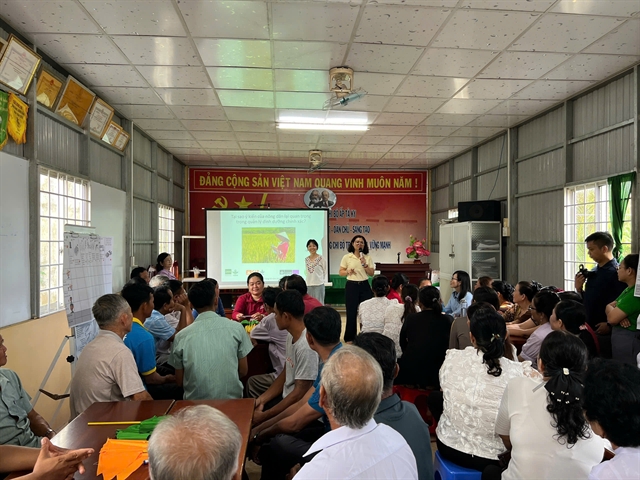
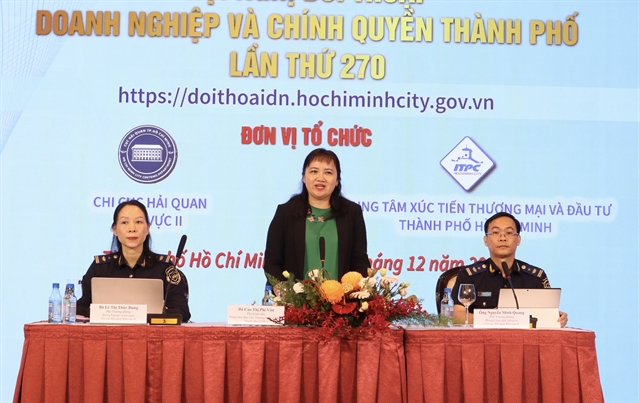
| Cao Thị Phi Vân, deputy director of the HCM City Investment and Trade Promotion Centre (ITPC), speaks at the business – city government dialogue conference on December 19. — VNA/VNS Photo Xuân Anh |
HCM CITY — HCM City authorities and local businesses gathered to discuss solutions to ongoing challenges in tax, customs, and specialised inspection policies for import–export activities at a business – city government dialogue conference on December 19.
The conference, orgainsed by the HCM City Investment and Trade Promotion Centre (ITPC) and the Regional Customs Branch II, focused on addressing difficulties and obstacles in the implementation of tax policies and specialised management and inspection policies for import – export goods.
The conference took place as 2025 is expected to see many important adjustments in customs and tax policies, as well as changes in the state management model.
At the same time, the city is implementing organisational restructuring under the two-tier local government model, directly affecting focal points, authority and administrative procedures in the import – export sector.
The event served as a practical forum for businesses to engage directly with management agencies, clarify interpretations and ensure consistent application of legal regulations in practice.
Through the dialogue system, the conference’s organising board received more than 30 questions and recommendations from businesses.
These focused mainly on customs and tax policies for import – export goods; customs procedures for export processing enterprises, including the management of raw materials, supplies and import – export goods; on-the-spot import – export activities; as well as liquidation and final settlement procedures.
Regarding specialised management and inspection, businesses raised many difficulties related to food safety inspections, conditions for importing specific goods and co-ordination among agencies during customs clearance.
In some cases, products did not fall under the management of the Ministry of Agriculture and Environment, nor under the Ministry of Industry and Trade, causing obstacles in completing procedures.
Lê Thị Thùy Dung, deputy head of the Operations Division of Regional Customs Branch II, said the agency would review and resolve issues related to reduced inspections, while co-ordinating with the HCM City Food Safety Department to unify implementation methods.
Regional Customs Branch II will issue official documents to relevant agencies on food safety inspection, including the Saigon Port Customs Branch – Area 1 under the HCM City Customs Department, and will also submit reports to the HCM City Food Safety Department to strengthen co-ordination in state management of food safety in the city, she said.
At the conference, participants also discussed various issues related to harmonised system (HS) codes, food safety inspections for sample goods and reforms in specialised inspection.
In addition, the idea of applying post-clearance inspection to certain items, such as food containers, was also discussed, along with an assessment of the progress of specialised inspection reform under Decision No. 38/QĐ-TTg of the Prime Minister approving the scheme to reform the quality inspection and food safety inspection model for imported goods.
Businesses are encouraged to proactively update new regulations, prepare proper dossiers and documents, and strengthen communication with management agencies to promptly handle arising situations, thereby reducing risks and compliance costs in import – export activities.
Cao Thị Phi Vân, deputy director of ITPC, said tax and customs policies in the import – export sector are undergoing continuous changes and adjustments to meet practical demands.
In addition to Việt Nam’s legal system, import – export businesses also need to regularly update policies and regulations of the countries of their partners to follow correct procedures and avoid unnecessary risks caused by a lack of information.
Alongside direct dialogue conferences, businesses facing difficulties can also access information or submit recommendations through ITPC’s dialogue system, she said.
Open and frank exchanges are the key to effective connectivity between the city government and the business community, helping improve policy implementation efficiency, enhance the investment – business environment and ensure smooth and compliant import – export operations, she said.
ITPC will continue to closely co-ordinate with Regional Customs Branch II to monitor, consolidate and urge the handling of business recommendations.
It will also organise thematic dialogue conferences in specific fields to promptly remove obstacles and accompany businesses towards sustainable development. — VNS
Economy
 Economy
 Economy
 Economy
 Economy
 Economy
 Economy
 Economy
 Economy
 Economy
 Economy
 Economy
 Economy
 Economy
 Economy