 Opinion
Việt Nam, Australia turn momentum into practical cooperation
1.
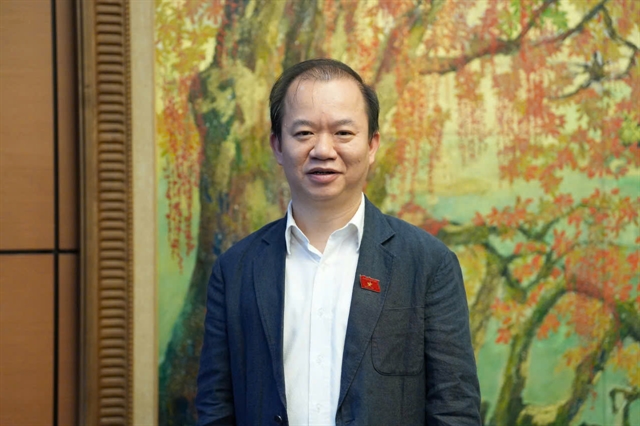 |
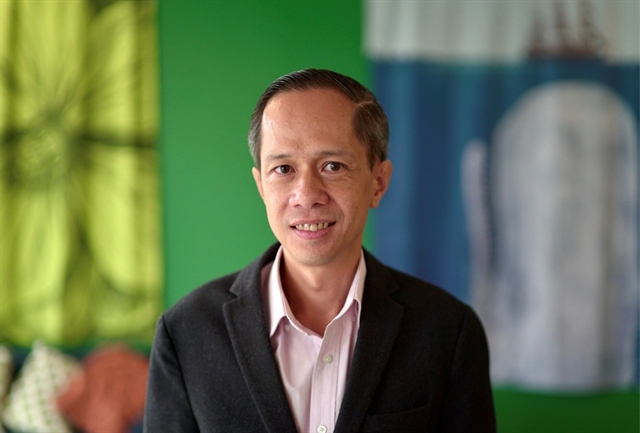
| Associate Professor Dr Bùi Hoài Sơn, a full-time member of the Committee of Culture and Society in Việt Nam's National Assembly. — Photo courtesy of Hoài Sơn |
From temples to mountaintops, Việt Nam’s spring festivals are thriving again in 2026. But alongside vitality come pressures of overcrowding, commercialisation and digital spectacle. In this Q&A with Thanh Nga, Bùi Hoài Sơn, a member of the Committee of Culture and Society of Việt Nam’s National Assembly, examines how festivals can remain sacred spaces while supporting sustainable cultural and economic development.
Could you please share your general impression of the Spring Festival atmosphere in 2026 compared with previous years?
Looking at the Spring Festival in 2026 from a measured perspective, I see a double rhythm: it is both more vibrant and more vulnerable. It is more vibrant because, after a long period of social upheaval, people need to meet, release the pent-up emotions of urban life and rediscover a sense of belonging to the community. Festivals this year are busier and more diverse. Many localities organise them more systematically, paying attention to hygiene and order, limiting superstition and increasing genuine cultural experiences. Encouragingly, many young people come not only to check in but to listen to stories about their villages, temples, crafts and legends, seeking connection with their cultural identity.
But there is also fragility. The more crowded the festivals, the greater the risk of jostling, haggling and price gouging. The more pervasive digital platforms become, the easier it is for festivals to turn into stages for the crowd, where the sacred is diluted by noise and ostentation. Many places still favour making festivals big and spectacular, prioritising quantity over quality. My general feeling is that in Spring 2026 the vitality of festivals remains strong, but it demands more sophisticated management so that the joy of crowds does not become chaos and development does not erode the essence of Vietnamese festivals.
According to you, what position and role does the Spring Festival hold in the cultural and spiritual life of Vietnamese people today?
The Spring Festival is not merely an event but a cultural mechanism that helps society renew itself each year. Festivals activate community memory: people return to communal houses, temples and pagodas not only to pray for good fortune but to reconnect with symbols that nurture the identity of their villages and regions. Festivals are also a unique space for soft education: children watch adults perform rituals, listen to ancient stories, observe customs and learn how to be part of a community in ways books cannot replace.
Spiritually, festivals help people find balance. Urbanisation and fast-paced modern life disrupt many social connections, leaving people tired and lonely even in crowds. Festivals create breathing space where people can slow down, believe in goodness and virtue and make wishes for the new year. In this sense, festivals are a form of spiritual infrastructure: invisible like roads and bridges but essential in preventing social fragmentation.
In the context of cultural industry development, festivals are a resource that must be properly understood, not merely as service revenue but as symbolic capital, a cultural brand for a locality. Properly organised, festivals preserve tradition while driving sustainable development. They tell the story of land and people and foster pride and soft power.
In the context of rapidly changing society, including urbanisation, digitalisation and tourism development, what is needed to preserve the identity of traditional festivals?
To preserve festival identity amid urbanisation, digitalisation and tourism, three core elements are essential: maintaining the sacred axis, preserving the subject and enforcing sound governance principles. The sacred axis -- rituals, space, symbols and origin stories -- is the core. It must be researched, restored and practised according to standards, not arbitrarily modified into entertainment that distorts legends and ceremonies. Supplementary activities can enhance appeal, but rituals must remain the backbone.
The subject is the community. Festivals cannot be fully delegated to administrative organisers nor turned into purely commercial products. Communities must participate in decision-making, organisation, supervision and enjoyment. When people see the festival as theirs, they will regulate and protect it.
Governance is key. Digital platforms and social media are tools, not enemies. Without rules, they can distort festivals. Planning must cover festival spaces, traffic flow, capacity limits, service standardisation, price listing and strict penalties for profiteering. Communication should avoid promoting superstitious transactional mentalities or exaggerated promises. Instead, it should emphasise humanistic, moral and ancestral values. Preserving identity means preserving our understanding of the festival as living heritage, not a marketplace of chance.
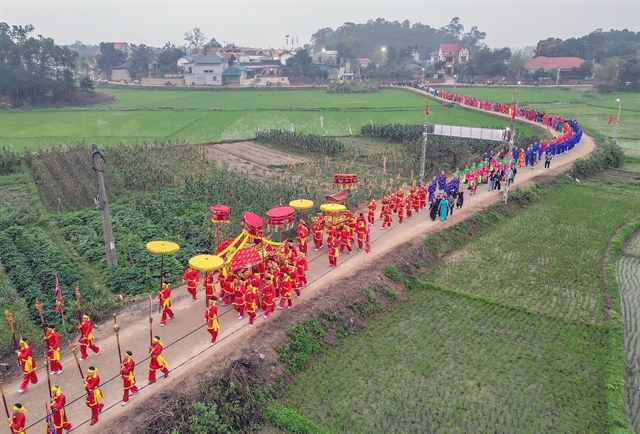 |
| Local residents take part in a procession during the 'Vạn Xuân Khai Quốc' Festival in Thái Nguyên Province. — VNS Photo Thu Hằng |
Many festivals are at risk of disappearing or becoming commercialised. What are the main causes and sustainable solutions to preserve the original values of these festivals?
The root causes can be seen as three breaks: a knowledge break, a norm break and a benefit break. The knowledge break appears when those who know the rituals are gone and documentation is lacking; younger generations then inherit fragmented memories or theatricalised scripts. The norm break occurs when laws and sanctions are insufficient, allowing looting, fortune-telling and price gouging to persist. The benefit break arises when interest groups capture festivals -- services, parking, stalls, donations and sponsorships -- shifting cultural goals towards profit.
Sustainable solutions start with establishing and protecting core values institutionally. Each festival needs a standardised record: history, rituals, space, worshipped figures, community rules and taboos. Localities should then develop transparent management by handling donations openly, standardising services, separating sales areas from sacred spaces, conducting public bidding for services and enforcing price listings.
Capacity building is crucial: train organisers, volunteers and crowd managers, and improve communication skills. Finally, return the community to the centre with mechanisms for public oversight. Festivals endure when people feel shame for wrongdoing and pride in right behaviour.
How do you assess the role of local communities and the younger generation in preserving traditional festivals? How should the government support them to enhance that role?
Local communities are the festival’s key holders: they preserve memory, space, ways of life and the sacred feeling outsiders cannot replicate. When communities practise festivals as part of daily life, traditions resist distortion. The younger generation is future leaders, bringing creativity, technology and communication skills. They decide whether festivals remain living heritage or fade into memory. The concern is not indifference but that young people lack meaningful roles beyond taking photographs.
Government support should be foundational, not paternalistic. First, support knowledge by documenting festivals through recording and digitisation, supporting artisans and custodians of ritual knowledge and creating mechanisms to reward and transmit expertise. Second, support governance by setting minimum standards for safety, hygiene and services, strengthening sanctions against profiteering and ensuring transparency in revenue management, especially donations. Third, support space by protecting landscapes and planning parking, pathways and service points to reduce conflicts between sacred and profane.
For youth, the State can create cultural volunteer programmes, heritage clubs in schools, multimedia storytelling competitions and experiential learning modules. When young people act as heritage guides, cultural communicators and facilitators of civilised behaviour, they will engage responsibly rather than fleetingly.
What are the cultural advantages and risks of turning festivals into tourism brands? What mechanisms are needed to harmonise tourism economic development with preserving cultural identity?
Turning festivals into tourism brands can bring clear advantages: visitors create jobs and revenue, funds can be reinvested in restoration, teaching and infrastructure, and festivals promote cultural diplomacy as tourists remember a region through festival experiences. However, the risks are significant. Prioritising visitor numbers and revenue can produce experiential production rather than traditional practice: rituals shortened for schedules, sacred spaces encroached upon by stalls, symbols reduced to cheap souvenirs and locals forced into performative roles. Mass tourism can also exceed environmental and social carrying capacity.
Harmonisation must follow the principle that culture leads and the economy serves. Carrying capacity should be assessed to set visitor limits. Service areas should be separated from sacred ones, price listings and quality control mandated and communications should avoid inciting superstition. A benefit-sharing model should return part of tourism revenue to conservation, communities and heritage funds. Establishing a cultural advisory council of researchers, artisans and community representatives to evaluate festival products will help ensure authenticity. A tourism brand is sustainable only when built on authentic culture.
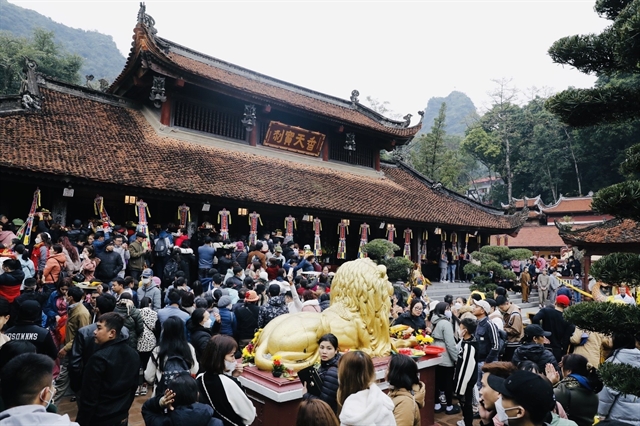 |
| Thousands of tourists from across the country attend the Hương Pagoda Festival. — VNS Photo |
The application of technology in festival management such as ticketing, crowd control, monitoring and publicity is being implemented. How do you assess the role and extent of technology application today? What technologies should be prioritised?
Technology is becoming a second hand of festival management. It reveals crowd flow, predicts risks, improves service transparency and sharpens communication. Electronic ticketing, QR codes, surveillance cameras, digital maps and crowd announcements are positive steps. Yet application is uneven and sometimes superficial. Electronic ticketing can still cause bottlenecks, cameras may not be integrated with response systems and digital communication may promote a blessing-seeking mentality that attracts attention rather than respect. Technology without cultural philosophy can accelerate distortion.
Priorities should follow three layers. First, safety and order: real-time people counting, overcrowding warnings, digital traffic flow maps and integrated control centres with rapid response units. Second, transparency and service: cashless payments, digital price listings, on-site reporting apps, parking and sanitation management and rescue services. Third, education and cultural communication: multilingual digital narration, measured use of AR/VR for storytelling and QR codes linking to standardised records of history, rituals and codes of conduct so visitors understand festivals as cultural experiences, not competitions.
Technology must serve both physical and spiritual order. If technology replaces cultural grounding, festivals risk becoming modern but soulless.
According to you, is a set of criteria for civilised, safe and friendly festivals necessary for scoring or recognising festivals? If so, what would the inspection and recognition mechanism be?
Yes, a set of criteria is necessary, but it must be scientific and humble, not a certificate given for show but a practical benchmark for self-reflection and public monitoring. Criteria should be tiered with mandatory hard elements: safety (fire prevention, medical services), order (traffic and overcrowding control), environmental hygiene, service transparency, combating superstition and profiteering, protecting sacred spaces and preserving historical sites, alongside soft elements, community participation, heritage education, accessibility and civilised behaviour.
Inspection must be independent and transparent. A model could combine local self-assessment with evaluations by an inter-agency team comprising culture, police, health, environment and tourism authorities, along with community representatives, researchers and local media. Surprise inspections during peak periods, published results with explanatory reports and feedback channels such as QR codes and hotlines for residents and tourists should form part of the process.
Crucially, criteria must carry governance consequences. If a festival fails to meet minimum standards, organisers must reduce risky activities, adjust plans or temporarily suspend events. When criteria are linked to responsibility and transparency, they drive improvement; otherwise they become meaningless labels. — VNS
Opinion
 Opinion
 Opinion
 Opinion
 Opinion
 Opinion
 Opinion
 Opinion
 Opinion
 Opinion
 Opinion
 Opinion
 Opinion
 Opinion
 Opinion