 World
World
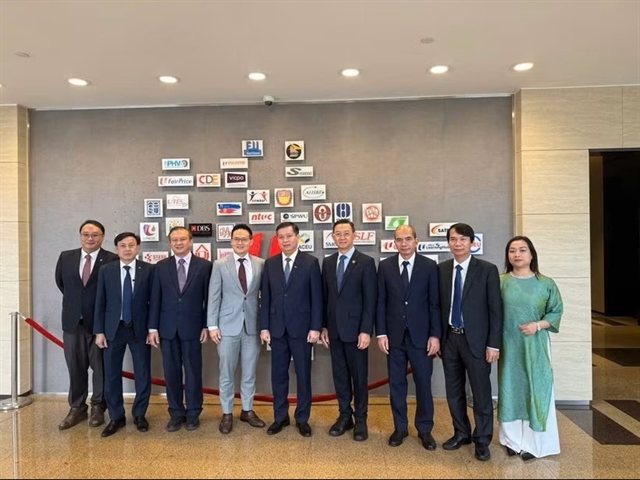
Việt Nam, Singapore promote cooperation through Party-to-Party channel
1.
|
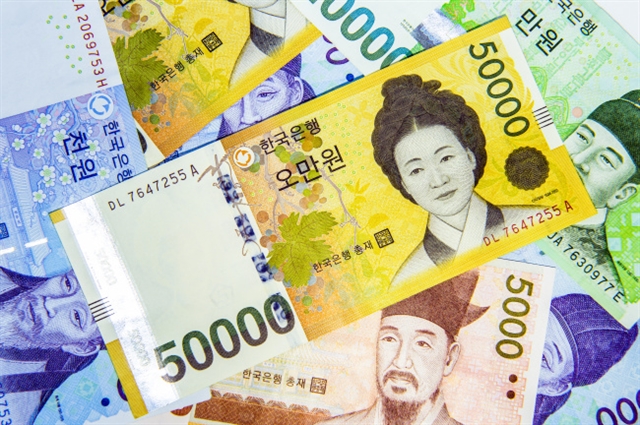
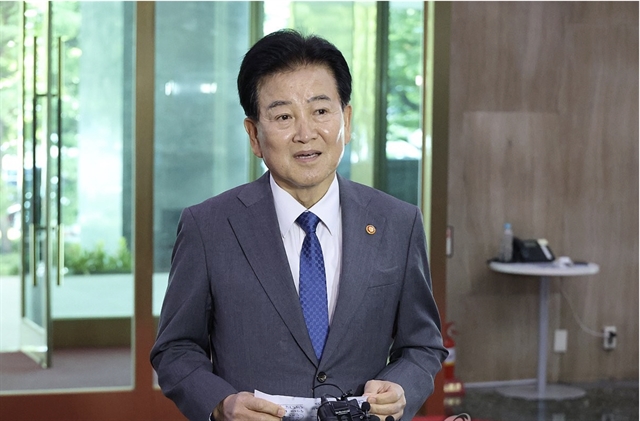
| The new survey findings come as the government considers measures to reduce the income tax burden, amid concerns that wage income tax accounts for a growing share of total tax revenue. — THE KOREA HERALD/ANN Photo |
Lim Jae-seong
More than half of citizens of the Republic of Korea (RoK) believe taxes on high-income earners should be increased, a recent survey showed, as policymakers explore ways to ease the tax burden on salaried workers.
According to a report by the Korea Institute for Health and Social Affairs, 56.8 per cent of respondents said the tax burden on high-income earners is low, including 14.9 per cent who described it as “excessively low.”
In contrast, 54.7 per cent and 51.3 per cent said taxes paid by middle- and low-income groups, respectively, are at appropriate levels. The survey covered 7,300 households nationwide.
The perception gap was more pronounced among lower-income respondents. Among those earning less than 60 per cent of the median income, 19.1 per cent said taxes on high-income earners are “excessively low,” compared with 14.4 per cent among other income groups.
Across all income brackets, respondents most frequently identified high-income groups as the primary source of funding for government welfare programs, with 38.9 per cent selecting this response.
The findings come as the government considers measures to reduce the income tax burden, amid concerns that wage income tax accounts for a growing share of total tax revenue.
One proposal under discussion is to link tax brackets to inflation, aimed at preventing taxpayers from being pushed into higher brackets due to nominal income increases.
RoK lawmakers from both the ruling and opposition parties have argued that inflation-driven bracket shifts that push taxpayers into higher brackets effectively raise taxes without corresponding gains in real wages.
“Tax rates once applied to high-income earners are now extending to middle-class workers,” said Jeong Jeom-sig, policy chief of the main opposition People Power Party. “A system in which taxes continue to rise under such conditions clearly distorts fairness and rationality.”
Experts, however, say expanding tax revenue remains necessary given demographic shifts and rising demand for public welfare spending.
While acknowledging resistance to tax increases, they note that the RoK's effective tax rate remains relatively low compared with other members of the Organization for Economic Co-operation and Development (OECD).
OECD data released last year showed that the effective income tax rate for a single worker earning the average wage in the country stood at 6.9 per cent, ranking 33rd among the 38 member countries.
This is significantly lower than in countries such as Australia, the United States and France, which recorded rates of 25.3 per cent, 15.5 per cent and 16.7 per cent, respectively.
Experts say the government should focus on reducing extensive tax deductions and exemptions, which are a key factor behind the low effective rate. They also note that a substantial share of workers do not pay income tax.
“About 32.5 per cent of wage earners paid no income tax as of 2024, an exceptionally high level compared to countries like Japan and Australia,” said Jung Chang-soo, head of the Fiscal Reform Institute.
“Gradually narrowing the tax-exempt group and converting welfare-oriented tax credits into more transparent budget spending could be one possible solution.” — THE KOREA HERALD/ANN
World
 World
World
 World
World
 World
World
 World
World
 World
World
 World
World
 World
World
 World
World
 World
World
 World
World
 World
World
 World
World
 World
World
 World
World