 Features


Tea traditions run deep in Thái Nguyên
1.
|
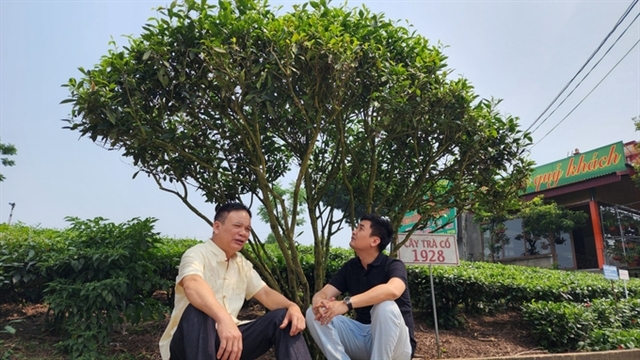
| Lê Quang Nghìn (left) sits next to an old tea tree planted in 1928 in front of his house by his great-grandfather. — Photo Toán Nguyễn |
At his home in Hồng Thái 2 Hamlet, Tân Cương Commune, tea artisan Lê Quang Nghìn often sits with a cup of hot tea, looking out over the surrounding hills.
For his family, tea has been a livelihood for five generations, as well as a tradition closely tied to the land and history of Tân Cương, one of Thái Nguyên Province's best-known tea-growing areas.
Nghìn, a member of the Ngái ethnic group, has a particular attachment to an old midland tea variety that his family has preserved for nearly a century. An old tree planted in 1928 by his great-grandfather still stands in front of the house. Unlike tea bushes in the fields, it has been allowed to grow naturally as a tree with several trunks and a wide canopy.
He began picking tea with his parents at the age of six. By 15, he had learned about the weather, soil, fertiliser, irrigation and harvesting time, as well as the skills involved in hand-roasting and drying tea. He can judge the heat by touching the tea leaves, a skill developed through years of practice
“Tea is a speciality crop, the essence of a region's culture and a benefactor to the people of tea-growing areas. Simply put, tea has given our family a comfortable life,” Nghìn said.
His family now cultivates more than 8,000sq.m of tea and harvests over three tonnes of dried tea annually.
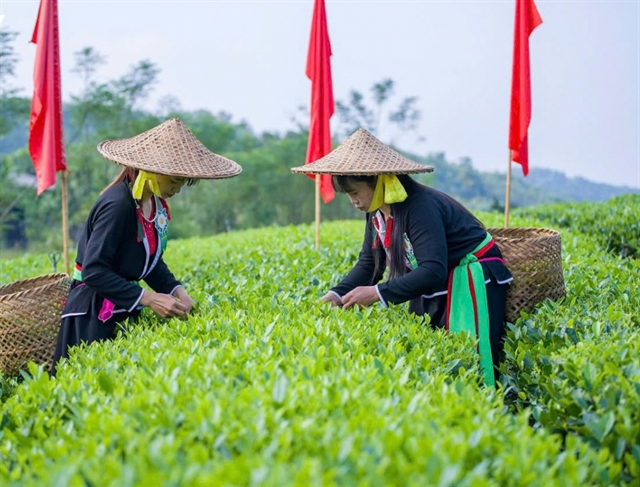 |
| Local women in traditional ethnic dress pick tea leaves on a tea farm in Thái Nguyên. — Photo courtesy of vov.vn |
Tea heritage
Nghìn's family story is part of a much longer history of tea cultivation in Thái Nguyên. The book Đại Nam nhất thống chí (The Comprehensive Gazetteer of Đại Nam), a geographical and historical compendium compiled under the Nguyễn Dynasty in the 19th century, recorded tea growing in Phú Lương, Đồng Hỷ, Đại Từ and Phổ Yên, noting the high quality of tea from these areas.
The development of Tân Cương as a renowned tea-growing area is closely associated with Vũ Văn Hiệt. Born in Hưng Yên in 1883, he moved to Tân Cương, cleared land and helped establish tea cultivation. Local accounts say he brought a tea variety from Phú Thọ, set up a processing workshop and marketed his product under the name Cánh Hạc (Crane Wings).
In 1935, Cánh Hạc tea won first prize at the Hà Nội Fair, helping raise the profile of Tân Cương tea. The practice of picking one bud and two young leaves also became a standard for quality tea.
Today, tea is grown in many parts of Thái Nguyên, including Tân Cương, La Bằng, Trại Cài, Khe Cốc and Đồng Phúc. Notably, Đồng Phúc also has Shan Tuyết tea, adding another distinctive variety to Thái Nguyên's tea range.
The province has nearly 24,000ha of tea, with about 23,000ha in production, yielding around 285,000 tonnes of fresh buds annually. Nearly 6,700ha are cultivated under VietGAP or organic standards.
Growing methods have changed over the years. Nghìn's family was among the early growers to adopt VietGAP practices, paying closer attention to field hygiene, equipment sanitation and the traceability of farming inputs. A reservoir covering nearly 1,000 sq.m provides water for irrigation, while sprinkler systems have reduced the time and labour needed to water the tea gardens.
Modern equipment has made production more efficient, but experience remains important, particularly in selecting buds, deciding when to harvest and controlling the heat during processing. Preserving traditional knowledge does not mean rejecting new methods; both are needed to maintain tea quality.
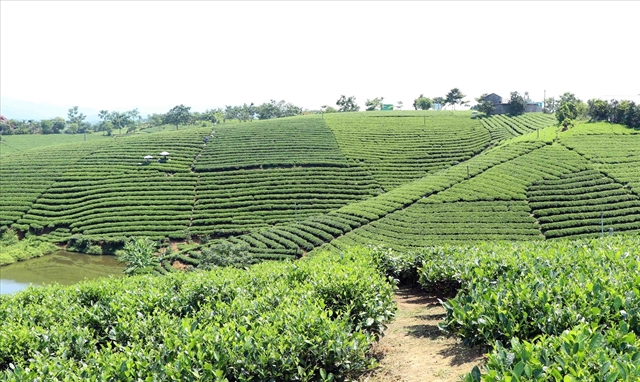 |
| Tea hills in Tân Cương, one of Thái Nguyên Province's best-known tea-growing areas. VNS Photo |
Tea culture
For Nghìn, tea is more than a crop or a source of income. It is also part of the way people in Thái Nguyên welcome guests and maintain relationships. The saying “Khách đến nhà không trà cũng rượu” (When guests come, tea or wine should be offered) reflects the place of tea in local hospitality.
A pot of tea is often prepared when relatives and friends visit, at family celebrations and during chats with neighbours. Sharing tea is a familiar way of showing respect and making guests feel welcome.
Đào Thanh Hảo, director of Hảo Đạt Tea Cooperative in Tân Cương, described the qualities of good tea: "Good tea is not about bright colour or a strong aroma. It should have a gentle fragrance and a subtle taste."
Trần Văn Sinh, a visitor from Hà Nội, said the pleasure of drinking Thái Nguyên tea lay in its aftertaste.
“The tea should be astringent but not bitter, rich but not harsh. Its fragrance should not be overpowering, and its flavour should remain after drinking,” he said.
Tea master Mông Đông Vũ has spent years helping preserve the tradition of tea preparation. He owns nearly 400 antique tea sets and has taught thousands of women in Thái Nguyên's tea-growing areas how to prepare and serve tea.
Vũ said women in these areas can sometimes identify where tea comes from by looking at the brewed leaves, smelling the tea and tasting it. Their familiarity with local varieties and processing methods allows them to recognise differences that others may overlook.
Preparing tea involves more than choosing the leaves. The amount of tea, water temperature and brewing time all affect the taste. Choosing a tea set and offering a cup to a guest are also part of the hospitality associated with tea.
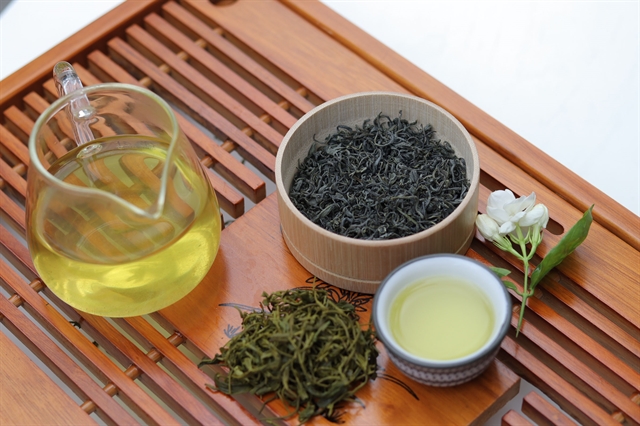 |
| Preparing tea involves more than choosing the leaves. The amount of tea, water temperature and brewing time all affect the taste. Photo plantrip-cha.com |
Living heritage
The knowledge of tea cultivation and processing in Thái Nguyên has developed through generations of observation and practice. It covers the selection of suitable varieties, tending the plants, picking at the right time and processing the leaves to bring out their characteristic flavour.
Researchers have also studied old tea trees in areas such as Núi Bóng in Minh Tiến Commune, formerly part of Đại Từ District, and Tam Đảo, examining their age, biological characteristics and genetic resources.
On October 27, the knowledge of tea cultivation and processing in the province was added in the National List of Intangible Cultural Heritage. The recognition was announced at the opening of the Thái Nguyên International Tea Festival 2026, held from October 30 to November 7.
The recognition highlights the value of knowledge passed down through generations, while also drawing attention to the need to maintain quality as production expands. Tea exports to demanding markets such as the European Union must meet requirements on pesticide residues, making careful cultivation and traceability increasingly important.
At his home in Tân Cương, Nghìn continues to preserve his family's old tea variety while producing tea for the market. His family has adopted new farming methods, but the work still depends on knowledge acquired through years of tending the plants and processing the leaves.
For tea-growing families like his, the heritage of Thái Nguyên tea lies not only in the product, but also in the skills and customs that continue to shape everyday life. — VNS
 Features
 Features
 Features
 Features
 Features
 Features
 Features
 Features
 Features