 Sports

Ping An Digital Bank Completes HKMA’s Second GenA.I. Sandbox Cohort
1.
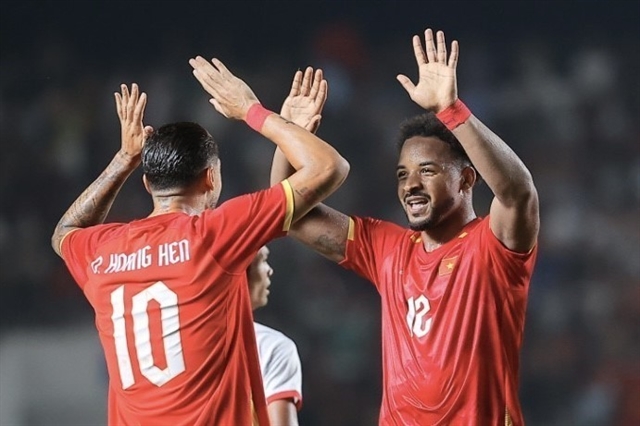 |
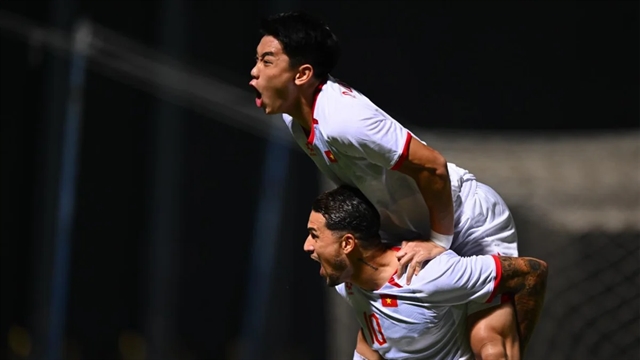
| Đỗ Hoàng hên and Nguyễn Xuân Son celebrating Việt Nam's victory in the pre-tournament friendly against Myanmar. Việt Nam is the team to beat this tournament, with a great coach and an ever-improving squad. VNA/VNS Photo Minh Quyết |
Anh Đức
A week after Spain, a team in red and gold, lifted the World Cup trophy in New Jersey, United States, Vietnamese fans remain caught up in football fever as the ASEAN Championship gets under way, with another team in red and gold preparing to defend its title.
Comparing the world's top football tournament with a regional competition may be a stretch, but the ASEAN Championship can offer stories just as compelling, if not more so, in a saga that has unfolded over 30 years.
Timor-Leste, once overlooked by top teams, are now more threatening with the inclusion of heritage players currently playing for European clubs. Led by their all-time top scorer, João Pedro, their story draws comparisons with Cabo Verde at the World Cup. Just two years ago, they led former champions Malaysia 2-1 at Bukit Jalil before losing 3-2 in the final ten minutes.
Further up the rankings lie Laos and Cambodia, testing two different approaches: step-by-step youth development for the former and naturalisation for the latter. Myanmar remain a tough challenge for anyone, built on a solid defence, though a dismal average of one goal per match in 2024 keeps the semi-finals out of reach.
The Philippines, riding a football surge powered by talent from abroad and a Spanish attacking style, came close to reaching the last final and return under a new coach looking to make history.
Then come the contenders, and the World Cup parallels write themselves.
Malaysia are Southeast Asia's England. Bukit Jalil, like Wembley, is a cathedral of noise, and, as with England, the passion is matched only by the wait: one title, in 2010, with every campaign since ending in hope, hype and heartbreak. Wounded by the loss of their disqualified naturalised contingent and led by interim coach Tan Cheng Hoe, they can never be written off, because no fan base deserves a trophy quite so much.
Singapore are the region's Italy. Four titles, built in their golden years on discipline and defensive steel, make them the ASEAN answer to catenaccio. But, like the Azzurri after 2006, the Lions have spent more than a decade watching others lift the trophy they once owned. Captain Hariss Harun insists this young side under Gavin Lee is rising again. Italians said the same for years. Eventually, they were right.
Indonesia are the France of the region, their roster built substantially around Dutch-born players of Indonesian heritage, from Jordi Amat to Thom Haye. Like France, they are a rising force nobody dares overlook, having come within a play-off of the World Cup itself. And, like France before 1998, they carry a curious burden: six finals, six defeats, no title. New coach John Herdman must do what Aimé Jacquet once did.
Thailand, inevitably, are Brazil. Seven titles, a history of flair and a self-image as natural kings. But, like the Seleção since 2002, the War Elephants are a dominant power in decline, having lost the last final to Việt Nam and arrived with a weakened squad. The hunger now is desperate: not for a first trophy, but to prove the golden past is not merely past.
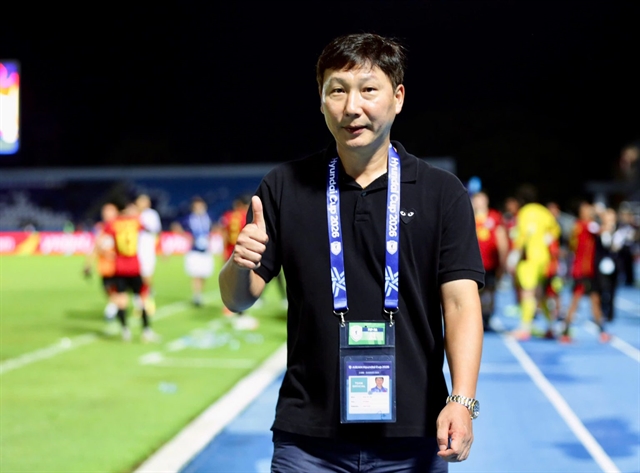
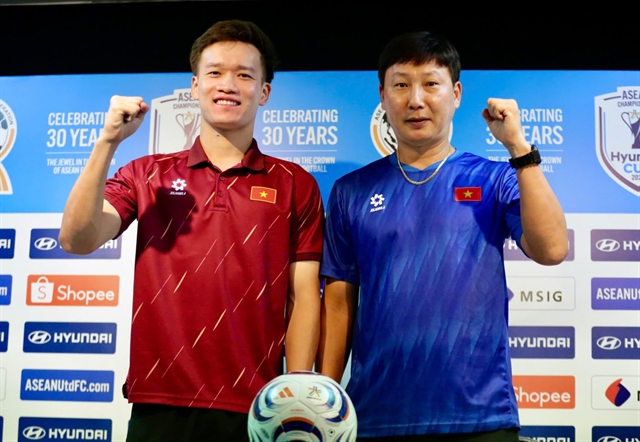
Which leaves Việt Nam as Argentina, and I say this with only slight bias. The Golden Star Warriors arrive as the team everyone measures themselves against: defending champions, unbeaten in 18 matches, led by a tactically adaptive coach in Kim Sang-sik and boasting depth in every position, from Nguyễn Quang Hải to Nguyễn Xuân Son. Like Argentina, they will find that being the team to beat is the heaviest shirt in football.
Five weeks from now, we will know whether the script holds. But like the World Cup it humbly mirrors, this 30-year-old saga is at its best when the script gets torn up. VNS
Sports
 Sports
 Sports
 Sports
 Sports
 Sports
 Sports
 Sports
 Sports
 Sports
 Sports
 Sports
 Sports
 Sports
 Sports
.jpeg)